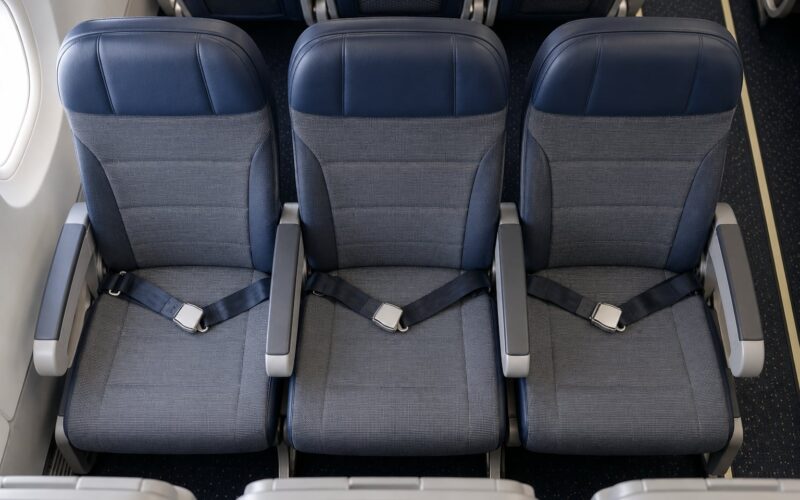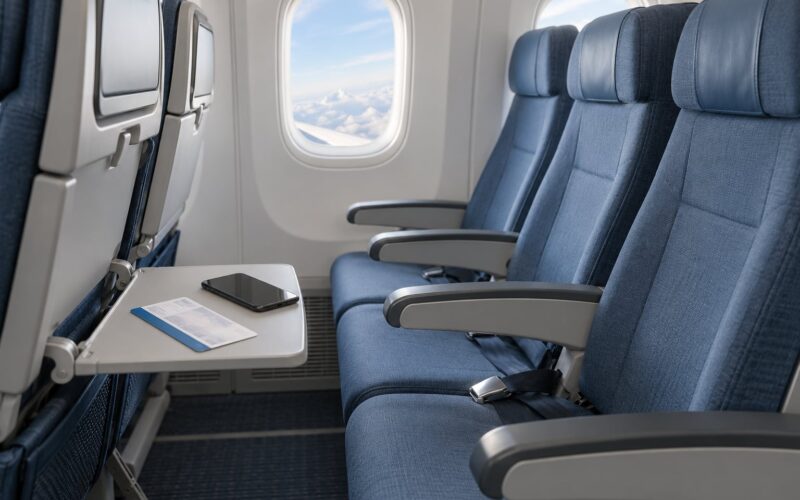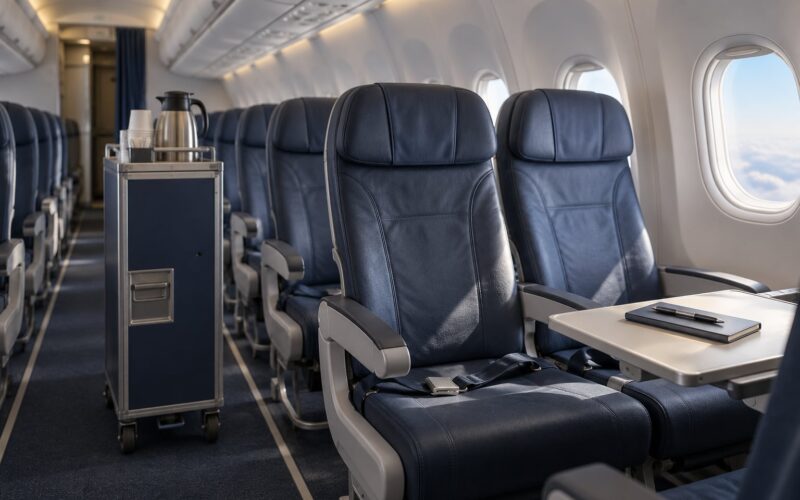
To make an economy seat more comfortable, change three things in this order: pick a seat that suits your body, use the adjustments the seat already has, then support the three spots that hurt most, your tailbone, lower back and feet. Add an eye mask and a water bottle and most of the discomfort of a long flight becomes manageable.
Economy seats in a standard cabin are roughly 30 to 32 inches apart with a thin cushion that does not adjust and nothing to rest your feet on. Nobody is going to change that, but almost all of the pain comes from a small number of pressure points you can address yourself. Most of the useful tricks cost nothing, and the ones that cost something are small enough to fit in a backpack.
Table of Contents
- What You Need
- Step-by-Step
- How to Make an Economy Seat More Comfortable Before You Book
- Set Up Your Seat for More Space and Support
- Use Clothing and Posture to Reduce Discomfort
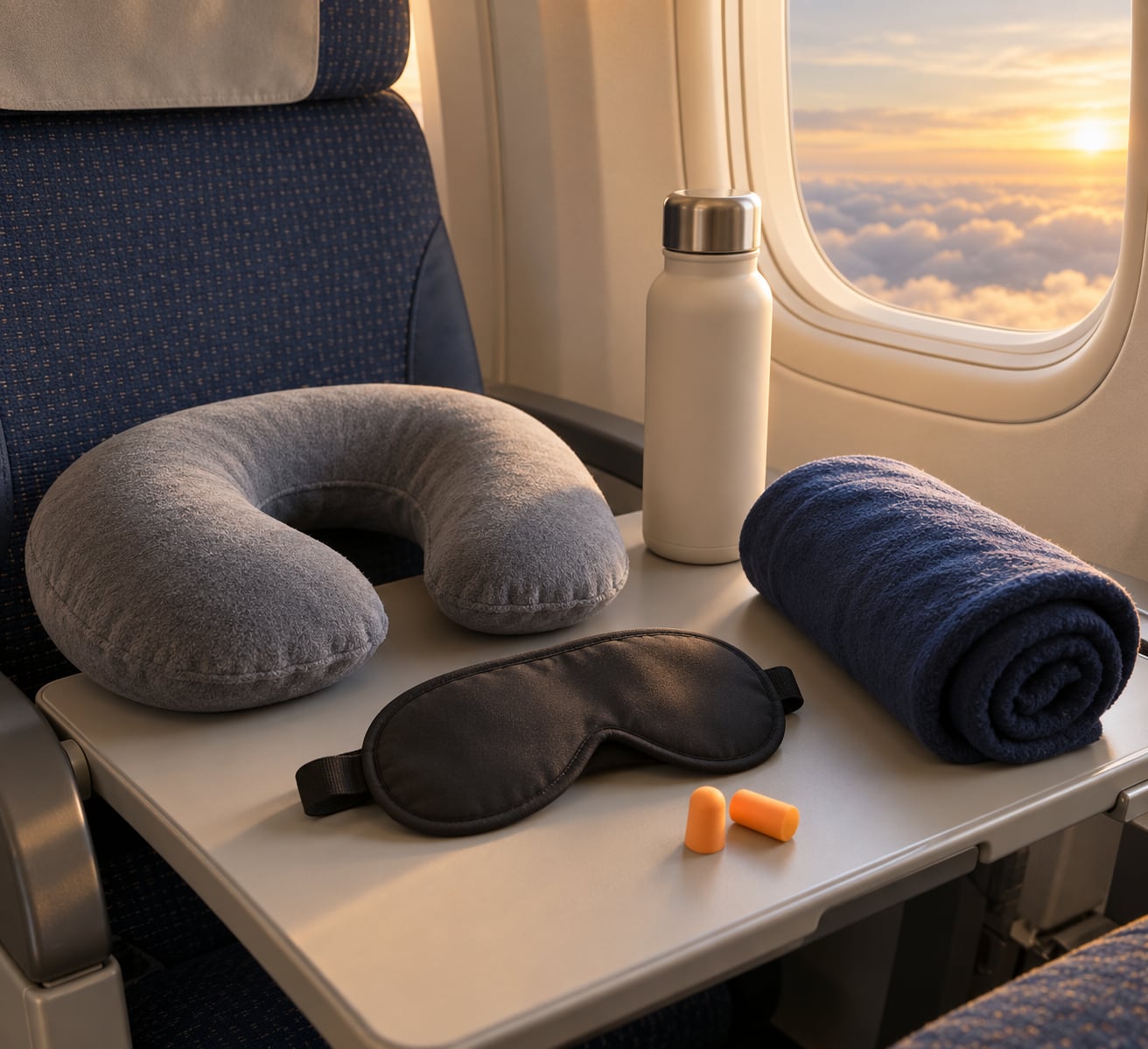
- Add a Small Comfort Kit
- Stay Comfortable During the Flight
- Use a Simple Routine Before Landing
- Common Mistakes
- Frequently Asked Questions
- What is the best seat for comfort in economy?
- Can a neck pillow make an economy seat more comfortable?
- How can I get more legroom on a plane?
- Are eye masks and earplugs useful on economy flights?
- Do footrests or laptop stands help in economy class?
- Conclusion
What You Need
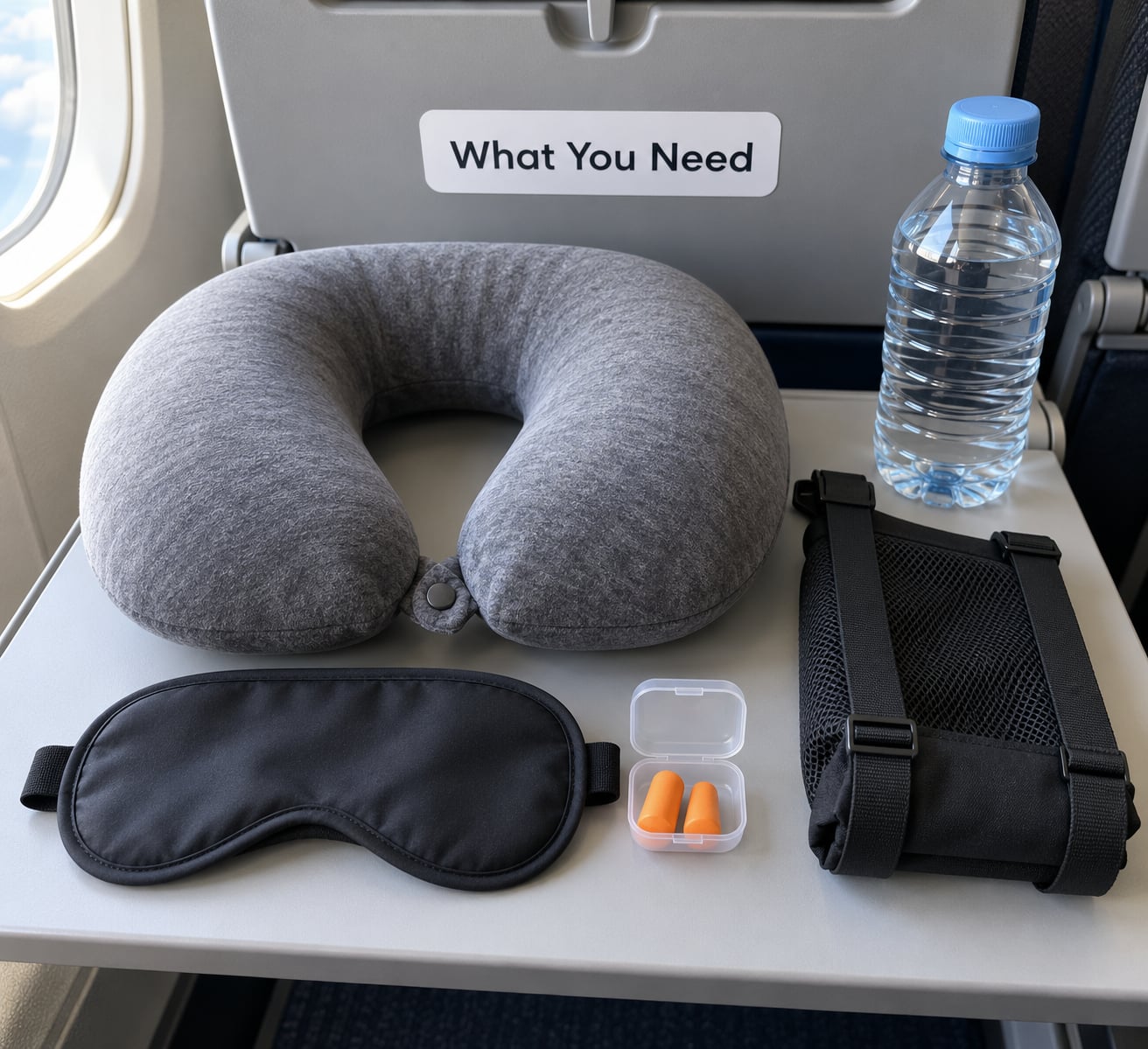
Start with the free category, because it costs nothing and takes about two minutes once you are sitting down.
- Your own hands. Most seats have an adjustable headrest, a height lever and an armrest that lifts. You only need to find them.
- Layered clothing. Cabins run cold and a sweater you can push up your sleeves beats one bulky piece that traps heat when the cabin warms up.
- An empty reusable water bottle. Fill it after security so it goes through the checkpoint empty and stays with you the whole flight.
The second category is the small kit, and it is worth keeping deliberately modest.
- An eye mask. Blocks the light that makes a red-eye feel like an afternoon.
- Earplugs or noise-canceling headphones. Earplugs handle the announcement and the lavatory queue; headphones handle engine rumble.
- A neck pillow. Only useful if your head would otherwise fall forward, and a flat or wrap style is often better in a narrow seat than a big donut.
- Something for your feet. A foot hammock or foot sling, or a folded bag that props your feet up a few inches.
- Lumbar support. A rolled airline blanket, a rolled jacket or a small memory foam pillow.
The third category is where people waste money. Mattress-topper seat cushions, full-size bedding sets and multi-piece travel pillows look good in a photograph and turn into a bag you resent for the rest of the trip. Buy one thing, fly with it once, then decide.
What you do not need is anything heavy, anything that blocks the row exit, and anything you have never tried before. Test every unfamiliar item on a short flight first, at home, or on a three-hour hop before trusting it with a twelve-hour overnight leg.
Step-by-Step
Here is the sequence that works, from the day you book to the last ten minutes before landing. Each step tells you what to do and how you can tell it is helping.
How to Make an Economy Seat More Comfortable Before You Book
Seat choice does more for comfort than any accessory, and it is the only step that costs you nothing. Open the seat map early, because the good rows go first, sometimes within hours of the flight opening for sale.
What to look for, in order of how much it matters to most people:
- Rows with extra legroom. The first row behind a bulkhead divider usually has more space in front, and rows ahead of wing exits often gain a few inches. The tradeoff is that some of these seats do not recline, because the exit row needs a clear path behind it.
- Seats to avoid. Rows directly in front of a galley or a lavatory get doors opening into your face and standing queues. The very last row of the cabin gets the lavatory traffic and the service cart. Rows where a passenger in front reclines hard are common on older narrow-body aircraft.
- Over-the-wing versus everywhere else. These rows feel the least movement in rough air because they sit near the aircraft’s center of gravity, but they are also the noisiest spot if a wing root is close.
- Window, aisle or middle. A window seat gives you a wall to lean on and a view, but you are boxed in for four hours. An aisle seat lets you walk and stretch, at the cost of strangers crossing your space all night. A middle seat gives you neither.
- The two-seat side of a three-seat row. On a 2-by-3 layout, the two-seat configuration gives you an aisle armrest on one side and a wall-side armrest on the other, which is a friendlier place to sit than a full row of three.
Exit rows have rules worth knowing. Airlines generally require you to be able to reach the floor and the overhead without stretching, and to open the hatch, so children and anyone who cannot perform the brief safety demonstration are moved out of the row without fuss. If you want one, book it in advance rather than hoping at the gate.
You can also ask to move at the gate. A polite, specific request works far better than a vague one: tell the gate agent you will pay the difference and say which seat you want, such as a middle seat in a row with an empty beside it. Travelers report this succeeds often enough to be worth trying, and never argue if the answer is no.
Set Up Your Seat for More Space and Support
This is the step almost every flyer misses. Your seat has moving parts, and nobody demonstrates them.
Set the headrest first. Headrests with side wings can usually be folded in, moved up, moved down, or both, and the right setting stops your head bobbing during a bump. Slide it so the wings sit at the sides of your skull rather than behind your neck.
Find the armrest lift. On most aircraft the aisle armrest has a small button or lever at the hinge end, near where the armrest meets the seat back. Pressing it raises the armrest several inches so you can slide in more easily, and on many seats it stays up for the flight, which is worth more to you than a fixed armrest height. A raised armrest gives you more shoulder room and stops the passenger beside you leaning into your space.
Recline only when the seat in front does. Reclining into someone who is working or eating is the fastest way to make a long flight unpleasant, and on some older aircraft there is no real lock, so your back angle depends on the passenger ahead. A reasonable middle setting, somewhere between upright and flat, is the polite compromise on a red-eye.
Use the storage. Move your bag from under the seat in front into the seatback pocket or under your own seat, so your knees are not pressed against a bag. The space in front of you is the one thing in the cabin you can actually claim.
Support the three pressure points. Your tailbone takes the most pressure, then your lower back, then your feet. A folded blanket or small cushion under the tailbone, a rolled blanket or pillow behind the lumbar curve, and anything that lifts your feet a few inches handles all three.
Use Clothing and Posture to Reduce Discomfort
What you wear matters more than most people expect. Loose, breathable layers let you adapt as the cabin cycles between cold and warm, and elastic waistbands matter more than they sound like they should, because a tight waistband on a long flight is miserable once you are stuck sitting.
Then change your position on purpose. Nobody sits well for ten hours because they sat well for nine of them. Every hour or so, shift your weight from one hip to the other, uncross your legs, and plant both feet flat on the floor for a minute if the legroom reaches.
Small seated stretches are worth doing while still buckled. Press your lower back gently toward the seat back as you inhale, then round away as you exhale, and repeat a few times. Turn your head slowly toward one shoulder, then the other, holding each for a few seconds. Both are quiet enough that nobody notices.
If the aisle is close, get up and walk every two to three hours on anything longer than four hours. Travelers agree on this one more than anything else, partly for stiffness and partly because long periods of sitting raise the risk of a blood clot in the leg, a risk that climbs on flights over four hours or when you have other risk factors. Standing and walking in the aisle is the simplest thing you can do about it, and compression socks help some people on very long legs. If you have a clotting history, ask your doctor rather than a forum.
Add a Small Comfort Kit
Keep the kit to what touches a specific problem, and pack each item for a specific job.
- For light: a contoured eye mask. It matters most on overnight flights, where the cabin lights come on for service and you never really know how long it is.
- For noise: foam earplugs for voices and announcements, noise-canceling headphones for low engine rumble. Many flyers carry one pair and regret the other.
- For your head: a travel pillow, or a rolled blanket in a loop if you do not want to pack one. On narrow seats a flat wrap style often beats a thick ring.
- For your back: a small memory foam lumbar pillow, or the airline’s own blanket rolled up behind your lower back. Travelers mention that free substitute often, and it costs you nothing.
- For sitting: an inflatable or gel seat cushion. Folding models are the ones people actually use, because they disappear into a backpack when the flight ends.
- For your feet: a foot hammock, foot sling or inflatable footrest.
Check the airline rules on anything that hangs or clips. Footrests and leg slings can block the row exit, and crew may ask you to remove them during service. Read the safety card, and keep the item low enough that a flight attendant can step past without asking twice.
One more thing about gear: pack it in a stuff sack or the pillow’s own pouch, and put it where you can reach it without standing. Anything that lives in the overhead bin on a full flight is something you will not use.
Stay Comfortable During the Flight
Cabin air is dry and pressurised, and thirst shows up as a headache, cracked lips and tired eyes long before it feels like thirst. Sip steadily through the flight instead of drinking in one go, and keep water in front of you. Medical guidance for air travel commonly suggests around eight ounces of water an hour, and alcohol works against you because it dehydrates and fragments sleep. Coffee is fine in the morning and less kind at night.
Food is the other quiet factor. Heavy, salty meals make you bloated and uncomfortable, and gas at altitude is genuinely worse than it sounds, because the cabin pressure expands it. A lighter meal before a long flight, eaten slowly, is usually the better call, and a snack box in your personal item is worth more than a full meal you skipped.
Keep moving your eyes and your attention. Looking out of the window every twenty minutes, getting up to refill your bottle, or reading a physical page reduces the specific achy-head feeling of a long screen session. Layers solve the temperature swings, since a cabin near 70 degrees F can turn cold once the engines are at cruise and the crew stop moving around.
On sleep, manage expectations. Most flights over eight hours have one real sleep window, and a neck pillow, eye mask, earplugs and a reclined seat get you a broken stretch of it rather than eight hours. Melatonin works for some people, but it is worth trying at home first, and asking a pharmacist before the first trip is the sensible move. If you plan to sleep, pick your seat and gear for it, and tell the person beside you before they pull the shade without asking.
Use a Simple Routine Before Landing
How you finish the flight decides how you feel an hour after landing, and the last fifteen minutes are the easiest to get wrong.
Pack small, frequently used items into your personal item first, so you are not digging through the overhead bin while the aisle is a queue. Check the seatback pocket and under the seat in front of you, since the phone charger you forgot is always there. Stand up slowly with a hand on the seat, and take a couple of slow steps in the aisle once you are up.
Then go to the lavatory before the seatbelt sign comes back on. Aisle passengers get a much better exit if they are not the reason twenty people are standing behind them. The last twenty minutes of a flight are also the tightest space of the day, because everyone is pulling bags down at once, and having an empty stomach and clear bladder makes that squeeze noticeably easier.
Common Mistakes
Almost every uncomfortable flight comes down to one of these.
- Waiting too long to pick a seat. The extra-legroom rows and the aisle pairs disappear first, sometimes within hours. Fix: choose your seat the moment the flight opens, even if you have no preference beyond not sitting near a lavatory.
- Letting the seat in front own the space. Their reclined seat back is now your tray table, and their knees are now your legroom. Fix: check the recline situation when you board, and if the row behind you has no recline, that tells you what you are dealing with.
- Packing the knee space with bags. A backpack at your feet means your knees bend higher and your posture collapses. Fix: everything goes on the seat in front of you, in the pocket or under their seat, and the space in front of you stays clear.
- Wearing restrictive clothes. A tight waistband, stiff jeans and anything that binds across the stomach get worse with every hour. Fix: drawstring or elastic waist, a layer you can remove, and shoes you can take off in the aisle.
- Improvising foot support. A random pile of magazines on a footrest or a rolled bag that rolls the moment the cabin tilts ends up on the floor. Fix: a purpose-made hammock or sling, or nothing at all, and check the airline rules first.
- Ignoring water and movement. Four hours of stillness and dry air will beat any cushion. Fix: steady sipping, and a walk in the aisle every two to three hours.
- Testing something new on the flight. A pillow, a melatonin dose or a sleep mask you have never used is a bad bet at 40,000 feet. Fix: every new item gets one trial run on a shorter flight.
A few last details that pay off more than they sound. Empty seats change constantly, so look at the seat map again on the way to the gate, since a good row sometimes opens up when a family splits up. If you travel with children, take aisle seats and bring a foot sling and a snack box, because the person in the middle of the group is the one nobody helps. If a seatbelt is too short, ask a flight attendant for a seatbelt extender, which is standard equipment on most airlines, and ask early instead of at the last minute.
Frequently Asked Questions
What is the best seat for comfort in economy?
For most people on a long flight, an aisle seat two or three rows back from a galley, or an over-the-wing row for a calmer ride, works best. Choose a bulkhead or exit row for the extra legroom, accepting that many of those seats do not recline. A window seat wins if your priority is sleep and you value having a wall to lean on. Check the map early, because the good rows sell first.
Can a neck pillow make an economy seat more comfortable?
Yes, if your head otherwise falls forward during sleep, and it costs little space to pack. A flat or wrap style usually suits a narrow economy seat better than a thick ring, which can push your chin toward your chest. If you already have something to lean against, a rolled blanket works about as well and takes no bag space. Try any new pillow on a short flight first.
How can I get more legroom on a plane?
You cannot change the seat pitch, but you can claim what is there. Book a bulkhead row or a row ahead of a wing exit, put your bag in the seatback pocket instead of at your feet, and check the aircraft for a seat that does not recline behind you. On a two-by-three layout, the two-seat side of the row gives you an aisle armrest and a wall-side armrest, which is easier to sit in.
Are eye masks and earplugs useful on economy flights?
They are the two items that most reliably change how a flight feels, and both are cheap and tiny. A contoured eye mask blocks cabin light and the glow of a screen. Earplugs handle announcements and the lavatory queue, while noise-canceling headphones handle engine rumble, which earplugs barely touch. On an overnight flight, using both means the cabin stops interrupting you every ninety minutes.
Do footrests or laptop stands help in economy class?
They help most when you are shorter than the seat was designed for, because dangling feet put pressure on the back of your knees and the lower back. A foot hammock or sling that folds flat is the most practical option. Check the airline rules first, since anything hanging from the seatback can block the row exit and be asked to be removed during service.
Conclusion
Learning how to make an economy seat more comfortable is mostly a matter of order. Choose the best seat available, use the headrest and the armrest lift, and support your tailbone, lower back and feet.
If you do only three things, do these: pick your seat as soon as the flight opens, pack an eye mask, earplugs and one support item that matches your body, and get up to walk every couple of hours. Everything else on this list is a bonus.