Learning how to ask someone to switch seats on a plane comes down to one rule: only ask if the seat you are offering is better than or equal to the one you are giving up. Wait until boarding has finished, sit in your assigned seat, then make a short, friendly offer to whoever is holding the seat you want. A polite no is a complete answer.
That sounds simple, and most of the time it is. The awkwardness comes from a handful of predictable mistakes: asking during boarding, arguing after someone says no, or trying to move into a seat someone paid extra for. Each one turns a normal request into a cabin-wide event.
Regular flyers tend to agree on the phrasing. The top thread on r/Flights puts it plainly: make it short, quick and polite, and if there is no attitude, drama or pouting, it is fine. Travelers on r/SouthwestAirlines add the same boundary from the other direction — asking is okay, ideally for a similar seat or an upgrade, but be prepared for a no.
Last updated: October 2026
Table of Contents
- What You Need
- Step-by-Step: How to Ask Someone to Switch Seats on a Plane
- Confirm Whether a Seat Swap Is Possible
- How to Ask Someone to Switch Seats Without Giving a Speech
- Make the Trade Fair for Both Passengers
- Ask Before the Overhead Bins Are Settled
- Accept the Answer and Return to Your Seat
- Common Mistakes
- Frequently Asked Questions
- When is the best time to ask a passenger to switch seats on a plane?
- Can a flight attendant force two passengers to swap seats?
- What should I say if someone refuses to switch seats?
- How do I ask for a seat change when we do not share a language?
- Can I ask to switch seats because of a medical or accessibility need?
- Conclusion
What You Need
Nothing physical. No documents, no equipment, no special permission form. What you actually need is accurate information, because most awkward seat swaps start with an asker who guessed wrong about the seat map or the boarding stage.
Know these four things before you approach anybody:
- Your assigned seat and its exact attributes. Row, letter, and whether it is a window, middle or aisle seat in the main cabin or a separate cabin zone.
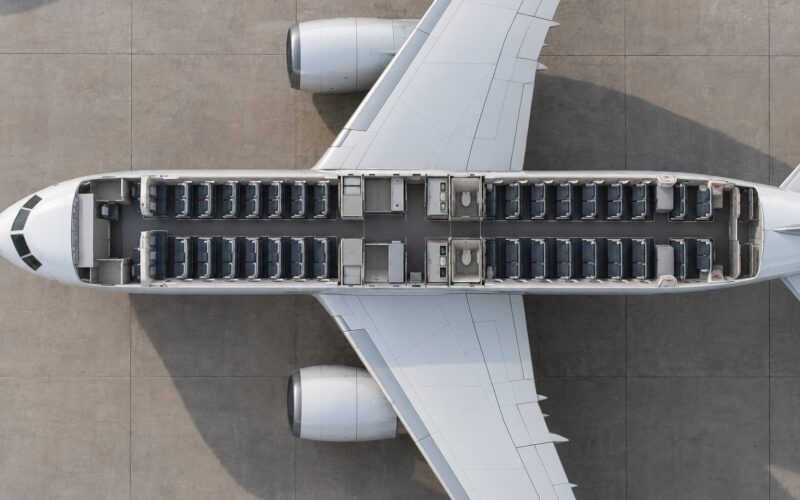
- Where your target seat sits in the cabin. If it is an exit row, a bulkhead row or a paid extra-legroom seat, that changes the whole conversation.
- What stage boarding is at. Askers who interrupt an active boarding line are the ones people remember badly.
- Whether crew can actually help. A gate agent works the seat map before the door closes. A flight attendant works the cabin once you are on board. Neither can hand you a stranger’s seat.
Step-by-Step: How to Ask Someone to Switch Seats on a Plane
Confirm Whether a Seat Swap Is Possible
Seats are allocated for a reason. Airlines distribute weight across the aircraft, keep aisles and galley zones clear, and track who is sitting where for take-off and landing. A swap is permitted, but it is not automatic, and nobody can force a passenger out of an allocated seat.
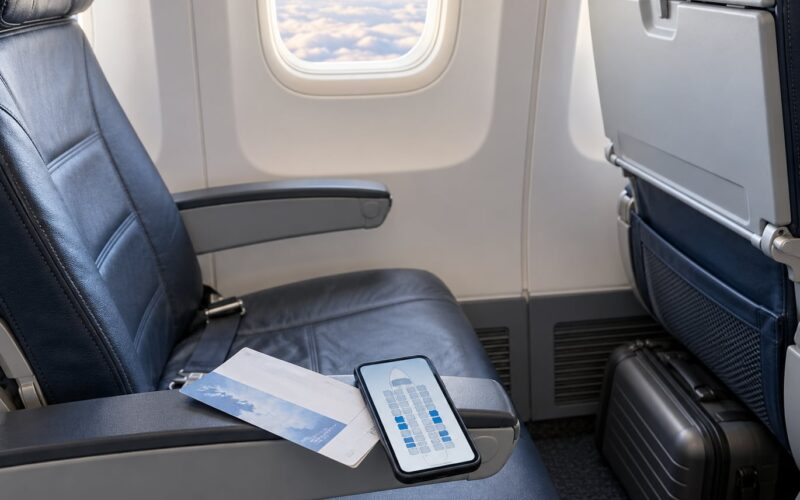
Check the current seat map on the airline app or a boarding pass scanner before you walk anywhere. If the seat you want shows as occupied, you are asking a person, not the airline. If it shows as open, ask a gate agent first — a free reseat beats a stranger conversation every time.
How to Ask Someone to Switch Seats Without Giving a Speech
Short, warm and specific. Four beats: greeting, reason, request, easy exit. Overexplaining is what turns a normal request into a negotiation.
A natural version sounds like this: “Hi, sorry to bother you — would you like to switch? I’ve got the aisle seat and I think you’d have more room over there.” That is one breath long. It names the benefit for them, not for you, and it lets them say yes or no without pressure.
Keep the reason honest and brief. A tall passenger can mention fitting comfortably on a long-haul flight. A parent can mention sitting near a toddler who needs help. Someone who booked separately from a companion can mention sitting together. Do not invent a hardship — you will be sitting twelve inches from the person you just misled.
Make the Trade Fair for Both Passengers
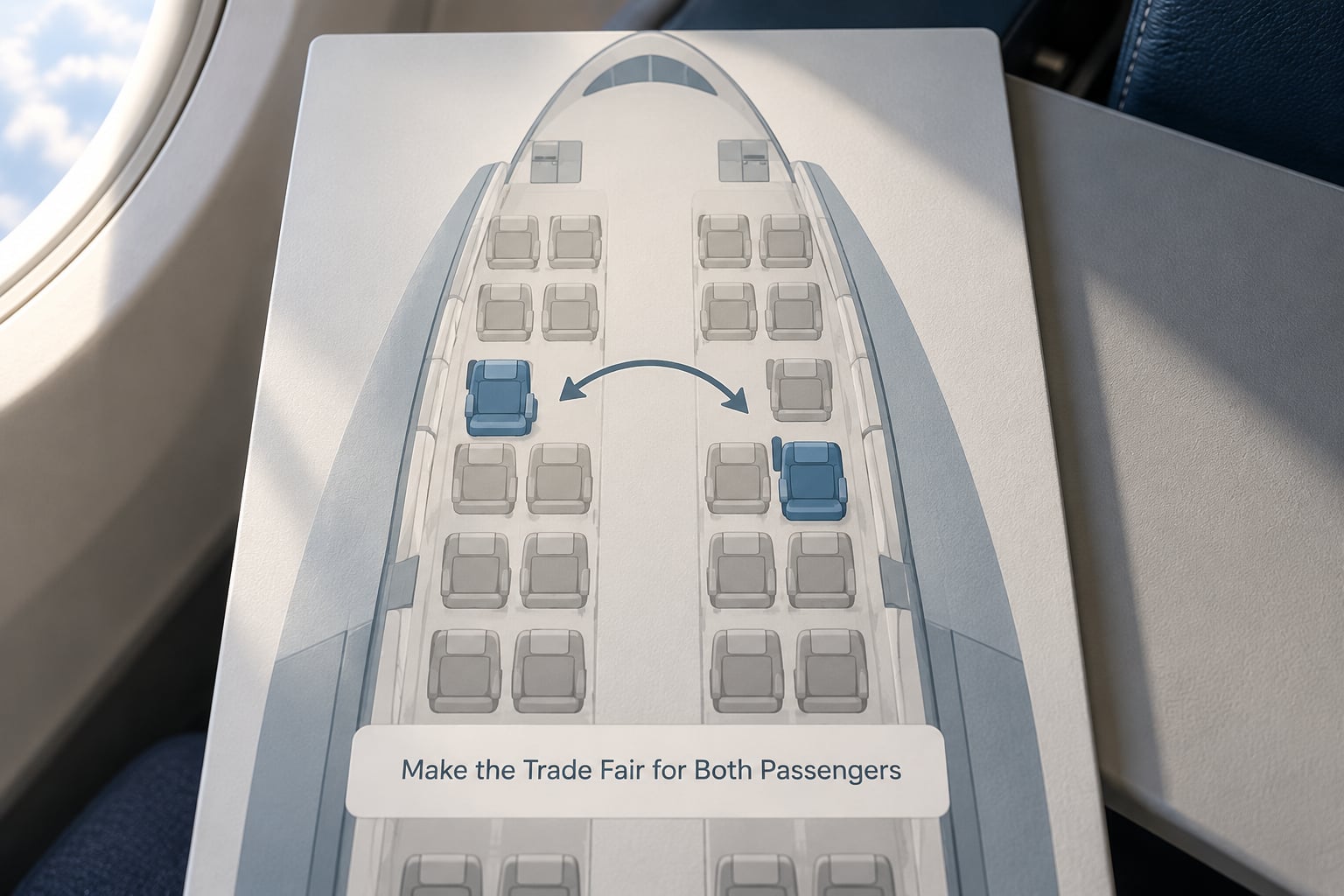
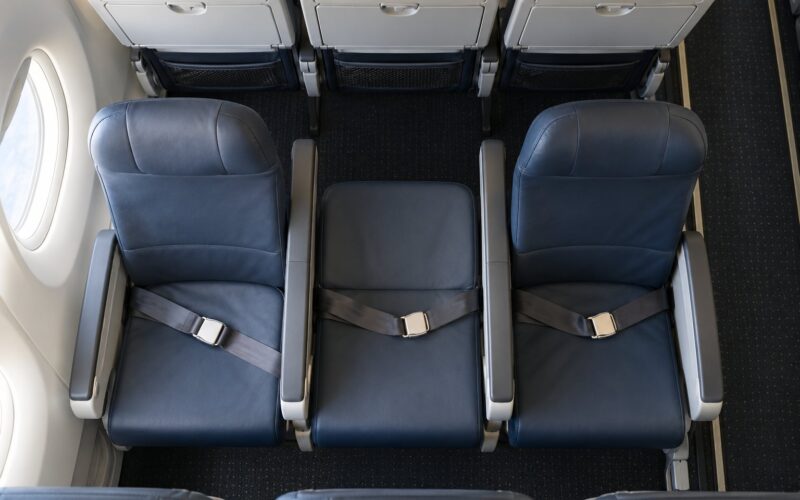
The rule most passengers quote is the reciprocal-benefit one: the seat you give up must be better or equal to the seat you want, or the ask reads as entitled. Swapping a window seat for an aisle seat is an easy yes because the other passenger is not losing anything. Asking a stranger to give up an aisle seat for your window seat is not the same request.
Two exceptions are widely treated as reasonable because the other passenger genuinely gains something: reuniting a family that got split across the cabin, and moving next to a travel companion who booked separately. Both are win-win. Anything where you gain and they lose is not, however good your reason.
Ask Before the Overhead Bins Are Settled
Timing matters more than wording. The cleanest moment is while the row is still loading — people are standing, reaching, deciding about their own seats, and a quick offer costs nothing. Once a passenger has settled in with a bag overhead and a drink open, interrupting them costs you something socially even when your request is fair.
Whatever you do, stay in your own seat until boarding is complete. Interrupting a boarding line slows everyone down, which is exactly the resentment that turns a polite request into an argument.
Accept the Answer and Return to Your Seat
Whatever the answer, smile, say thanks, and go back to your seat. A gracious no looks like this: “No problem at all, thanks anyway — have a good flight.” No follow-up question, no second attempt with better wording, no sigh that the whole cabin can hear.
If the situation genuinely affects your ability to fly safely or comfortably — a mobility issue, a panic attack in a middle seat, a child who will not settle — that is a different conversation. Tell a flight attendant directly instead of asking a stranger. Crew can re-seat you, move you to a bulkhead, or arrange assistance, and they will not think less of you for asking.
Common Mistakes
Nearly every seat-swap disaster traces back to one of these, and each has a clean fix:
- Demanding instead of asking. “I need that seat” gets you a refusal every time. “Would you like to switch?” can get you a yes.
- Vague requests. “Can we swap?” forces the other person to work out what you want. Name both seats.
- Reasons that do not add up. Claiming leg room needs while offering a tighter seat invites suspicion.
- Asking twice. A second ask after a no is pressure. Accept it and move on.
- Offering a downgrade. Trading a paid extra-legroom first row for a standard middle seat will be refused, and rightly so.
- Moving without confirmation. Never sit in the other seat until both the passenger and the cabin crew have agreed. If crew says no, that is the end of it.
- Targeting the wrong person. Skip children, older passengers, anyone with a disability, exit rows, and cross-cabin requests entirely.
- Summing people up afterward. Complaining about a refusal where others can hear it makes you the story of the row.
Three etiquette tips that cover most situations: wait for boarding to finish, keep the ask under fifteen seconds, and always frame the offer around what the other person gains.
Frequently Asked Questions
When is the best time to ask a passenger to switch seats on a plane?
Ask while your row is still loading, but never during an active boarding line. The ideal window is the stretch just after most passengers are seated and before anyone has settled in with bags overhead or a drink open. Stay in your assigned seat until boarding is complete, walk over, make a short offer, and return to your seat regardless of the answer.
Can a flight attendant force two passengers to swap seats?
No. Crew can re-seat a passenger, assign an unoccupied seat, handle accessibility needs and settle disputes, but they cannot require a passenger to give up an allocated seat. If both adults agree and an open seat is available, a flight attendant can usually approve it in seconds. If anyone says no, the answer is no, and crew will not override it.
What should I say if someone refuses to switch seats?
Say something short and kind, then leave. A simple no problem at all, thanks anyway, have a good flight ends the interaction cleanly and usually leaves the other person feeling fine about it. Do not ask a second time, do not explain why your reason is stronger, and do not comment about it loudly on the way back to your seat.
How do I ask for a seat change when we do not share a language?
Point at your seat, point at theirs, and ask with a gesture: would you like to switch? Then show the two boarding passes side by side so the trade is obvious. A friendly smile and a thumbs up finish it. If the passenger cannot understand the offer at all, ask a flight attendant to explain it rather than repeating the request louder, which only adds pressure.
Can I ask to switch seats because of a medical or accessibility need?
Tell a flight attendant rather than asking a stranger. Mobility needs, breathing issues, anxiety in middle seats and travelling with a service animal are all situations crew are equipped to handle, and they can move you or reseat you without involving anyone else. If you have a documented condition, mentioning it plainly to crew usually gets a faster, better outcome than a seat swap request would.
Conclusion
Start with the moment, not the words. Check the seat map before boarding, sit in your assigned seat, and wait until the boarding queue has cleared before you walk over to anyone.
Then make the offer, not a request. Name the seat you are giving up, name the seat you want, and frame it around what the other person gains. Fifteen seconds, one sentence, easy answer either way.
If you are still stuck, that is the signal to ask a flight attendant instead of a stranger — they can reseat you, and they do not mind. And whatever comes back, take it. That is the whole art of knowing how to ask someone to switch seats on a plane without it becoming a scene.