If you want one sentence: the Boeing 737 MAX family seats anywhere from about 135 to 230 passengers, and the number you board with is set by the airline, not by the aircraft name. A MAX 7 in service is usually in the low 130s, most MAX 8s run 162 to 189, and the MAX 10 is planned for up to 230. Figures below are refreshed for 2026.
That range frustrates people who just want to know whether their flight is a jumbo or a shuttle. The reason there is no single number is straightforward: Boeing certifies a maximum for each variant, and every operator fills the cabin with its own mix of classes, seat widths and galley doors.
So the generic answer is fine for orientation, and the useful answer comes from the seat map on your booking. Here is how the pieces fit together.
Table of Contents
- How many seats are on a 737 MAX? Quick answer
- Why 737 MAX seat totals differ by airline
- How many seats are on each 737 MAX variant?
- How many seats are on a 737 MAX in each cabin?
- How many seats are on a 737 MAX 8?
- How many seats are on a 737 MAX 9?
- How many seats are on a 737 MAX 10?
- How airline seating choices change the total
- What is the lowest and highest seat count?
- How to find the seat count for your specific flight
- Frequently Asked Questions
- How many seats does a 737 MAX usually have?
- Is the 737 MAX 8 smaller than the regular 737-800?
- How many rows are on a 737 MAX?
- Why does my 737 MAX seat map show more seats than expected?
- Does a higher seat count mean a less comfortable 737 MAX?
- How many flight attendants are on a Boeing 737 MAX 8?
How many seats are on a 737 MAX? Quick answer
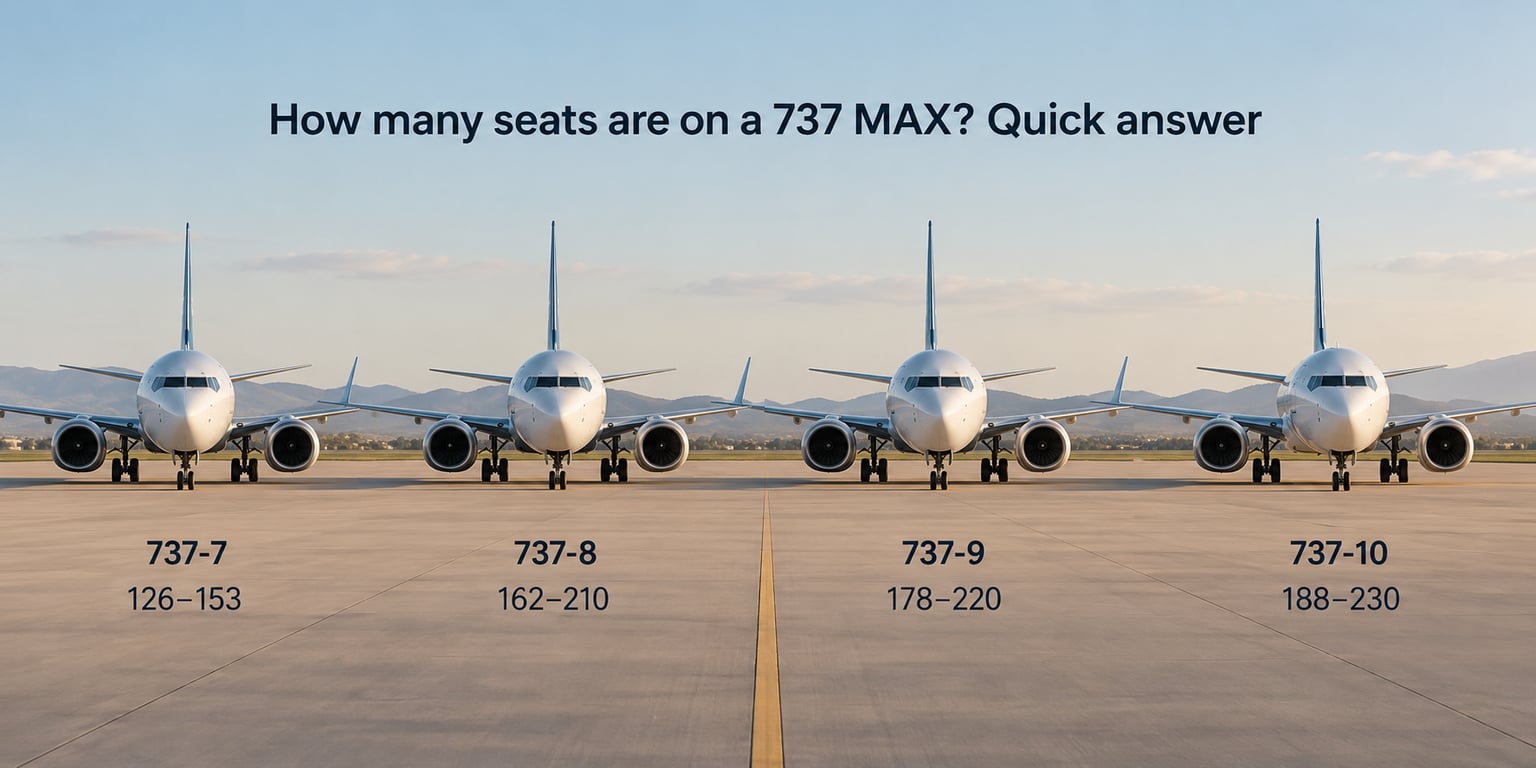
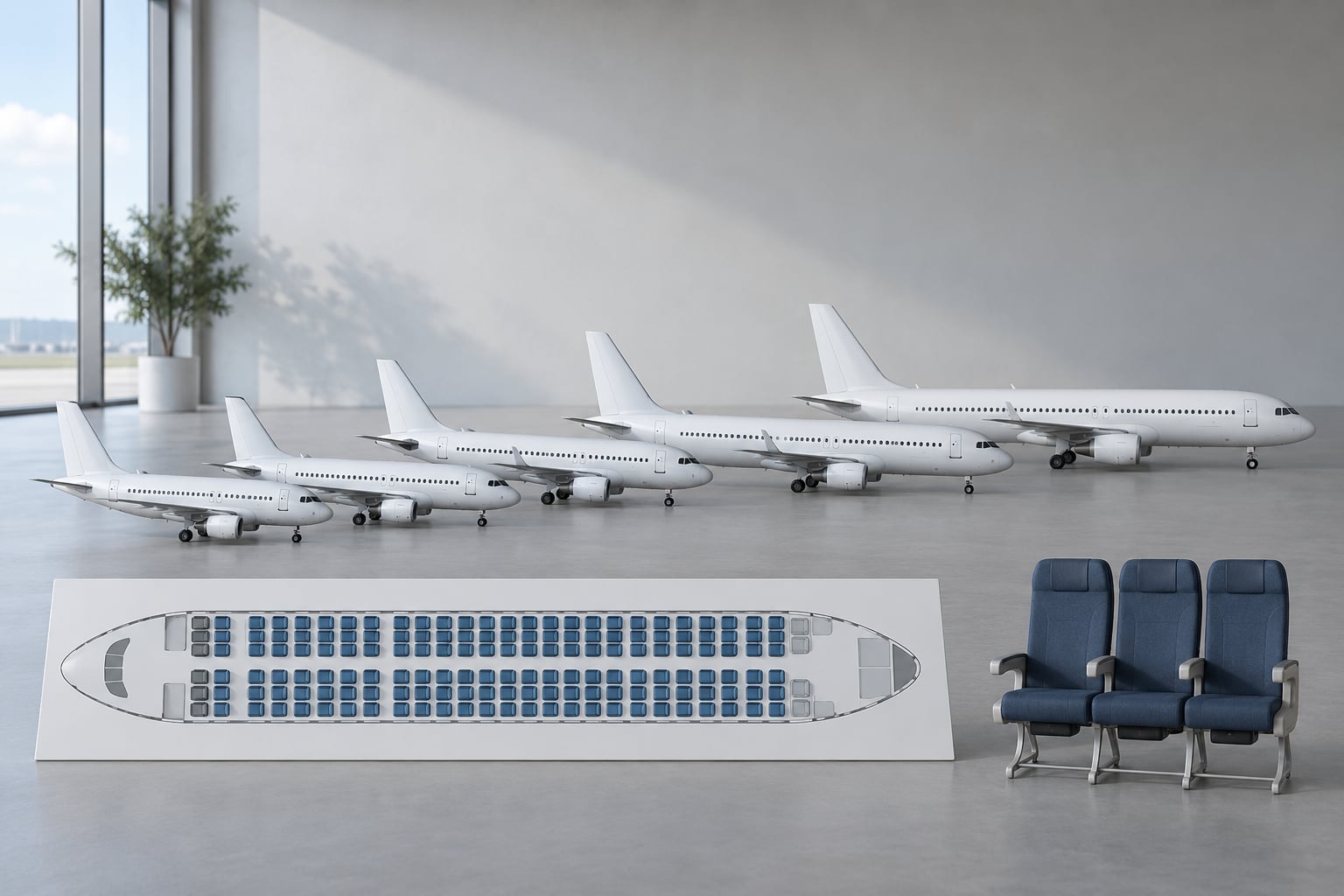
Here is the consolidated view across the family, with the typical two-class figure and the certified maximum for each variant. Two-class means business plus economy, which is the way airlines report the headline number.
| Variant | Typical two-class | Maximum seats | Length | Range |
|---|---|---|---|---|
| 737-7 MAX | About 130 to 140 | 172 | 110 ft 4 in | About 3,100 nm |
| 737-8 MAX | 162 to 178 | 210 | 129 ft 6 in | About 3,500 nm |
| 737-9 MAX | About 180 to 193 | 220 | 138 ft 1 in | About 3,500 nm |
| 737-10 MAX | About 189 to 200 | 230 | 143 ft 8 in | About 3,300 nm |
Read the two columns together. The typical column is what a passenger actually occupies, and the maximum column is a certification ceiling. Almost nobody flies the ceiling.
Why 737 MAX seat totals differ by airline
The aircraft model sets a limit, not a layout. Boeing certifies each MAX variant for a maximum number of passengers under a specific emergency-evacuation configuration, and that number assumes the cabin is packed to the allowed density with a certain number of exits. Change the exits or the seat spacing and the certified figure moves.
The airline then decides what fills that space. Aeromexico puts 16 recliner seats up front and 150 in economy on one MAX 8. LOT puts 186 on a MAX 8 of the same length. Southwest’s 737 MAX 8 seats 175. Nobody is wrong; they bought the same jet and laid it out differently.
Four things move the total around most often: how many business or premium economy rows get inserted, how many over-wing exit rows are needed at the chosen density, how many galleys and lavatories fit forward and aft, and how tight the economy seat pitch is. Every one of those trades rows for comfort or the other way around.
Aircraft swaps make this messier still. The seat map you see at booking can be the map of the specific airframe assigned to your flight number, and that assignment can change before you board. Flyers on aviation forums keep hitting the same thing: two MAX 8s on the same route, two different seat grids.
How many seats are on each 737 MAX variant?
How many seats are on a 737 MAX in each cabin?
Most MAX 8s and MAX 9s run two classes, with a small business cabin and the rest in economy. The typical MAX 8 split runs from around 12 to 30 business seats with 140 to 160 in economy. Wider business cabins on the MAX 9 push that to 24 to 36 up front.
Premium economy is rarer on this type than on widebodies. Where it exists, airlines usually carve out a block of roughly 12 to 24 rows-equivalent seats just behind the front galley, and that block is the main reason the economy total drops.
| Cabin | Typical seats on a MAX 8 | Typical seats on a MAX 9 |
|---|---|---|
| Business | 12 to 30 | 24 to 36 |
| Premium economy | Often none, sometimes 12 to 24 | Sometimes 12 to 36 |
| Economy | 140 to 160 | 150 to 175 |
| Typical total | 162 to 178 | 180 to 193 |
These are examples of common layouts, not guarantees. A handful of operators run MAX 8s all economy, and a few run them with a much larger premium cabin than the range suggests.
How many seats are on a 737 MAX 8?
The MAX 8 is the variant most people mean when they say 737 MAX, and it is by far the most common one in airline fleets today. Typical two-class capacity is 162 to 178 seats, and Boeing certifies it for up to 210. In practice you will see 166 and 175 more often than anything else.
There is also a high-density version, the 737-8-200, which adds the extra over-wing exit rows needed to certify 200 seats. That version usually shows up on high-density leisure routes rather than in a normal mainline seat map.
How many seats are on a 737 MAX 9?
The MAX 9 is the stretched middle member of the family, roughly 8.5 ft longer than the MAX 8, and that extra length translates to a handful more rows. Typical two-class capacity lands around 180 to 193 seats, with a ceiling of 220.
Because the extra length goes into cabin rather than fuel, the MAX 9 usually fits about two more economy rows than a MAX 8 with a similar business cabin. Airlines with roomier front cabins on the MAX 9 can end up with a total close to a tightly packed MAX 8.
How many seats are on a 737 MAX 10?
The MAX 10 is the longest member of the 737 family. It carries up to 230 passengers in a single-class layout and is typically planned around 189 to 200 seats in two classes, which is about ten more than a MAX 9 at similar density.
Treat those figures as planning numbers rather than settled airline configurations. Individual operators on the MAX 10 have not all published final cabin layouts, and the real count on a specific aircraft will be set when the airline delivers its first jets.
How airline seating choices change the total
Seat density is the biggest lever. A MAX 8 with 3 by 3 economy seating and standard pitch fits noticeably more rows than one configured for a business-heavy or premium economy cabin. That choice also drives how many exit rows the aircraft needs, and each extra exit row consumes a chunk of the seat count it was meant to unlock.
Then there are the parts of the cabin that hold nobody. Two forward and one aft galley plus the full lavatory complement occupy rows you would otherwise sell. Airlines that add a premium cabin cut into that space from the front, which usually removes more rows than the new premium seats replace.
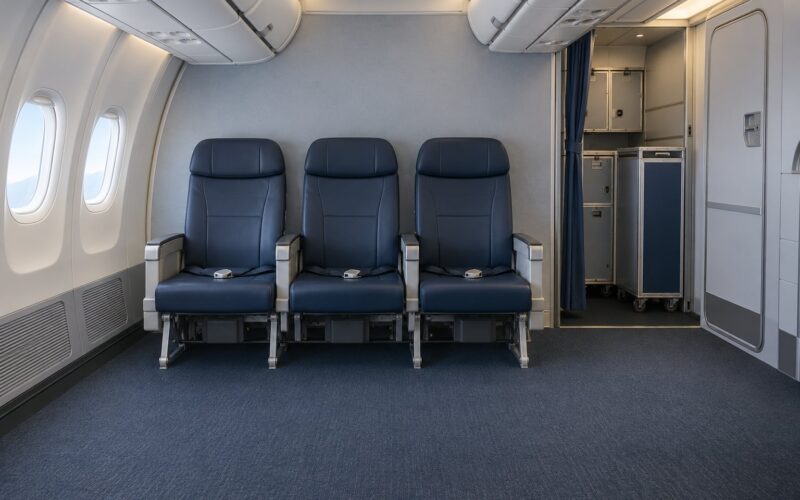
Seat width matters as much as the count on a narrowbody, because this cabin is only about 12 ft wide inside. Most MAX economy seats are 17 in wide with 30 to 32 in of pitch, and the slimline style used on some MAX seats takes a few people by surprise. Business-class seats are typically around 20 in wide with 36 to 38 in of pitch, and most are recliners rather than lie-flats.
That trade-off is worth naming explicitly, because it changes which seats are worth picking:
- Rows to favour: the first economy row behind a bulkhead when you want extra width but no legroom penalty, and the over-wing exit rows if you do not mind a limited recline.
- Rows to question: the last economy rows, which sit close to the aft galley and lavatory and pick up noise, cabinet noise and queue traffic on every service.
- Exit row detail: some layouts have a non-reclining exit row seat, often one of the window or aisle positions near the over-wing door, and airlines frequently do not flag it until you board. Checking the seat map notes before paying to select a seat is worth the minute it takes.
What is the lowest and highest seat count?
The practical low end for a MAX in airline service is a small two-class jet in the low 130s, which is what a MAX 7 looks like with a generous business cabin relative to a small economy section. On the 737-8 side the floor in regular service is closer to 160.
The high end is 230 on the MAX 10 in a single-class layout, and 210 on the MAX 8 once you use the 737-8-200 high-density version. Those are certifications, and airlines rarely fly them at the ceiling, because every seat past a comfortable density costs legroom and adds queueing at the galley and lavatory.
So the highest number is not the best number. A 178-seat MAX 8 with 32 in pitch and a 16-seat business cabin is a noticeably better flight than a 210-seat version of the same aircraft, even though the second one fills faster on a peak route. For context, the Airbus A321neo sits in a similar band, typically 180 to 200 in two classes with a maximum a little higher.
How to find the seat count for your specific flight
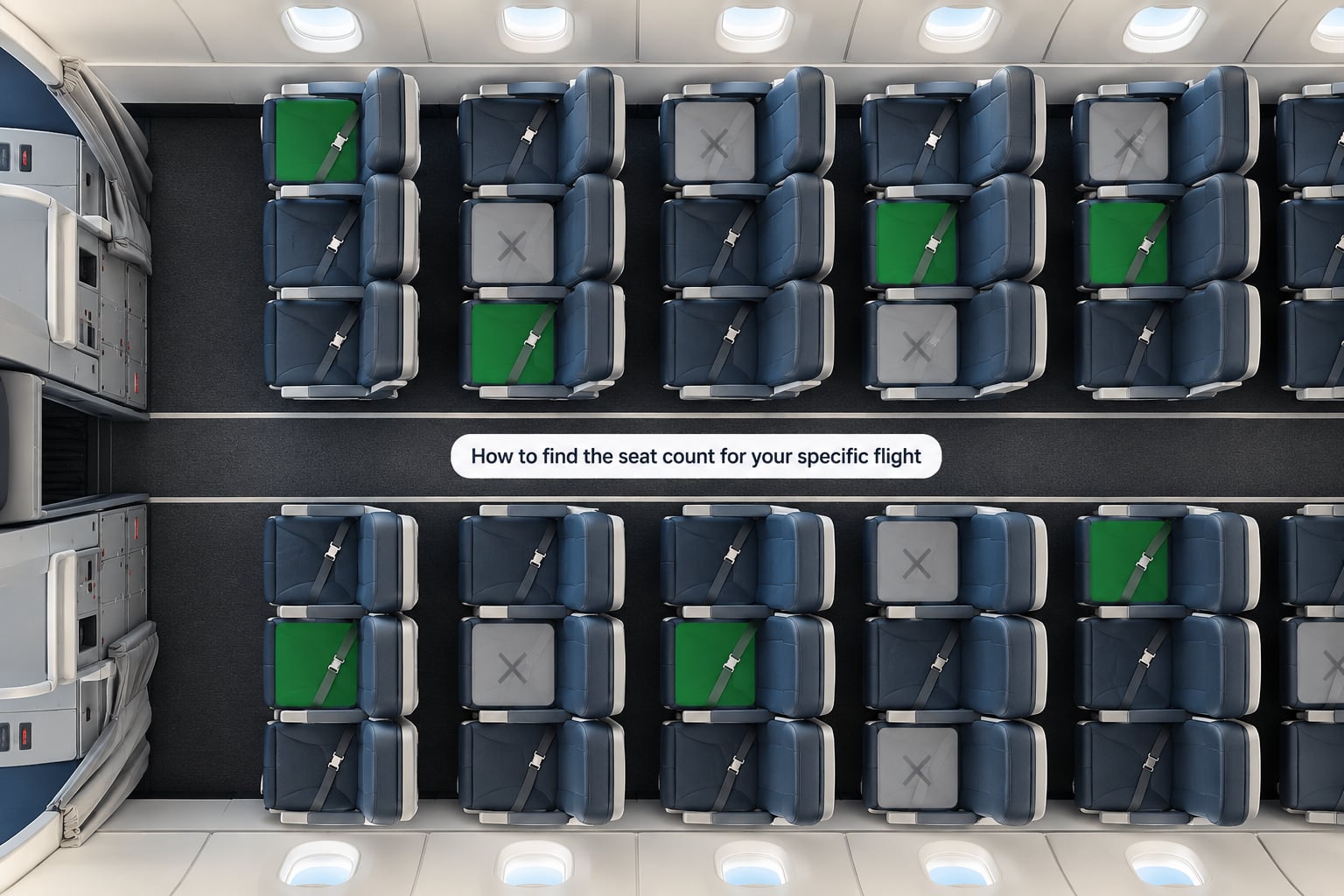
Skip the spec sheet and read your own booking. The order below takes a couple of minutes.
- Identify the variant first. Most airline apps and confirmation pages show the aircraft type on the itinerary or flight details screen. If it only says 737 MAX, check the route: an aircraft with the extra doors behind the wing is a MAX 9 or MAX 10, and a shorter one is a MAX 8.
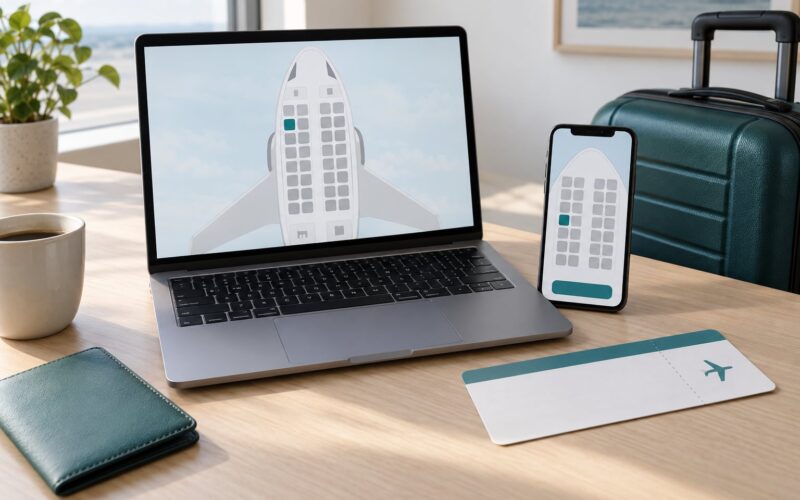
- Read the configuration label. Airline seat maps often carry a code such as 16J / 150Y, which is 16 business seats and 150 economy. Adding the numbers tells you the total without any guesswork.
- Count rows in the seat selector. Open the seat map and look at the last row number. Multiply by the seats abreast shown, then adjust for the row gaps around exits and the galley. Most rows are 3 by 3 in economy and 2 by 2 in business.
- Check the flight information page. Airline schedules pages and third-party flight trackers list the aircraft for each specific flight number and date, which is what tells you whether a swap happened after you paid for a seat.
- Re-check before you travel. Equipment changes show up on the same flight information screen a day or two before departure. If the row count no longer matches what you picked, move your selection early.
Frequently Asked Questions
How many seats does a 737 MAX usually have?
Most 737 MAX 8s in service carry 162 to 178 passengers in a two-class layout, with 166 and 175 the most common totals. A MAX 7 usually sits in the low 130s, and a MAX 9 runs about 180 to 193. Boeing certifies higher ceilings of 210, 220 and 230 for the MAX 8, 9 and 10, but airlines rarely fly at the limit.
Is the 737 MAX 8 smaller than the regular 737-800?
Not in any meaningful way. The MAX 8 is slightly longer than the 737-800 and carries a similar cabin, with typical two-class capacity in the same 160s and highs of around 178 to 189. The MAX versions differ mainly in engines and wing, not in cabin length, so seat maps and row counts look nearly identical.
How many rows are on a 737 MAX?
A two-class MAX 8 usually has around 32 to 37 rows, counting business rows at the front and economy rows behind them, plus gaps at the over-wing exits and galleys. A MAX 9 adds roughly two economy rows because of its stretched fuselage. The reliable way to count is the last row number on your own seat map.
Why does my 737 MAX seat map show more seats than expected?
Two reasons. The aircraft may be a longer variant than you assumed, since a MAX 9 and MAX 10 carry several more rows than a MAX 8 of the same family. Or the configuration code on the map, such as 16J / 150Y, describes a specific airframe, and an equipment swap before departure can put you on a different layout.
Does a higher seat count mean a less comfortable 737 MAX?
Usually yes. Seats past a comfortable density come out of pitch, width or space taken by extra exit rows and galleys. Two 737 MAX 8s with the same cabin length can differ by 20 or more seats, and the denser one is typically tighter in economy. Check the pitch and the cabin split, not just the total.
How many flight attendants are on a Boeing 737 MAX 8?
Most MAX 8s carry five or six cabin crew, with a captain and first officer in the flight deck. The higher number is used on the largest single-class layouts; smaller two-class versions usually fly with a reduced complement. Crew count can also change with the airline, so it is not fixed by the aircraft type.
Start with the seat selector on your own booking rather than a spec sheet. It gives you the aircraft, the cabin split and the last row number, which is everything you need to pick a seat that suits you.