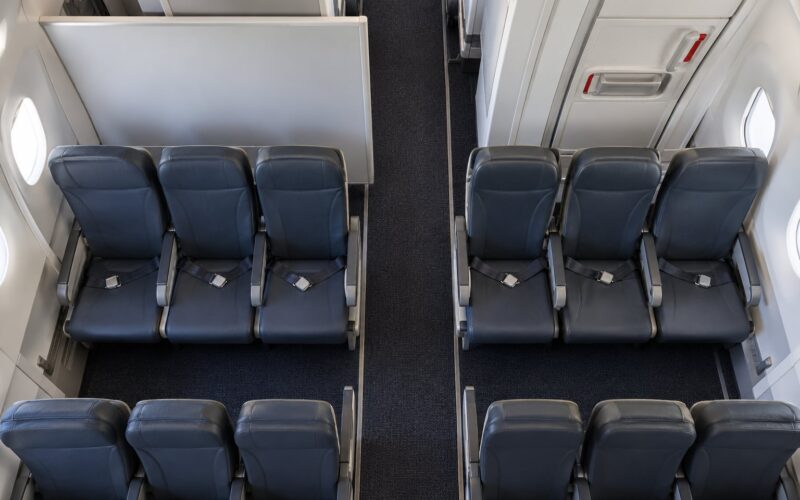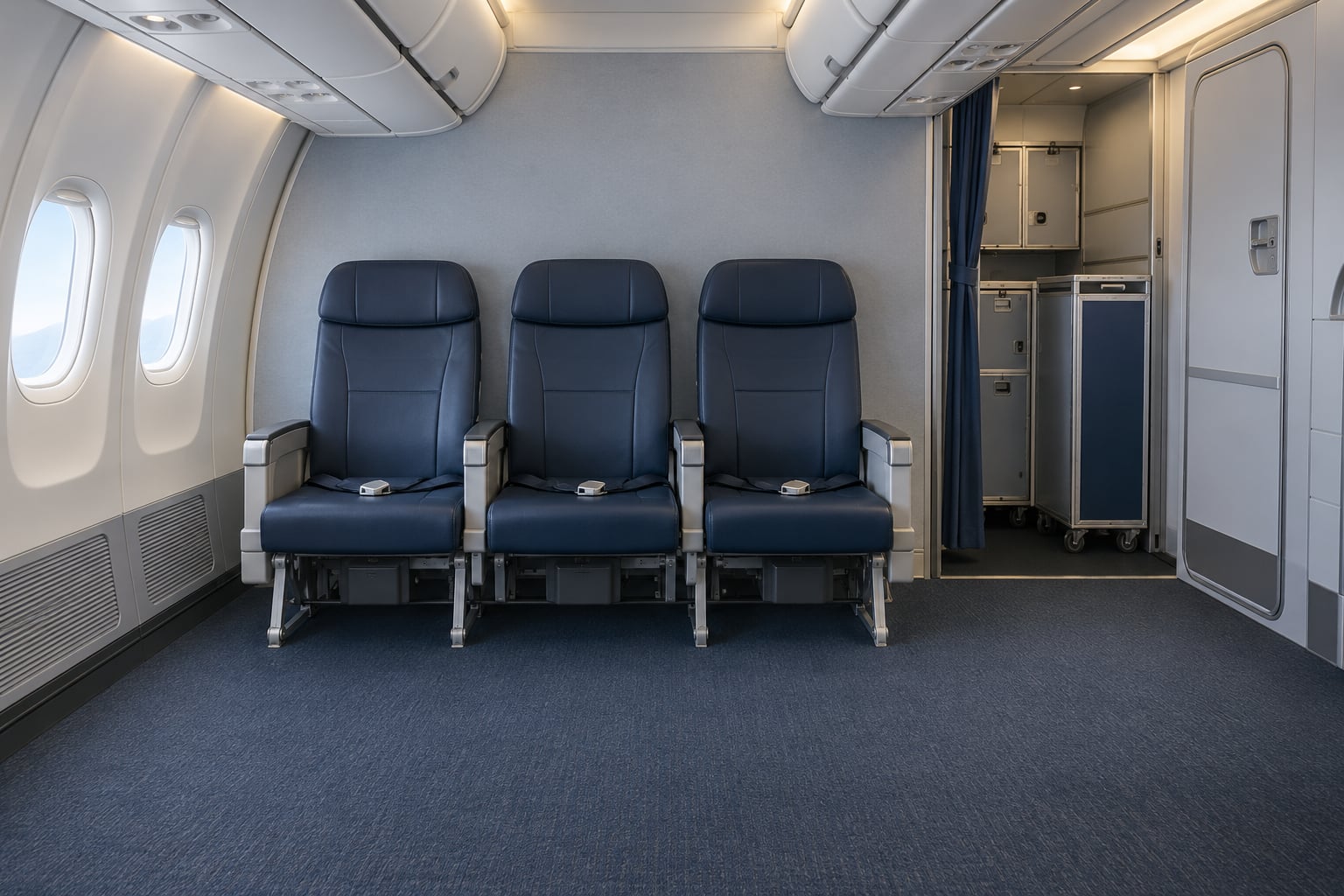
A bulkhead seat is a seat in the first row behind a fixed cabin partition, a wall, curtain or divider, with no passenger row in front of it. That open space gives you room to stretch that a normal row cannot, and it is the reason plenty of travelers go out of their way to sit there.
The catch is what you give up to get it: under-seat storage, a seatback that reclines, and sometimes the window or aisle position you wanted. Updated for 2026, here is how the trade actually works.
Table of Contents
- What Is a Bulkhead Seat?
- Why Do Bulkhead Seats Feel More Spacious?
- What Is a Bulkhead Seat Good For?
- Bulkhead Seats vs. Standard Seats</
- What Are the Drawbacks of a Bulkhead Seat?
- Is a Bulkhead Seat Comfortable?
- How to Find a Bulkhead Seat Before Booking
- Which Bulkhead Row Is Usually Best?
- Frequently Asked Questions
- Does a bulkhead seat always have extra legroom?
- Can I use a bulkhead seat for a travel bassinet?
- Are bulkhead rows always aisle or window seats?
- Does booking the first row guarantee a bulkhead seat?
- Why are some bulkhead seats not selected by the airline?
- Are bulkhead seats quieter than regular rows?
- The Best Bulkhead Seat Choice
What Is a Bulkhead Seat?
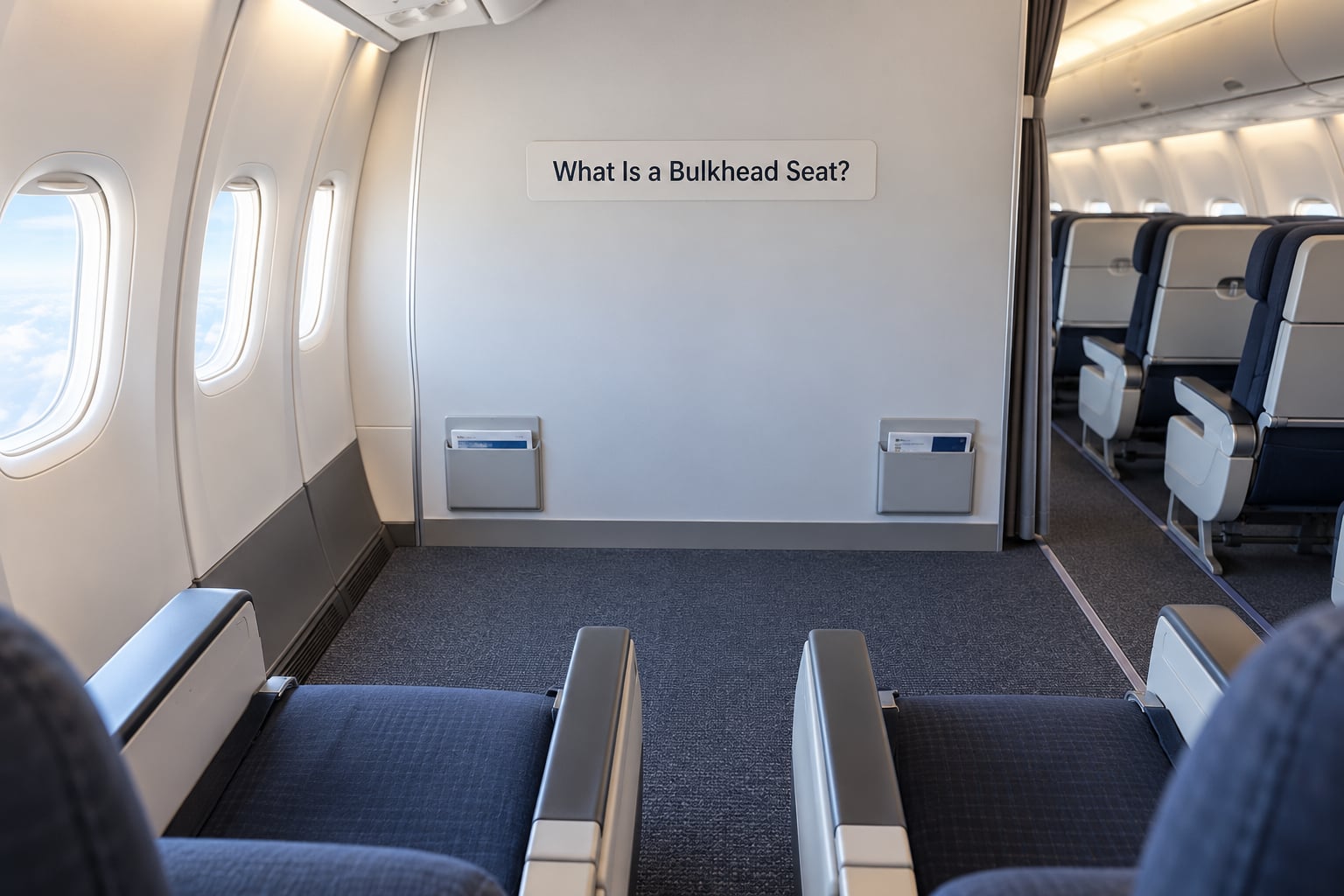
A bulkhead is the fixed partition itself. It separates cabin sections, divides classes, or hides a galley or lavatory behind a wall or curtain, and the row of seats immediately behind it is the bulkhead row. On some aircraft you get one bulkhead per cabin section, so a wide-body might have a business-class bulkhead and a separate economy bulkhead further back.
The defining feature is not a label on the seat map. It is that there is physically nothing in front of you that a passenger can kick, and nothing that can recline into your space.
A few terms get mixed up constantly, so it helps to keep them straight. A bulkhead is the wall. A bulkhead row is the first row behind that wall. An exit row is the over-wing row next to an emergency hatch, which is a completely different seat with its own rules. A bassinet mount is one of the fittings built into the bulkhead wall for infant bassinets, and you will find them in most cabins but not all.
Why Do Bulkhead Seats Feel More Spacious?
Because the space in front of you goes from zero to a usable floor area. In a standard row your knees are level with the seatback in front, and every attempt to stretch ends with your feet touching a seat pocket. At a bulkhead there is no seatback at all, so you can cross your legs, put your feet on the floor properly, or swing your knees without hitting anyone.
The second benefit is negative space: nobody reclines into you. A tight economy seat is mostly a question of how badly the person in front leans back, and that question simply disappears here.
The third is speed. The bulkhead row is often right next to the first door, which means you board earlier when overhead space is still plentiful, and you are usually among the first off the plane. Families with young children tend to land in this zone too, because it is where a bassinet fits.
How much extra room you actually get varies by aircraft. Some cabins were designed with a shallow gap in front of the wall, so the row is comfortable but not dramatic. Others have a deep space behind the partition, and the difference on a long-haul flight is obvious. Seat pitch figures rarely reflect this, because the open area is a floor gap rather than additional inches of row-to-row distance.
What Is a Bulkhead Seat Good For?
A bulkhead seat is good for travelers who need room to move in a confined space. Tall passengers get the clearest benefit because they gain a footwell instead of a wall of seatback. So do anyone with a stiff knee, a recent leg injury, or simply a habit of sitting cross-legged.
It also suits people traveling with bulky items, since the floor in front is available for a bag that will not fit in an overhead bin. Parents with an infant who needs a bassinet can request one of the fittings in the wall, and flying with a service animal often works better when the animal can lie on the floor rather than across a passenger’s lap or feet.
Anyone who wants to be off the plane fast should like it, because the first rows are closest to the forward door and often deplane before the middle of the cabin.
Bulkhead Seats vs. Standard Seats</
Here is the honest side-by-side. The left column lists what changes when you move from an ordinary row to the first row behind a partition.
| Factor | Bulkhead seat | Standard seat |
|---|---|---|
| Legroom | Open floor area in front, no seatback to stop your knees | Knee room limited by the seat in front |
| Foot space | Cannot extend legs forward past the wall, so no footrest stretch | Feet slide under the seat in front when it reclines |
| Bassinet use | Fitted with wall mounts in most cabins, but requested and often held for infants | Not available; babies travel in a car seat on the seat or in a purchased seat |
| Under-seat storage | None, so bags go to the overhead bin and stay out of reach | Full bag stowage under the seat in front |
| Noise exposure | Often next to a galley, lavatory or crew storage area | Varies by position in the cabin |
| Window or aisle | Either can be available, but the middle of a wide row can be the choice | Full choice across the whole cabin |
| Recline | Frequently fixed upright with no adjustment | Usual range of recline on most aircraft |
| Operational limits | May be blocked, held for families, or changed at the gate | Wider availability and more flexibility |
One more distinction matters more than any of these rows. A bulkhead row and an exit row are not the same thing, even though people treat them as synonyms. On many narrow-body aircraft the front row is both, which is why some bulkhead seats come with exit-row age and health restrictions and cannot be booked by families with infants.
On larger aircraft the middle seats of the front row are usually not exit seats, which makes them the ones fitted for bassinets. FlyerTalk discussion makes the same point from the other direction: not every hard wall qualifies, and in some cabins the first row counts as a bulkhead even without one. It depends entirely on the aircraft.
What Are the Drawbacks of a Bulkhead Seat?
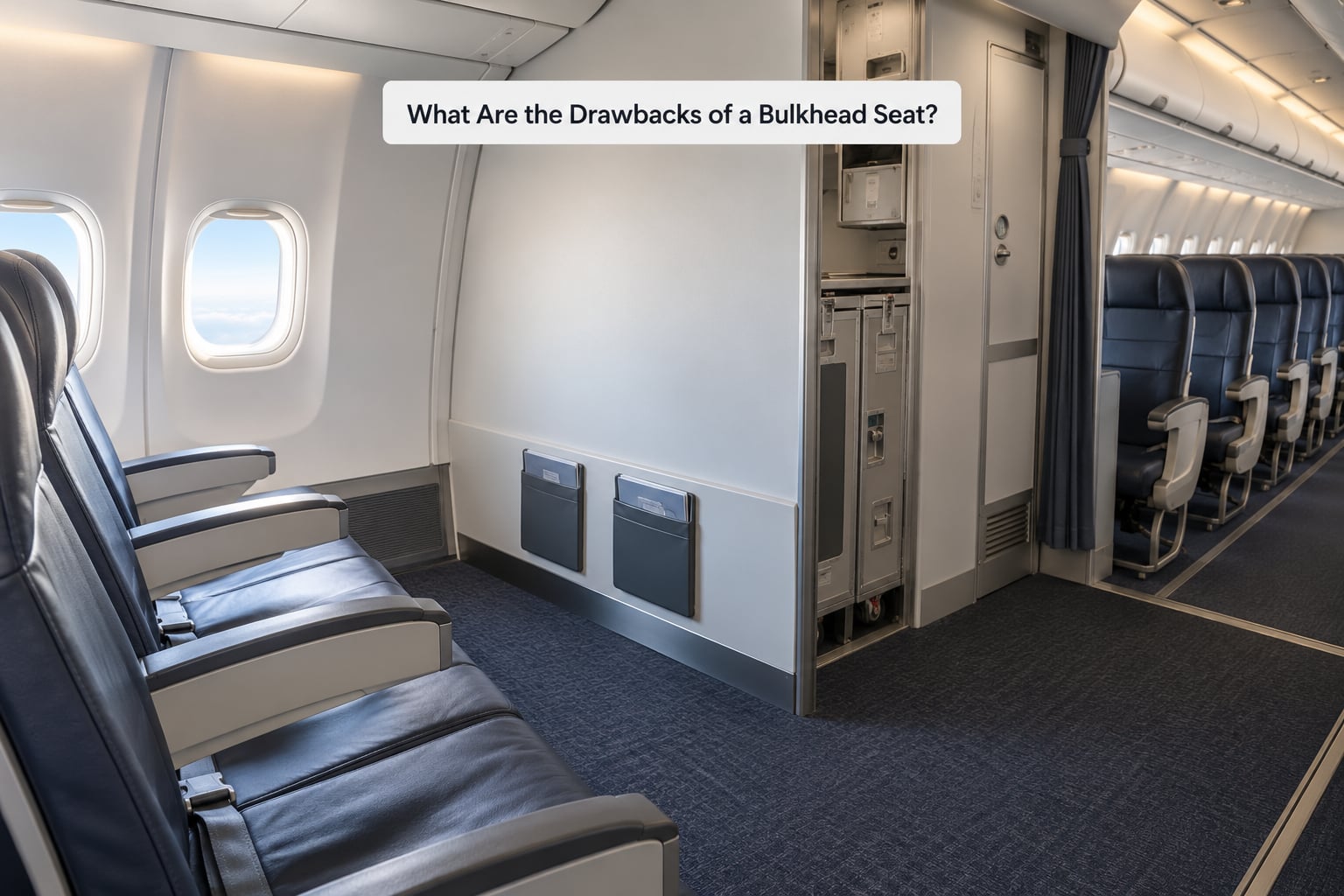
No under-seat storage is the first thing regular flyers miss. There is no seat in front, so there is no seat pocket to stuff a backpack into, and the nearest stowage is the overhead bin where your bag sits out of reach for the whole flight.
The seatback often does not recline. On many aircraft it is fixed upright, and on some it has partial movement. That is a deliberate design choice tied to evacuation requirements and bassinet fittings, not an accident, but it can feel like a downgrade on a red-eye when you had your heart set on lying flat.
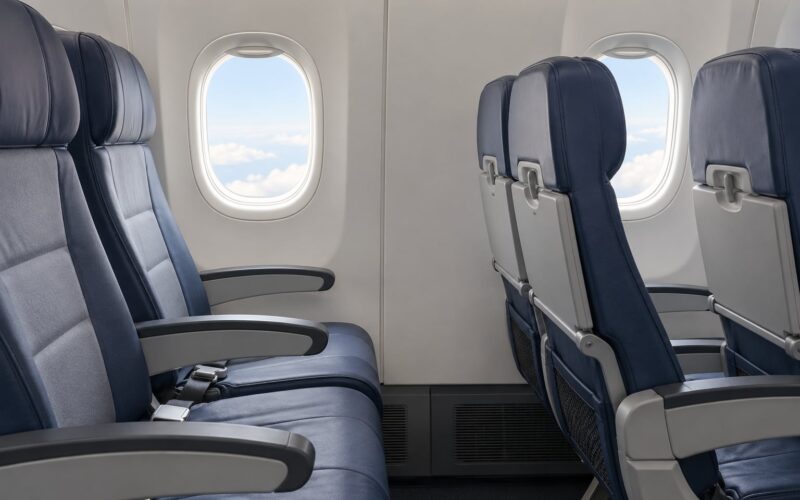
Tray table and screen built into the fixed armrest shave width off the seat. Passengers report that this combination makes the seat feel noticeably narrower than a standard one, and that the hard armrest takes some of the cushioned width away.
The wall also blocks forward leg extension. On a tall trip that can feel like the opposite of the advertised benefit, which is why people on r/tall sometimes skip these rows: you trade a footwell you can use in one direction for a wall you cannot lean past.
Noise and foot traffic depend on what sits behind that partition. A bulkhead next to a galley means carts, crew movement and lavatory queues in your line of sight all flight. A flyer on r/QantasFrequentFlyer described a bulkhead bassinet row as noticeably noisy for exactly that reason, and reviewers on other forums describe the same problem in rows beside a service area.
The armrest usually cannot be raised either, so a parent cannot lie across the row with a sleeping child the way they can in a row with a liftable armrest.
Lastly, availability is not guaranteed. Agents assign these seats to passengers who need movable armrests or a service animal, and travelers on r/unitedairlines have posted photos of bulkhead rows sitting empty while the rest of the plane boards. Airlines also block them for families with infants, so the row you wanted can be gone before you board.
A parent should also weigh the armrest. Where a normal row has a liftable armrest, a parent can lie across two seats with a child; at a bulkhead the fixed armrest blocks that, so the open floor becomes floor space for a play mat rather than a place to sleep yourself.
And if you are flying with a toddler rather than a baby in arms, note what travelers on r/Flights mention: a baby table mounted on the bulkhead wall consumes the very space you chose the row for. Ask the airline whether a baby table is fitted on your aircraft before you count on that legroom.
Is a Bulkhead Seat Comfortable?
It is comfortable for some people and genuinely uncomfortable for others, and the deciding factor is not the seat but the aircraft and whatever is directly behind the partition.
The space helps when you are tall, stiff, or want to move your legs. What can offset that benefit is a fixed upright seat, an armrest-mounted tray and screen narrowing the cushion, and galley noise in a busy cabin. A bulkhead row at the front of a full economy cabin can be the loudest place on the aircraft.
Before you select one, check four things on the seat map: whether the partition is next to a galley or lavatory, whether the row is also an exit row, whether under-seat storage exists anywhere in that cabin, and whether the layout gives you a window or aisle at all. If the map shows the bulkhead row only in the middle, you are not choosing a position, you are choosing a spot.
Premium cabins have a version of the same trade. A front-row business or first seat behind a curtain gives you a wide berth and usually a footrest or ottoman, since the seat width matters more than the floor space in that layout. FlyerTalk users are split on whether the curtain is a benefit, because the bulkhead in a premium cabin can be a soft divider you cannot lean against, while a solid wall in the same position gives you privacy and a real surface.
One thing worth knowing if you plan to sleep: the open floor does not help you lie back. If your priority is rest rather than legroom, an exit row or a standard aisle seat with a fixed upright seatback can be the better pick, and paying for a bulkhead will not solve a recline problem.
How to Find a Bulkhead Seat Before Booking
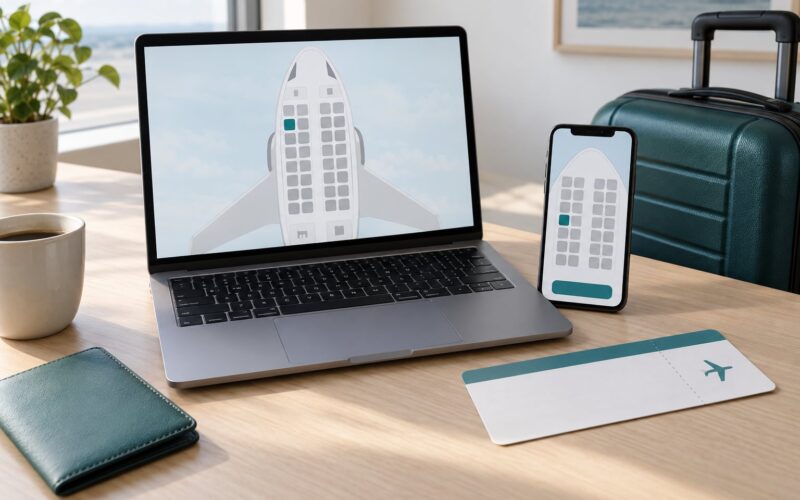
Reading a seat map is the whole game, and it takes about a minute once you know the symbols.
- Open the seat map for your flight and find the front of each cabin section rather than the front of the plane. On a wide-body there is usually a second bulkhead behind the premium cabins.
- Look at the icons immediately in front of that first row. A galley symbol, a lavatory symbol, or a drawn gap where a seat should be all mark the start of a section.
- Check whether a door or exit hatch icon is attached to the same row. If it is, that row is a bulkhead and an exit row at once, and exit-row age and health rules apply.
- Check whether under-seat storage is drawn on the map. If it is not, plan on the overhead bin.
- Count the seats across the row. Three seats on a wide-body means the middle bulkhead position is your only option.
- Confirm the aircraft code on your booking, then check that specific model’s front row rather than the airline’s general policy.
Once you know the row, use the airline directly. Seat-selection tools and the reservations line can tell you whether a given bulkhead row reclines and whether it has any under-seat storage, which is the one question maps never answer. Ask for the row by name rather than by number, since row numbers differ between aircraft in the same fleet.
On whether it is worth paying extra: worth it when you specifically need the floor space and the seat map shows a bulkhead that is not also an exit row. Not worth it if you are buying seat selection mainly to avoid a middle seat, because a window or aisle seat elsewhere may suit you better. Requesting in advance or at check-in is free on most airlines, so paying is rarely necessary just to get the row.
Which Bulkhead Row Is Usually Best?
There is no universally best row, and anyone who tells you there is has flown on two aircraft. What changes between rows is what sits behind the wall and how close you are to crew working areas.
A bulkhead in front of a solid partition in an empty premium cabin is the quiet version. A bulkhead beside a galley is the loud version. Rows near a door get more movement but also more chance of a service cart parking beside you.
The practical move is to check reviews for your aircraft type and cabin rather than for the airline. FlyerTalk threads and Reddit posts that name the aircraft, the seat number and the cabin are the ones worth reading, since verified first-hand reports are far more useful than generic summaries.
Policies also change. Recline rules in particular have shifted on some regional fleets in recent years, which is worth remembering before you treat an old thread as current.
Frequently Asked Questions
Does a bulkhead seat always have extra legroom?
Usually, but not always by a dramatic margin. Because there is no seat in front, you get open floor space instead of a seatback, and that helps tall passengers most. On aircraft designed with a shallow gap behind the partition the difference from a standard row is modest, so check the specific aircraft layout before booking.
Can I use a bulkhead seat for a travel bassinet?
Most bulkhead rows are fitted with bassinet mounting points in the wall, which is why families are placed there. You normally request the bassinet when you book or by calling the airline, and requests are free. Availability is limited per flight, so ask early and confirm the request at check-in.
Are bulkhead rows always aisle or window seats?
No. On a two-seat-per-side aircraft the front row gives you the usual window and aisle pair. On a three-seat-per-side wide-body the middle bulkhead seats can be the only options, meaning you give up your choice of position entirely. Check the seat map to see which positions exist in the row.
Does booking the first row guarantee a bulkhead seat?
Not always. On some aircraft the first row is also the exit row, which brings age and health restrictions and blocks families with infants. On other aircraft the first row sits behind a partition with no exit hatch. Check whether the row you are booking is marked as an exit row as well as the front of a section.
Why are some bulkhead seats not selected by the airline?
Airlines hold these rows for passengers with specific needs, including travelers with infants, people who need movable armrests, and those flying with a service animal. Travel forums have also shown agents assigning front rows on request. You can ask the airline directly, but a reserved row may stay reserved.
Are bulkhead seats quieter than regular rows?
Rarely, and it depends entirely on what sits behind the partition. A bulkhead beside a galley or lavatory means carts, crew movement and queues close to your ear, which travelers describe as noticeably noisy. A bulkhead in front of a solid wall in a quieter cabin can be calm. Check the seat map for nearby service icons.
The Best Bulkhead Seat Choice
Book a bulkhead seat when stretching room, open floor space and getting off the plane fast matter most to you, and when you can pack light enough to live without under-seat storage.
Skip it when quiet, under-seat carry-on storage, a real recline, or a guaranteed window or aisle position is what you are buying with the ticket. And confirm the row on the seat map for your aircraft, because that is the only place these answers actually live.