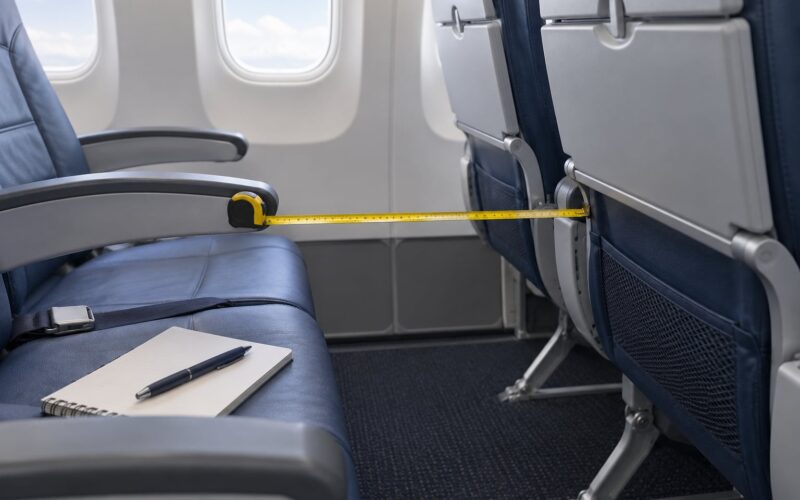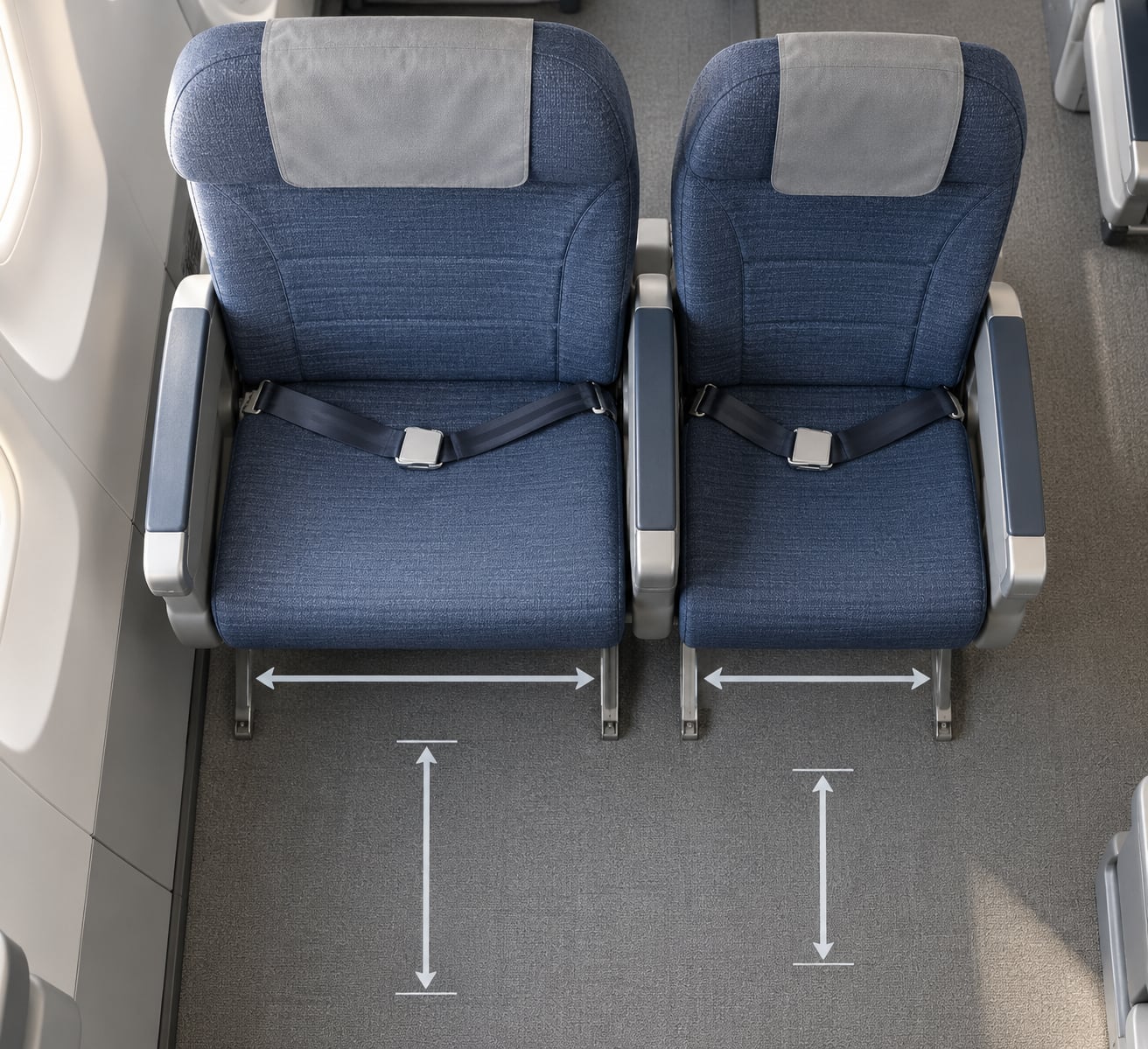
Short version: width wins for most people. Seat width is the side-to-side space you get between the armrests, and it sets your shoulder room. Seat pitch is the front-to-back gap to the row ahead, and it sets your legroom. Pitch decides whether your knees are free. Width decides whether you can sit still for three hours without your shoulders fighting the person next to you.
I’ve read enough post-flight complaints and seat-measurement spreadsheets to be wary of anyone who tells you one number settles it. Neither does. But if you only have room in your head for one metric when you book, make it width. Below is the reasoning, the numbers, and how to check them before you pay for anything.
Table of Contents
- Why Seat Width Matters More Than Pitch for Airplane Comfort
- What Is the Difference Between Seat Width and Seat Pitch?
- Why a 30 Inch Pitch Can Beat a 31 Inch Pitch
- Why Does Seat Width Affect Shoulder Comfort?
- Why Does Pitch Still Matter for Airplane Comfort?
- How Cabin Layout Changes the Feeling of a Seat
- Which Seat Measurements Should You Check Before Booking?
- How to Choose a More Comfortable Seat for Your Body and Trip
- Frequently Asked Questions
- What does pitch mean on an airline seat?
- What is the typical width of an economy airplane seat?
- Does seat width matter more than legroom?
- Is a 33 inch seat pitch good?
- Can a 350 lb person fit in an airline seat?
- Which seat is best in a plane for comfort?
- Conclusion: What to Check First
Why Seat Width Matters More Than Pitch for Airplane Comfort
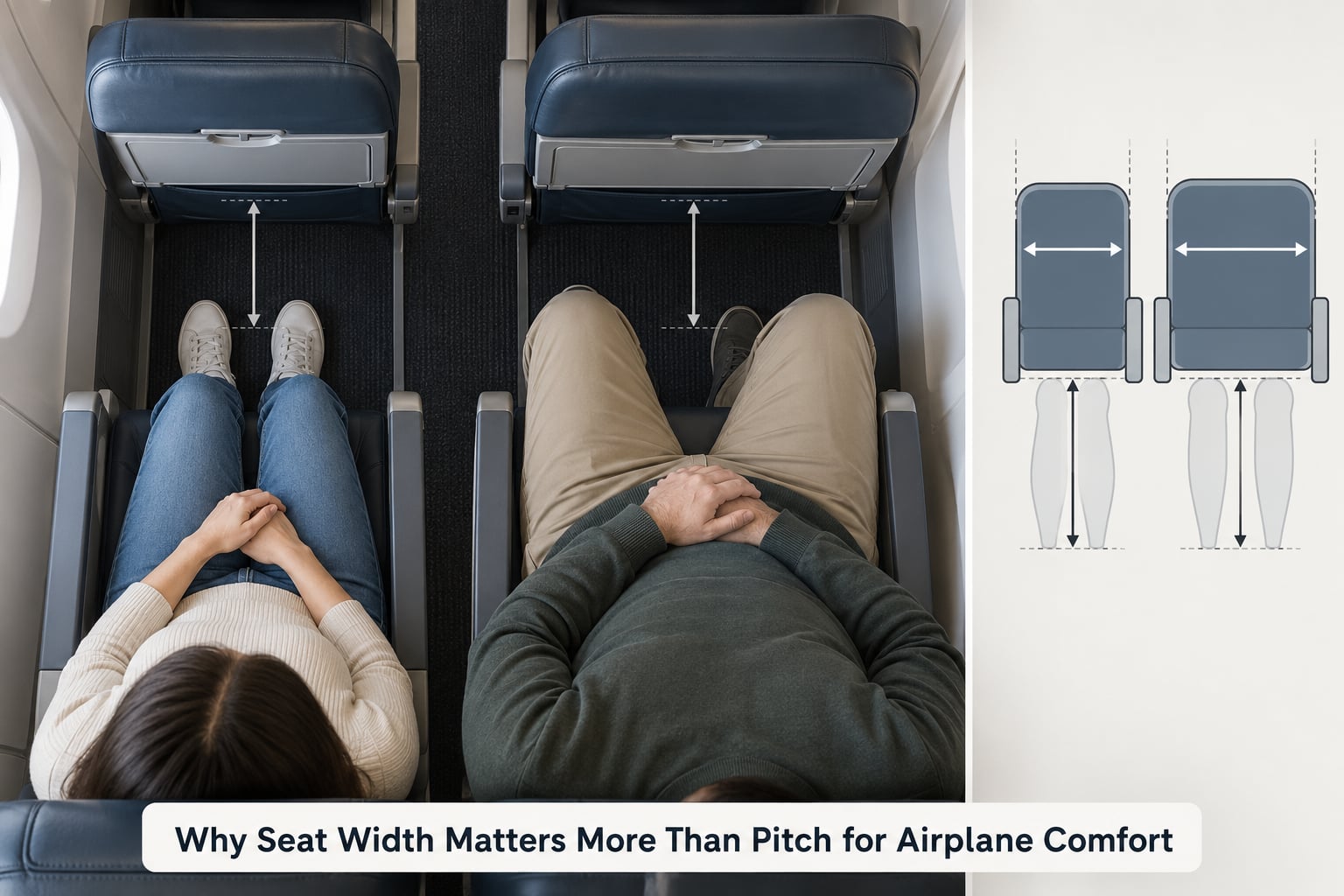
Two passengers of identical height can sit in economy on the same day, on the same airline, and one of them flies comfortably while the other spends the flight shifting and holding their breath to avoid touching the neighbour. The difference is almost never pitch. It’s width, armrests and layout, plus the fact that a seat with 31 inches of pitch on one aircraft can be a foot wider than a 31 inch seat on another.
Width is also the harder number to check. Airlines publish pitch constantly because it fits in a headline. Usable economy width is rarely printed anywhere, so most people default to the number they can find and assume legroom is what comfort means. That’s the gap this article closes.
| Measurement | What it is | Typical economy range | What it decides | The catch |
|---|---|---|---|---|
| Seat width | Side-to-side cushion space between the armrests | 16 to 19 inches (about 41 to 48 cm) | Shoulder room, elbow room, whether you can sleep on your side | Rarely published by airlines for economy, and measured inconsistently |
| Seat pitch | Front-to-back distance from a fixed point on one seat to the same point on the seat ahead | 28 to 34 inches (about 71 to 86 cm) | Legroom, knee angle, how far you can stretch | Not comparable across different seat-back thicknesses |
| Recline | How far the seat back tilts | Some carriers limit or fix it entirely | Whether you can lie back without leaning on the row ahead | A non-reclining row is often a denser row |
| Armrests | Shared, hinged, and not part of the quoted cushion width | Typically 1 to 2 inches of the width, shared between two people | How much width you actually keep for your own shoulders | A raised neighbour armrest cuts into your side |
| Seat position | Window, middle or aisle | Applies in every cabin | How many armrests you control | The middle seat of a 3-3 is the narrowest-feeling place on the plane |
The comparison above is the whole argument in one table. Pitch is front-to-back and it is measured consistently enough to advertise. Width is side-to-side, it is measured two different ways depending on the airline, and it decides the thing passengers actually complain about: being unable to sit still.
There’s also evidence behind the swap. Shabila Anjani’s dissertation research, covered by Runway Girl Network in 2021, found that a seat 18 inches wide with 30 inches of pitch produced roughly the same comfort increase as a seat 17 inches wide with 34 inches of pitch. In plain terms, one inch of width did the job of four inches of legroom. That’s the finding no competitor page uses and the reason width deserves priority.
What Is the Difference Between Seat Width and Seat Pitch?
Seat pitch is a front-to-back measurement. You pick one point on a seat, usually the front of the cushion or a point on the seat back, and measure to the same point on the seat in front. That distance is the pitch, and it is what most people mean when they say legroom. One inch equals 2.54 centimetres, so a 31 inch pitch is about 79 cm.
Seat width is a side-to-side measurement, and this is where it gets fuzzy. Some airlines quote cushion width, measured across the padded part of the seat only. Others quote the distance from armrest to armrest, which sounds more generous and is closer to what you feel. Those two numbers can differ enough that two carriers both advertising a 17 inch seat are selling genuinely different things.
Why a 30 Inch Pitch Can Beat a 31 Inch Pitch
Older seat backs are thick. A legacy seat might eat 5 or more inches of the gap in front of your knees before your legs get anywhere. Slimline seats use a thinner frame and a thinner cushion, so more of the quoted pitch arrives at your knees. That’s why a 30 inch pitch on a slimline seat can give more real legroom than a 31 inch pitch on an older one.
This is the single most important caveat in any seat width vs seat pitch comparison. It means you cannot take a pitch number from one airline and a pitch number from another and treat them as the same unit, which is exactly the mistake that makes people fly an aircraft that suits them without knowing it.
| What you are comparing | Typical measurements | Usable width | Usable legroom |
|---|---|---|---|
| Standard economy on a narrowbody, legacy seat | 17 in wide, 31 in pitch | Narrow | Reduced by a thick seat back |
| Standard economy on a narrowbody, slimline seat | 17 in wide, 30 in pitch | Narrow | About the same or better than above |
| Wider economy seat on a widebody | 18 to 19 in wide, 31 in pitch | Materially roomier | Similar pitch, calmer shoulders |
| Premium economy, narrowbody | About 4 in wider, up to 38 in pitch | Roomier, often with wider armrests | Noticeably more |
| Business class | 21 to 34 in wide, up to about 87 in pitch | Stand-up and cross-your-legs room | Well clear of the seat ahead |
| First class | 18 to 35 in wide, 34 to 94 in pitch | Wide enough to turn sideways | Often near-horizontal |
Read that table as ranges rather than promises. Even within one cabin class, a 34 inch pitch business seat and a 32 inch pitch business seat can be on the very same aircraft, sold side by side.
Why Does Seat Width Affect Shoulder Comfort?
Shoulders do not move much during a flight, but everything else does. You turn to look out the window, you cross your legs, you reach for the tray table, you shift to get comfortable. Every one of those movements pushes against the space beside you. If there is none, you spend the flight locked in one position and calling it discomfort, even when the pitch is generous.
Armrests take the first bite. Seat width figures usually describe the cushion, and the armrests sit on top of that cushion space. Once two people share a hinged centre armrest, each of them can end up with roughly an inch less than the advertised width. Raise the neighbour’s armrest and it gets worse. That is why a 3-3 middle seat feels narrower than its measurement.
Here’s the part almost nobody explains: pitch and width are linked through your legs. When pitch shrinks, taller passengers splay their legs outward to stop their knees hitting the seat in front, and those knees and thighs start taking up the width of the seat. That’s why decreasing seat pitch makes tall passengers use more width, as one r/aviation commenter put it. Short pitch quietly steals side-to-side space from exactly the passengers who already feel tight.
Rough body-fit math, with the caveat that these are rules of thumb rather than measurements. A 17 inch cushion seat gives many adults somewhere around 15 to 16 inches of usable space between armrests once armrest thickness and hinge play are taken out. An 18 inch seat moves that toward 16 to 17. Broad-shouldered adults report the difference clearly in real reports, and one r/unitedairlines commenter put it plainly: he pays attention to seat width, not legroom.
If you are around 6 foot 2 inches or 200 pounds, that extra inch is not a nicety. It is the difference between shoulders that rest inside the seat and shoulders that spend the whole flight outside it.
Why Does Pitch Still Matter for Airplane Comfort?
Pitch is not a useless number, and saying width wins is not the same as saying pitch is fake. Legroom controls your knees, your ability to stretch your legs during a long flight, and how far you can recline before you start invading the row in front.
Pitch matters most in three situations. On long flights, where you need to move your legs periodically and a cramped pitch makes that genuinely uncomfortable. For taller passengers, where even average pitch leaves the knees pressed against the seat ahead. And in cabins where the seat back reclines into your space, since recline only works if the pitch gives it somewhere to go.
A 33 inch pitch is a good pitch. It sits above most US carrier standard economy and below what premium economy advertises. On a short hop you may never consciously notice it. On an overnight transcontinental run, you will.
Extra-legroom rows exist because airlines keep standard economy tight on purpose, then charge for a few inches more pitch. If you are buying one anyway, check whether the extra-legroom row also widens the seat. Often it only adds pitch.
How Cabin Layout Changes the Feeling of a Seat
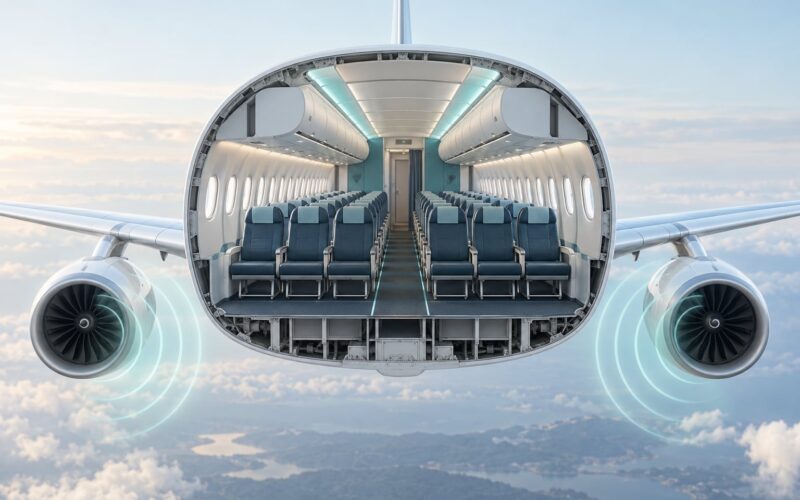
The aircraft holds a fixed tube of metal. What changes between airlines is how many seats get packed across it, and that number decides your width whether anyone measured the cushion or not.
| Layout | Where you see it | Effect on your width | Watch out for |
|---|---|---|---|
| 3-3 | Narrowbody economy, most common | Two shared armrests, three seats across | The middle seat has a neighbour on both sides |
| 3-4-3 | Widebody economy | More people across the same cabin, narrower seats | The four-seat middle block is where width complaints come from |
| 2-2 | Smaller regional jets | Only one neighbour and one shared armrest | Very few seats on board, so choices vanish fast |
| 2-3 | Smaller regional jets | Middle seat again, but a narrower tube | Width is the tightest of any layout |
| 2-4 | Bombardier regional jets | A four-abreast main cabin | Feels narrower still |
| 2-3-2 or 3-2-3 | Premium and business on widebodies | Fewer abreast, wider seats and real armrests | The only place where a lie-flat seat actually fits |
| 9 abreast | Some widebody economy | One more seat across than a ten-abreast layout | Regulars describe it as a squeezy way to fly long-haul |
| 10 abreast | Denser widebody economy | Narrowest economy on any widebody | Also the layout most often paired with limited recline |
A ten-abreast economy seat and a nine-abreast economy seat on similar aircraft can differ by a full inch of width. Same airline, same fare class, different flying experience, entirely because of how many seats were installed across the fuselage.
Which Seat Measurements Should You Check Before Booking?
Before you pay for a seat, work through these five checks. They take about five minutes and they replace most of the guesswork.
- Find the actual aircraft type on your itinerary, not the route name. The same airline sells the same route on a narrowbody one day and a widebody the next.
- Check the seat map for how many seats are across the cabin in your cabin class. Ten abreast economy and three-three economy are not the same seat.
- Look up the seat width for that specific aircraft on a seat map database such as SeatGuru. Read any measurement note carefully, because cushion width and armrest-to-armrest width are not interchangeable.
- Check whether the pitch is slimline or legacy, if the airline publishes it. A slimline seat at a lower pitch can beat a legacy seat at a higher pitch.
- Re-check before you fly, because equipment swaps happen. A widebody premium economy seat is wonderful right up until the aircraft is swapped for a 3-3 narrowbody.
One more thing worth knowing: in the United States there is no minimum standard for either pitch or width. The FAA has been asked to set one and declined, so nothing stops an airline reducing either measurement. That is the reason the numbers are rarely published. It also means the only figure that matters is the one for your specific aircraft, on your specific flight.
Do treat cross-aircraft comparisons from any source, including seat map databases, as a starting point rather than a fact. The measurement note usually tells you how reliable that particular number is.
How to Choose a More Comfortable Seat for Your Body and Trip
For tall passengers, pitch is the first thing to protect and width is the second. Look for rows at 34 inches of pitch or more, and check whether the row ahead reclines, because a fixed seat back in front of you adds legroom you cannot use. SeatGuru’s seat pitch values are worth comparing here rather than guessing.
For broad-shouldered passengers, the priority flips. Aim for an 18 inch economy seat or wider, favour window or aisle seats over the middle, and prefer premium economy if the trip is long, because the roughly 4 inch width increase is the whole point of that cabin. On widebodies, an aisle seat in a nine-abreast cabin is wider than a middle seat in a ten-abreast one.
For smaller-framed passengers flying short routes, none of this matters very much. Seat density only becomes painful when you are sitting in it for hours with nowhere to go.
For sleepers, width wins again, and recline decides whether you can use it. Look for larger recline angles and avoid layouts where the airline has disabled recline. Allegiant and Spirit have historically fixed seats upright on the whole aircraft, which makes recline irrelevant and leg position entirely your problem.
On seat type, a bulkhead row gives you space in front with no passenger to share it, though you cannot recline and you may have a bassinet strap or a table in the way. An exit row gives you the most legroom on the aircraft, and airlines require passengers to be able to open the exit door and assist in an evacuation, which rules out small children and anyone who cannot manage the latch. A standard seat with a good width figure beats an exit row you are squeezed into sideways. Premium seats solve width and pitch together, which is why they cost more than an exit row upgrade.
Frequently Asked Questions
What does pitch mean on an airline seat?
Seat pitch is the front-to-back distance from a fixed point on one seat to the same point on the seat ahead, which is how airlines describe legroom. Most US carrier economy seats are around 31 inches, with a range of about 28 to 34 inches. Pitch alone does not tell you how much room your knees get, because thicker seat backs absorb several inches of it.
What is the typical width of an economy airplane seat?
Economy seats are typically 16 to 19 inches wide, with most narrowbody layouts falling between 17 and about 18 inches. Because the figure may describe cushion width or armrest-to-armrest width, two airlines can both advertise 17 inches while selling different space. Usable width after the shared armrest is usually an inch or so less than the number on paper.
Does seat width matter more than legroom?
For most passengers on most flights, yes, which is why seat width wins the comparison. Research from 2020 and 2021 found an 18 inch wide seat with 30 inches of pitch matched the comfort of a 17 inch seat with 34 inches of pitch. Pitch still matters for tall passengers and long flights, since it controls knee room and how far you can stretch or recline.
Is a 33 inch seat pitch good?
Yes, 33 inches is comfortably above the roughly 31 inch standard on most US carriers in economy, and it sits below typical premium economy. You may not notice the difference on a two-hour flight. On an overnight long-haul, especially if the seat ahead does not recline, the extra pitch becomes one of the better things you can pick for yourself.
Can a 350 lb person fit in an airline seat?
Fit varies far more than airlines suggest, because width is what determines whether you can sit comfortably. A 17 inch cushion seat often leaves around 15 to 16 inches between armrests once the shared armrest is accounted for, which is tight for a broad seat. An 18 inch seat or premium economy, with a window or aisle position and a bulkhead or exit row, gives noticeably more room.
Which seat is best in a plane for comfort?
For most people the aisle seat in a wider layout wins, because you control one full armrest and can stand up freely. Add legroom with a bulkhead or exit row, though exit rows require you to be able to operate the exit door, and bulkhead rows normally cannot recline. A middle seat is comfortable only when width is generous, which is rarely true in economy.
Conclusion: What to Check First
If you remember one thing, make it this: check usable width before you check pitch. Width sets shoulder room, armrest freedom and whether you can sleep on your side, and it is the number airlines publish least. Pitch still matters for long flights, tall passengers and recline, so check it second rather than skipping it.
The first action, before you pay for anything, is to look up the aircraft type on your itinerary and then find the seat width for that aircraft in your cabin. If it comes back at 17 inches and you are broad-shouldered, you already know which seat to pick and which upgrade is worth paying for. If the flight is tomorrow and you cannot verify the width, choose the aisle or window seat in a wider layout and stop worrying about the rest.