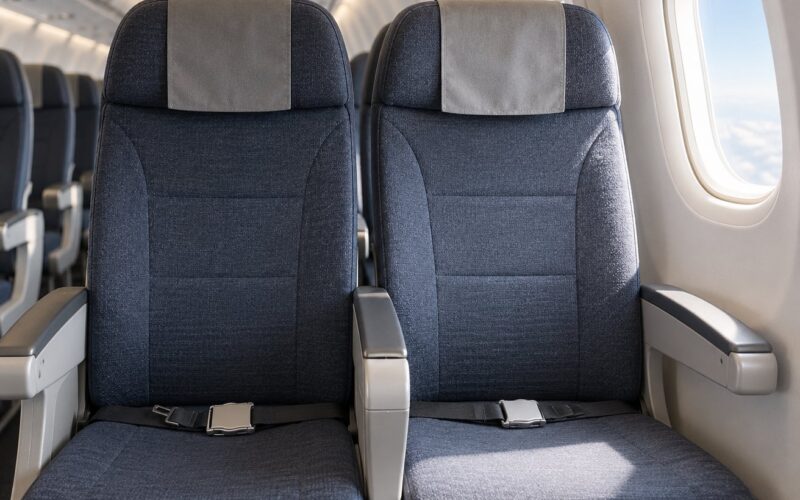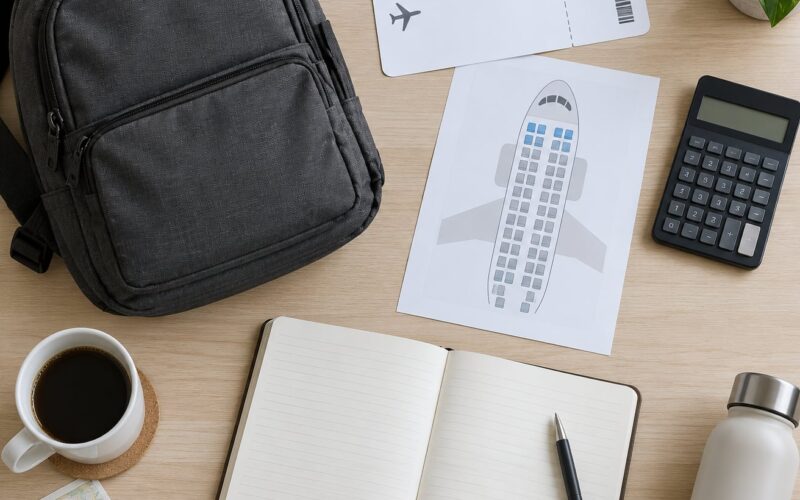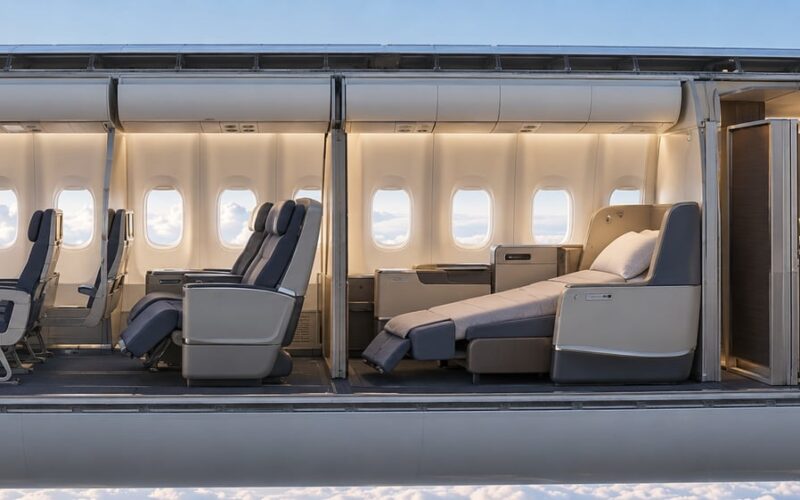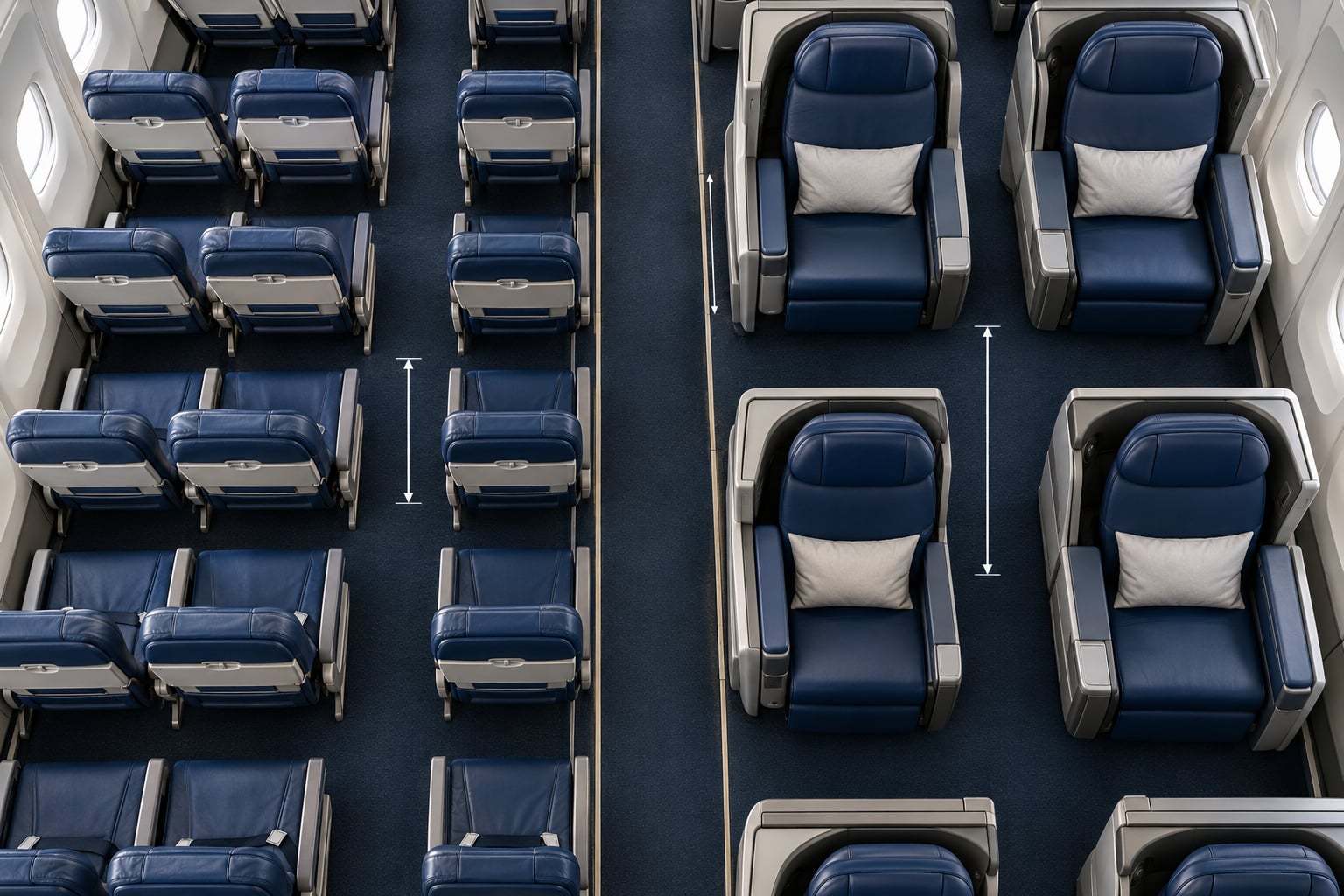
Economy seats typically offer 30-34 inches of seat pitch, premium economy about 38-42 inches, business class roughly 60-80 inches, and first class around 78-84 inches. Low-cost carriers can drop to 28-30 inches, and the same cabin varies by aircraft, so always check the seat map for your exact flight.
That answer is a starting point, not a promise. The number airlines publish is measured seat to seat, not the knee room you actually get, and a 31-inch economy row on a 737-800 can feel different from a 31-inch row on an A321neo.
Here is how the numbers break down, what each cabin really gives you, and how to check the legroom on a specific flight before you commit.
Table of Contents
- How Much Legroom Does Each Cabin Class Have? A Quick Guide
- What Is Legroom, and How Is It Measured?
- Seat pitch is not knee room
- Seat width is the number most guides skip
- Bed length is a third measurement entirely
- Economy Class Legroom: How Much Space Should You Expect?
- How much legroom does each cabin class have on a narrow-body?
- Domestic and international economy are not the same seat
- Why “up to X inches” is never the number you get
- Will you actually fit? Use inseam, not height
- Premium Economy Legroom: How Much More Space Is Typical?
- Business Class Legroom: What Space Can You Get?
- Configurations change the room you get
- First Class Legroom: How Much Room Is Usually Available?
- Why Legroom Varies by Aircraft, Seat, and Row
- How to Find the Legroom for Your Specific Flight
- Frequently Asked Questions
- Which airline has the most legroom in economy class?
- Which airline has the least legroom in economy class?
- Is seat pitch the same as legroom?
- Does an exit row or bulkhead row give more legroom?
- Which airline has the widest seats in premium economy?
- What airline is most plus-size friendly?
- Conclusion
How Much Legroom Does Each Cabin Class Have? A Quick Guide
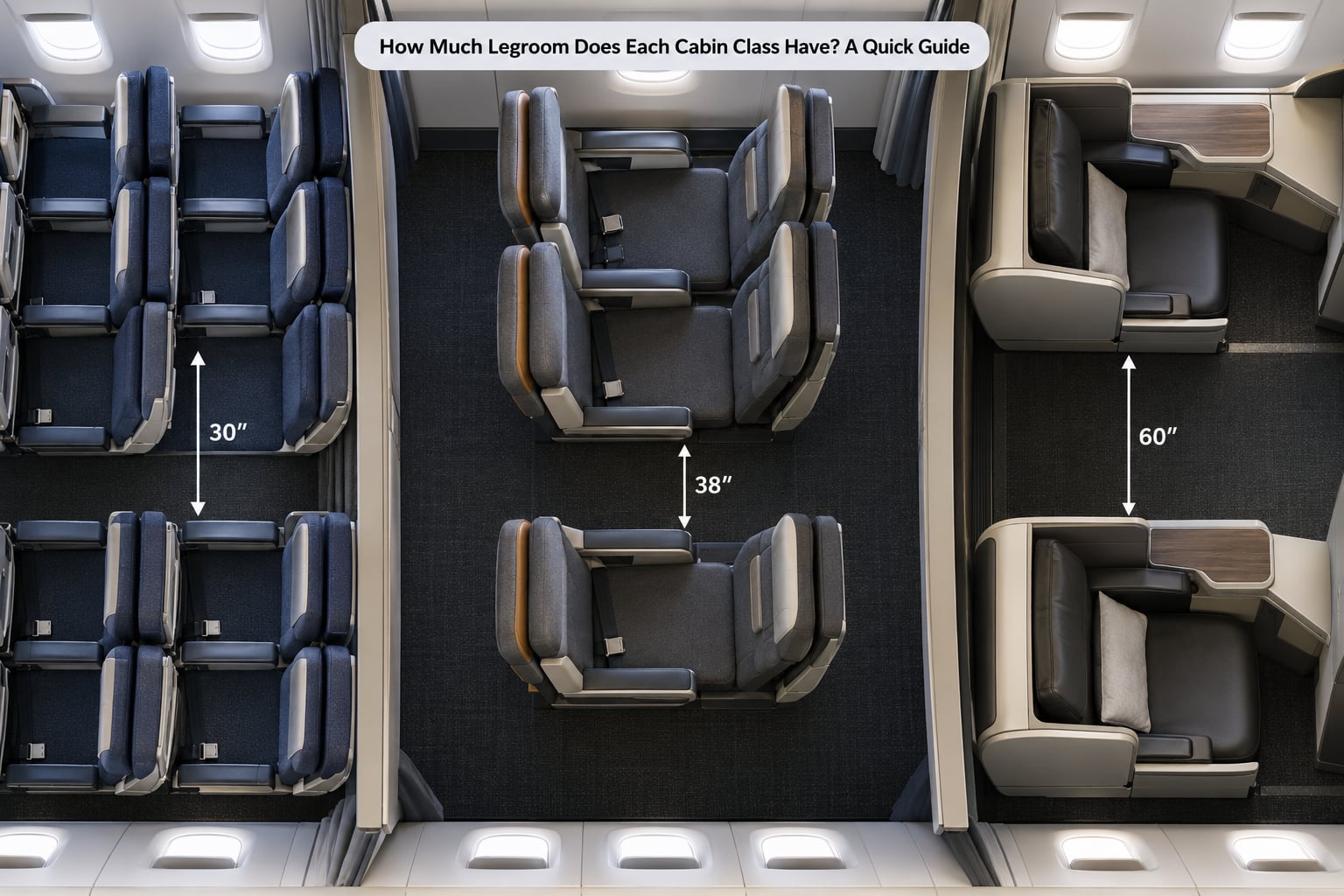
| Cabin class | Typical seat pitch | Typical seat width | Seat type |
|---|---|---|---|
| Economy (main cabin) | 30-34 in | 17-19 in | Upright or lightly reclining |
| Economy on low-cost carriers | 28-30 in | 16-18 in | Upright, minimal recline |
| Extra-legroom economy | 34-39 in | 17-19 in | Slightly deeper recline |
| Premium economy | 38-42 in | 19-21 in | Deep recline, footrest, larger cushion |
| Business class | 60-80 in | 20-24 in | Angled recliner or lie-flat |
| First class | 78-84 in | 22-27 in | Suite with door or enclosed recliner |
Figures are reference ranges drawn from published seat maps and cabin configurations, reviewed for 2026. Individual seats sit above or below these bands, sometimes well below.
What Is Legroom, and How Is It Measured?
Seat pitch is the distance from one point on a seat to the same point on the seat in front of it, measured in inches. It is the standard measure of airplane legroom, and it is why a cabin quoted at 31 inches has rows installed 31 inches apart.
Seat pitch is not knee room
Pitch is measured between seat frames, which means it includes the seat cushion depth, the back of the seat in front, and the space your shins take up before your knees hit anything. What you experience as knee room is the leftover, and it is smaller than the headline figure by a meaningful margin.
Seat width is the number most guides skip
Seat width measures the cushion across, not front to back. A 31-inch pitch seat that is 19 inches wide feels far more spacious than a 34-inch pitch seat squeezed into 17 inches, and for anyone over roughly 6’2″ the width matters as much as the pitch.
Bed length is a third measurement entirely
In a lie-flat business class seat, the usable sleeping surface is often longer than the seat pitch suggests. A 60-inch pitch angled seat can produce a 78-inch flat bed once the headrest and footrest extend, which is why a business class pitch figure cannot be read the same way as an economy pitch figure.
Economy Class Legroom: How Much Space Should You Expect?
Economy class on a full-service narrow-body typically delivers 30-32 inches of seat pitch with a cushion 17-19 inches wide. On a wide-body such as a 787-9 or A350-900 the pitch rises to 31-34 inches, because the cabin is a few inches wider and there is more room to work with.
How much legroom does each cabin class have on a narrow-body?
Narrow-body aircraft such as the 737-800, 737 MAX 8, and A321neo usually run 30-31 inches in economy, and that is the tightest mainstream product in regular service. A slim economy layout on a 737 MAX 8 can fall to 28 inches, which is closer to low-cost carrier territory than to the 31 inches most people picture when they think of a US airline.
Low-cost and ultra-low-cost carriers are where the smallest numbers live. Carriers in this group regularly install 28-30 inch rows, and on some aircraft the last several rows are tighter still. The pattern is consistent enough that experienced travelers treat the rear of a low-cost cabin as a red zone and move forward when they can.
Domestic and international economy are not the same seat
The same airline sells two different economy products on the same route. Domestic economy on a narrow-body gives 30-31 inches with a shallow recline, while the same airline’s international economy on a wide-body gives 31-34 inches, a wider cushion, seat-back screens, and power at every seat. Someone who flies only domestic routes often has no idea how much more space exists on the same airline ten thousand miles away.
Why “up to X inches” is never the number you get
Extra-legroom fares are advertised as up to 39 inches, and that is accurate for the front rows of the cabin. Ask about the actual measurement and the answer tends to be a couple of inches lower. On Delta’s Comfort+, r/delta regulars describe it as a normal main cabin seat with a couple of extra inches of pitch and little else. A retrofit aircraft can help here: a traveler on r/unitedairlines reported pleasant legroom on a recently retrofitted 737-800, which shows retrofit status can matter as much as the airline name.
Will you actually fit? Use inseam, not height
Fit depends on the relationship between your inseam and your torso length, not your height on its own. A 6’3″ traveler with a 36-37 inch inseam may have more knee room problems than a taller person with a shorter inseam, because a long torso folds forward into the pitch measurement.
- Under about 30 inches of inseam: standard economy at 30-32 inches generally works.
- 30-32 inch inseam: aim for 34 inches or more, and choose an aisle seat so you can angle out.
- Over 32 inches of inseam: economy becomes a real test. Exit row or bulkhead rows, plus extra-legroom fare classes, are the practical options.
Premium Economy Legroom: How Much More Space Is Typical?
Premium economy runs about 38-42 inches of pitch with a 19-21 inch cushion. That is roughly 6-8 inches more pitch than the main cabin on the same aircraft, which is enough to change posture on a long flight rather than just make the seat slightly less cramped.
The real difference is width plus recline. Premium economy seats recline deeply, often to around 40 degrees, and most carry a footrest or leg rest, so your feet are supported instead of dangling for nine hours. Main Cabin Extra, Comfort+, and Economy Plus are not the same product despite the similar names: those are extra-legroom economy fares that keep the original cushion width and often give only two or three more inches.
One practical warning from flyers in r/jetblue and r/delta: premium economy armrests are frequently immovable. That is fine for most adults and a problem for a parent trying to sleep with a lap child, so check the seat product before booking if that applies.
Airlines with the widest premium economy seats tend to be the ones running larger seat structures, such as the premium cabins on Qantas and the long-haul premium economy on British Airways. Verify on the seat map rather than trusting the cabin name.
Business Class Legroom: What Space Can You Get?
Business class advertises 60-80 inches of pitch, but that range describes two very different products. An angled recliner in a 1-2-1 layout sits at around 60-66 inches of pitch and gives you a bed that is long enough to sleep on if you are average height or shorter. A fully flat seat in a 1-2-1 or 1-1-1 layout advertises a pitch in the same band while producing a flat bed of 76-80 inches.
This is the pitch-versus-bed-length gap that trips people up. Because the measurement convention is identical, the number alone tells you almost nothing about sleep quality in business class. What matters is the bed length, the seat width (usually 20-24 inches), and whether the footwell or ottoman supports your legs when you are flat.
Configurations change the room you get
In a 1-2-1 layout every seat has direct aisle access, and the seat width per passenger is generous. In a 2-2-2 layout, common on transatlantic routes, each seat shares its neighbour’s space and the usable width narrows noticeably. In a staggered 2-2-2 the middle seats alternate forward and rear facing, which helps some sleepers and confuses others.
Reverse herringbone layouts on newer wide-bodies angle every seat toward the window and give a direct view on the floor. Pitch figures there often read lower than a herringbone layout while the bed is longer, another case where the advertised number understates the product.
First Class Legroom: How Much Room Is Usually Available?
First class sits at 78-84 inches of pitch when it is a suite, with cushions 22-27 inches wide and a bed that reaches full length. Traditional first class with conventional recliners rather than suites tends to land closer to the business class end of the range, around 60-72 inches, and the label on the ticket does not tell you which one you are buying.
On ultra-long-haul aircraft, first class sometimes appears as a small number of suites in a 1-2-1 or even a 1-1-1 arrangement, where the suite itself supplies the extra width rather than extra pitch. One caution worth knowing: domestic first class products, for instance a first class cabin on a narrow-body, can offer less legroom than international business class on the same airline. The cabin label is the least reliable signal in the whole industry.
Why Legroom Varies by Aircraft, Seat, and Row
Seat density is the biggest lever. Airlines fit as many rows as regulations allow, and each additional row across the cabin removes inches from every row behind it. That is why the same airline on the same route can change comfort after a retrofit or a densification.
- Bulkhead rows: the wall in front either gives you an ottoman and extra inches or takes them away. Check the seat map notes, because both outcomes are common.
- Exit rows: extra pitch is often available, but the tray table and seat-back storage are removed, so you have nowhere to put a laptop.
- Last rows: the rear galley or lavatory narrows the cabin and the recline is often restricted.
- Rows behind a non-reclining seat: no matter how much pitch you book, the seat back in front stays vertical.
- Galley and lavatory locations: a row beside a bulkhead is often wider but tighter fore and aft.
- Domestic versus international configuration: the wide-body version of a route is usually the roomier one.
How to Find the Legroom for Your Specific Flight
SeatGuru, the tool most older guides point you to, ceased operations in 2025, so any advice that sends you there is out of date. Here is the current process.
- Find your aircraft type first. The seat map for a 737-800 tells you nothing useful about an A321neo on the same route with the same airline.
- Identify the seat product. Main Cabin Extra and Comfort+ are extra-legroom economy fares, not premium economy cabins, and the pitch difference is small.
- Open the airline’s own seat map during booking. It shows the cabin layout, which rows are extra-legroom, and whether the seat back in front reclines.
- Use a seat lookup tool for the specific aircraft. SeatLink and SeatViewer both publish current seat maps with pitch and width data by registration and row.
- Cross-check the row you want. Narrow-body and wide-body versions of the same seat number can sit at different pitch, and rows near bulkheads behave differently from rows in the middle.
If two sources disagree, trust the airline’s own seat map, and confirm again at check-in, because aircraft swaps happen.
Frequently Asked Questions
Which airline has the most legroom in economy class?
Qatar Airways regularly publishes the widest economy figures in the industry, around 31-33 inches of pitch on many wide-body aircraft. Etihad and Air India follow in the same range on their long-haul fleets. Among US carriers, American, Delta, and United cluster at roughly 31 inches. Pitch is only half the story though, since seat width varies too.
Which airline has the least legroom in economy class?
Low-cost and ultra-low-cost carriers hold the bottom of the range. Spirit, Allegiant, Frontier, and Ryanair commonly install 28-30 inch rows, and slim economy layouts on newer Boeing 737 MAX 8 aircraft can match that. Seats at the very back of those cabins can be tighter still. If tight knees matter, avoid the rear rows and pay for extra legroom if you can.
Is seat pitch the same as legroom?
Not quite. Seat pitch is the distance from one point on a seat to the same point on the seat in front, and it includes cushion depth and the space behind the seat back. Your usable knee room is whatever is left over, so it is always less than the pitch figure. Seat width, measured across the cushion, is a separate number entirely.
Does an exit row or bulkhead row give more legroom?
It depends on the aircraft, so never assume. Exit rows usually add a few inches of pitch but remove the tray table and seat-back storage. Bulkhead rows can add an ottoman and real knee space, or can lose inches to a wall with no footwell at all. Both are flagged on good seat maps, so check your specific aircraft before picking one.
Which airline has the widest seats in premium economy?
Airlines operating larger dedicated premium economy seat structures generally come out on top, with Qantas and British Airways among the most commonly cited. Cushions in these cabins typically run 19-21 inches against 17-19 inches in main cabin. That extra width, combined with a deeper recline and a footrest, is what separates premium economy from an extra-legroom fare class.
What airline is most plus-size friendly?
Wide-body aircraft with 3-4-3 or 3-3-3 cabins on premium products tend to work best, because the middle seats have their own armrests. Airlines offering wider economy cushions and true extra-legroom rows at the front of the cabin help more than the cabin label does. Booking an aisle seat gives the most usable space, and checking the seat width rather than just pitch matters most.
Conclusion
Economy runs 30-34 inches of pitch, premium economy 38-42, business class 60-80, and first class 78-84, with low-cost products dipping to 28-30. Those bands tell you what to expect, not what you will get.
So start with your aircraft type and seat product, then open the airline’s seat map or a current lookup tool like SeatLink or SeatViewer and pick the row that suits your inseam and your length of flight. That takes two minutes and beats finding out at the gate.