To survive the middle seat on a long flight, you need to do four things: pick a better seat if you still can, claim both armrests early, plan your bathroom trips so you rarely have to climb over a stranger, and carry enough gear that you never need a wall to lean on. Set aside about twenty minutes of prep the night before and the flight stops being something you endure.
The middle seat is genuinely the least desirable seat on any aircraft, and it gets worse the longer you are stuck in it. One in three economy passengers is assigned one, so it is not a bad-luck thing that happens to you. It is a routine part of flying that most people simply have never been taught to handle.
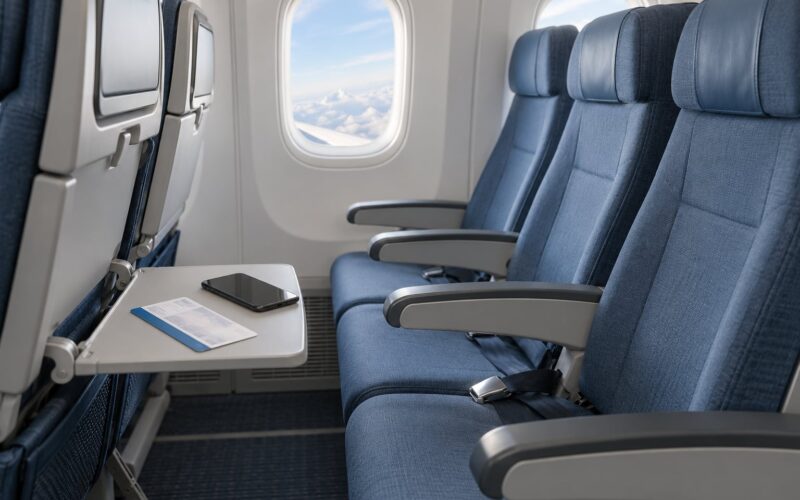
Here is what makes it hard. You have no window to rest your head against and no aisle to stand up and stretch into. Both armrests are shared, and neither neighbour has anywhere to lean, which is why the middle passenger gets both. You will need the lavatory at some point, and getting there means crossing a stranger’s legs.
Table of Contents
- What You Need
- Step-by-Step
- Step 1: Improve Your Chances of Avoiding the Middle Seat
- Step 2: Prepare Your Body for Hours in a Middle Seat
- Step 3: Make the Seat Work Once You Board
- Step 4: Stay Comfortable During the Flight
- Step 5: Handle the Worst Moments
- Common Mistakes
- Frequently Asked Questions
- Can I change from a middle seat on a long flight?
- How do I get through a long flight in the middle seat?
- Are middle seats really worse than window or aisle seats?
- How can I sleep comfortably in a middle seat?
- What should I do if both armrests are lowered?
- How do parents manage a middle seat with a child?
What You Need
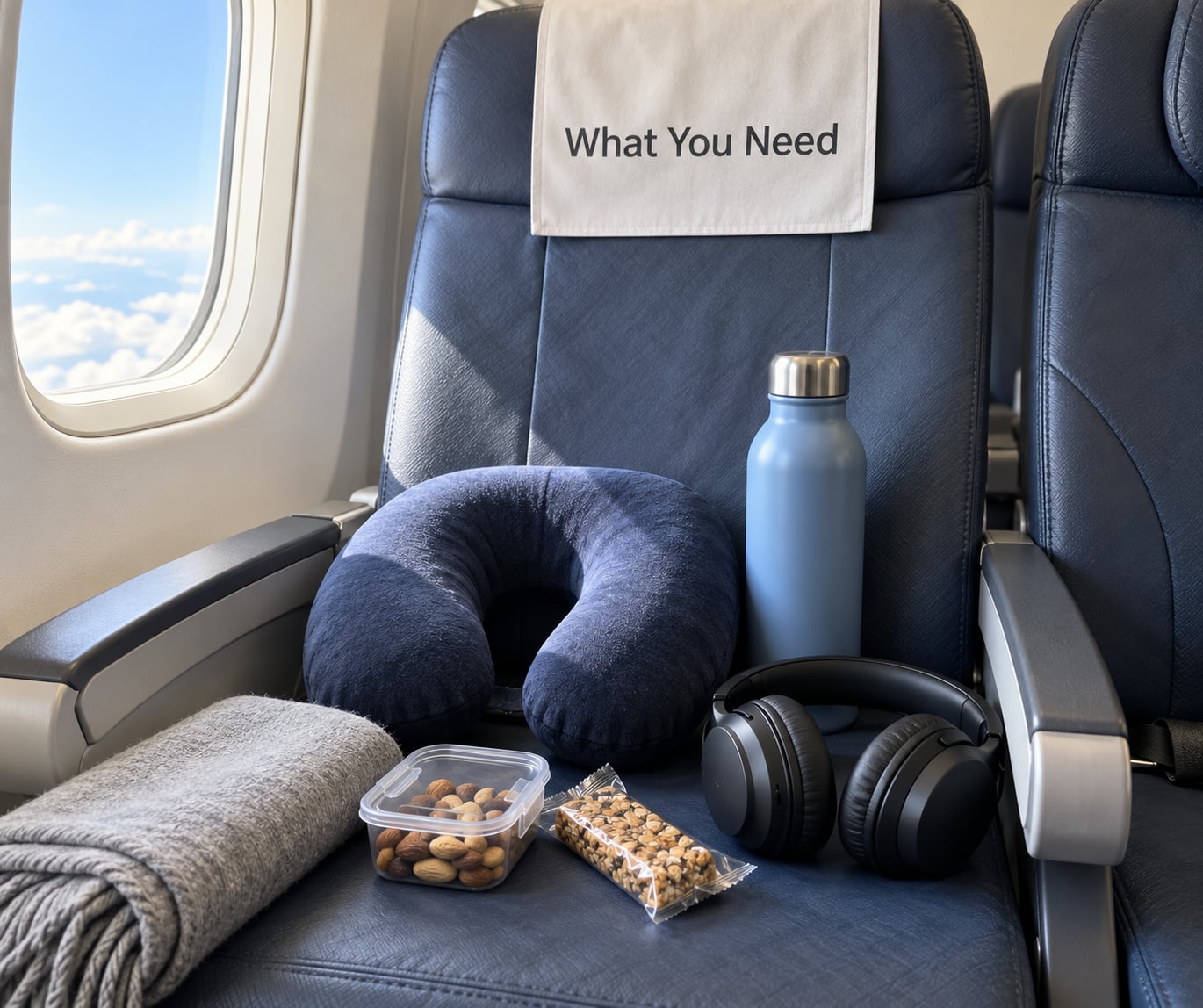
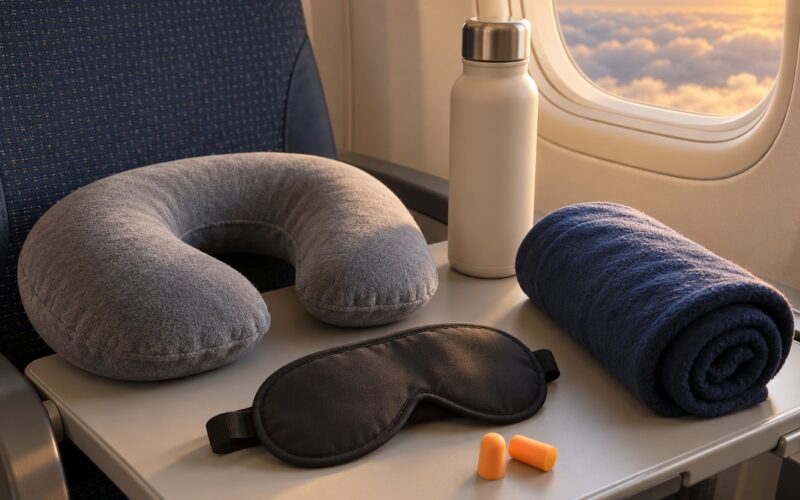
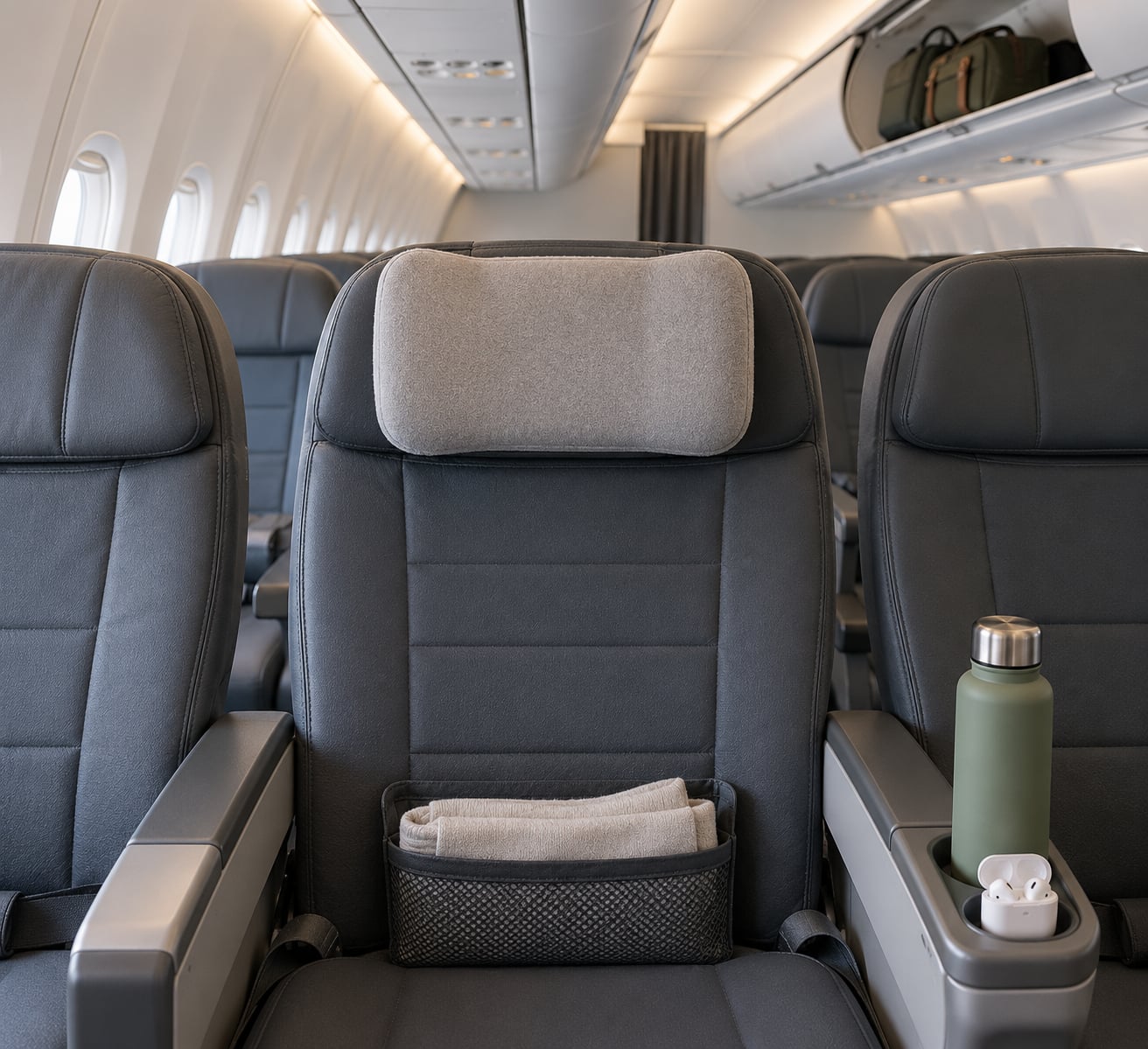
None of this is expensive and most of it fits in a jacket pocket. Pack it in your personal item, not a checked bag, because you will want the eye mask in the first hour and the snacks somewhere around the third.
- A neck pillow you can flatten. The inflatable or microbead kind, not a memory foam horseshoe. You want to be able to press it against the headrest or fold it flat, and memory foam is useless for a middle seat because you cannot get your head to a flat surface.
- A hoodie or a light layer. Tied behind your neck it acts as a makeshift support when the pillow slips, and cabin temperature swings more than most people expect.
- An eye mask and earplugs. Both, and the mask over the ears rather than under them. The mask blocks the overhead light, the earplugs block the engines.
- Earbuds. Not over-ear headphones. Anything bulky makes the armrest conversation worse.
- An empty refillable bottle. Fill it after security, because cabin pressure makes you thirsty and dry long before you would normally feel it.
- Two or three small snacks. Meal service is unpredictable in economy, and the sandwich that arrives at hour nine is a lot harder to eat when you are wedged in.
- Compression socks. Worth it on flights over about four hours. If you skip them, set a reminder to stand up every hour or two.
On the clothing side, loose trousers beat jeans and a belt. Bulky waistbands press exactly where a middle seat already presses. If you can manage it, slip-on shoes or socks mean you can move your feet during the flight without bending forward into a stranger’s knees.
Step-by-Step
Step 1: Improve Your Chances of Avoiding the Middle Seat
Most middle-seat assignments are decided before you ever reach the airport, so the first move happens at booking. On most full-service airlines you can pick your exact seat for free during the initial checkout, and a large share of travellers never touch that step.
If you did not choose, check the seat map again at online check-in, which usually opens a day or two before departure and often shows better options than the booking page did. On a full flight the map can be deceiving, though: an empty-looking seat may be blocked for a connecting passenger, a family group, or an unaccompanied minor. Assignments can change at any point right up to pushback.
If the map is unhelpful, ask at the gate. Gate agents hold the authoritative boarding list, and they can sometimes reseat a passenger whose fare class permits it, especially when the flight is not full. A polite ask costs nothing. Get there early enough that the agent is not holding a queue of people behind you, and keep it to one sentence.
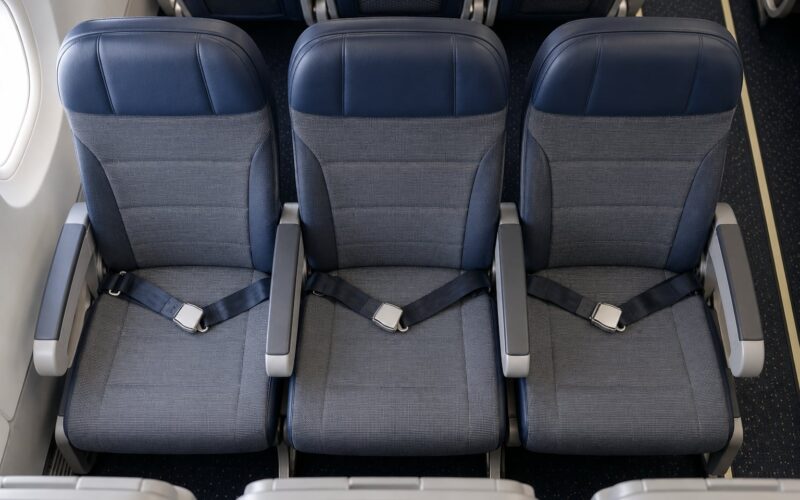
How do you tell whether it worked? The boarding pass and the seat map on the boarding pass will show a letter. A middle seat ends in B on a three-abreast narrowbody and in C on many widebodies, so if you see a B or a C where you expected a D, A, or E, you have not escaped.
Step 2: Prepare Your Body for Hours in a Middle Seat
Hydration does more here than comfort. A middle seat constrains your position, and sitting still in a compressed position for ten hours slows circulation in the legs. Drink steadily through the flight rather than in large amounts, and pair water with something containing electrolytes if you are flying for more than about eight hours.
Eat lightly before boarding and again during the flight. A heavy meal in a cramped position is the single most reliable way to turn a long flight into a long, uncomfortable flight.
Put your phone, watch, and any medications you take into the seat pocket before you board rather than in the overhead bin. Socks stay on until you want them off, and if you are prone to swollen feet, put the compression socks on in the airport lounge, because bending to pull one up in a middle seat is genuinely miserable.
Before boarding, walk for a few minutes. Gate or lounge movement, even standing still for two minutes, gives your legs a head start on a long stretch of sitting. You will know the preparation worked if you board without feeling stiff in the hips and lower back.
Step 3: Make the Seat Work Once You Board
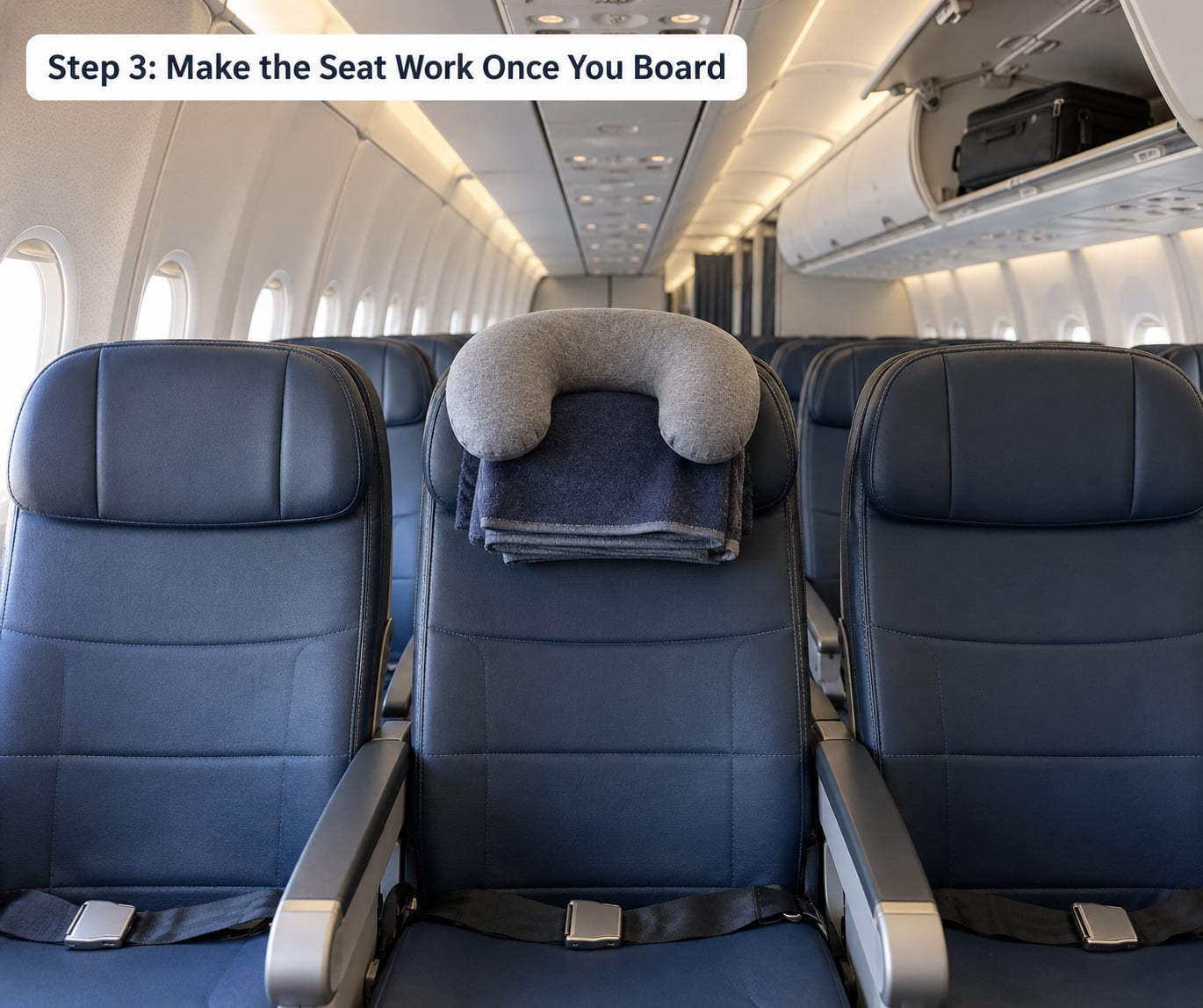
The middle passenger gets both armrests. That is the near-universal rule, and the reason is simple: the window passenger has the cabin wall to lean into and the aisle passenger has the aisle. You have neither.
The polite version is to claim them with a sentence instead of a stare. Saying something like “I am in the middle so I get both armrests, hope that is okay” settles it in advance and stops the whole thing from turning into a silent contest. Most people nod and never think about it again. If that feels unbearable, the alternative is to use the armrests and apologise once, only if there is a reaction.
Set up your space before either neighbour sits down. Get the overhead bin space settled while the bins are still empty, keep your bag light enough that you can lift it into the bin yourself, and get the under-seat space for your larger items before anyone else uses it. If your overhead bag is a roller, lifting it overhead from a middle seat means standing, twisting, and knocking something over.
Place the pillow as soon as you sit. Hold it against the headrest, tuck the hoodie behind your neck, and put your shoes or footrest under your feet. Do all of this before you settle into anything comfortable, because you cannot reposition once you are wedged in and your neighbours have taken their sides.
Step 4: Stay Comfortable During the Flight
The routine matters more than any single trick. Stand up at least once an hour, and preferably every ninety minutes, even if it means walking to the back of the cabin and back. Ten laps of a narrowbody is not necessary; a few minutes of walking, plus a stretch of the front of the hip on each side, is enough to keep your back from seizing.
Keep water within reach. Drink before you feel thirsty, and avoid alcohol, which is dehydrating and worsens the cabin’s low-humidity effect on sleep quality. Most people who regret a long flight regret the alcohol more than the seat.
For entertainment, download what you need before you board. Seat-back screens on narrowbodies are small and the entertainment on short-haul routes is frequently thin or absent, so treat the screen as a bonus rather than a plan. The screen, if there is one, is also the most direct route to a silent seatmate: put headphones on early and nobody starts a conversation.
For temperature, keep the layer within arm’s reach. Cabin heating runs hot in the front rows and cold at the back, and you cannot move. Wiping down the tray table, the seat belt buckle, and the armrests before you use them takes ten seconds and makes the whole thing feel less like a gamble.
You will know the routine is working if you reach the middle of the flight without a stiff back, a headache, or the sense that you have been folded into the seat for a decade.
Step 5: Handle the Worst Moments
The lavatory is the big one, and the trick is timing rather than courage. Go after meal service is served but before the crew start collecting trays, which is usually the cleanest window of the whole flight and the least crowded queue. Go before your seatmate starts a film, and go before you settle in for the night, because a full bladder at hour eleven is much worse than a slightly full one at hour four.
Apologise to the aisle neighbour before you stand, every time. It costs two seconds and it is the difference between people finding you pleasant and people finding you rude. If both neighbours are asleep, wake the aisle-side one, not the window-side one, and keep the movement slow.
For eating when space is tight, lift the tray only as far as it will go without hitting the seat in front, eat in stages rather than all at once, and keep the napkin on your lap instead of the tray, where it falls. Small bites are simply faster in a confined position.
For a flight that runs longer than the schedule promised, do not give in. Keep the walking rhythm, keep drinking, and treat the delay as extra unplanned time rather than as something to endure passively. A passenger with headphones, a full water bottle, and a plan looks like someone who is fine.
Common Mistakes
Booking on the basic fare and hoping for the best. Basic economy tickets often come with no seat selection at booking and a last-minute assignment, which is exactly how people end up in the middle. If that is your ticket, use check-in and the gate as your only opportunities, and know that both may refuse.
Boarding last and settling in fast. The middle passenger who boards last has already lost the armrest argument, the overhead space, and the under-seat space before anyone sits down. Get on board in the first or second group if your fare allows it.
Apologising for the armrests in advance. Sorry, but the middle passenger is the one person on the row who has nowhere to lean. Say it as a statement, not a question, and skip the apology entirely.
Storing your bag overhead when it needs lifting. A full overhead bin in a middle seat turns a small inconvenience into a two-person problem. Travel with a bag you can put away one-handed.
Having no bathroom plan. The people who suffer most are the ones who wait until they cannot wait. Pick two windows in advance, one after service and one before you settle, and use them.
Trying to work in a middle seat. A laptop on a tray table in the middle means hunched shoulders and a neighbour’s elbow in your ribs. Take notes by hand, or work on a phone, and save the laptop for an aisle or window seat.
Using alcohol as a sleep aid. It fragments sleep, dries you out, and makes the six hours after landing worse. An eye mask, earplugs, and a dark hoodie do more for the same effort.
Frequently Asked Questions
Can I change from a middle seat on a long flight?
Sometimes, and the earlier you try the better your odds. Most full-service airlines let you pick a seat free at booking, and the seat map usually reopens at online check-in a day or two before departure. If both are closed to you, a gate agent may reseat you if your fare class allows it and the flight is not full. Seat assignments can change right up to pushback, so keep checking the app after boarding too.
How do I get through a long flight in the middle seat?
Claim both armrests before your neighbours sit down, get your bags into the bin while it is still empty, and set your pillow up immediately rather than once you are wedged in. Then stand and stretch at least once an hour, keep drinking water steadily, and plan two lavatory trips at specific times instead of waiting until you cannot wait. That combination covers most of what people find unbearable about the seat.
Are middle seats really worse than window or aisle seats?
For most long flights, yes, and the reason is access rather than comfort. A window passenger can lean, look out, and get up without disturbing anyone. An aisle passenger can stand freely. The middle passenger has neither and has to climb over a stranger to reach the lavatory. The counterargument is that a middle passenger with a low-profile pillow and good armrest control often sleeps better than a window passenger fighting glare, and can be more disturbed by crying babies.
How can I sleep comfortably in a middle seat?
You need support that does not depend on a wall, so use a flat inflatable or microbead pillow pressed against the headrest, with a hoodie tied behind your neck. Wear an eye mask over the earplugs so nothing shifts during sleep. Empty your bladder before boarding, avoid alcohol, and use headphones rather than earbuds so you can hear announcements. Accept that you will be disturbed and plan to sleep in shorter stretches rather than aiming for one long block.
What should I do if both armrests are lowered?
The middle passenger is entitled to both armrests as common etiquette, not as a formal rule, so there is no authority to appeal to. Use them, and if either neighbour pushes back, apologise once, plainly, and keep using the armrest. If it continues, ask a flight attendant for help rather than arguing it yourself, because crew will handle it quickly and quietly. Prevention is better: claim both armrests with a friendly sentence the moment you sit down.
How do parents manage a middle seat with a child?
Book aisle rows wherever possible, since a child in a window seat still forces you to climb over both neighbours. If you are stuck in the middle, put the child on the aisle side so at least one exit is unobstructed, and pack far more in the seat pocket than you think you need. Bring food, headphones, and two quiet activities, and take the child to the lavatory or the back of the cabin before service, not during. Booking the two seats together at the time of purchase is still the only real fix.
If you take one thing from this, take the seat selection. Check the map at booking, check it again at check-in, and ask at the gate if you have to. Everything else on this list makes a bad seat manageable; only the seat map makes the problem disappear. Updated for 2026.