Short answer: yes, basic economy is worth the savings on a simple trip with fixed dates, one backpack and a big fare gap between it and standard economy. It stops being worth it the moment you need a chosen seat, a checked bag, a second flight, or any real chance of changing your plans. Every add-on the airline sells back to you is charged per segment, so the arithmetic flips faster than most people expect.
That is the whole argument, and it takes about a minute to check before you book. Here is how I work it out, airline by airline, so you can do the same with your own itinerary.
Table of Contents
- Is Basic Economy Worth the Savings? What You Get
- How to Compare the Real Cost of Basic Economy
- Is basic economy worth the savings on a round trip?
- What Restrictions Usually Come With Basic Economy?
- What each airline calls it and how it differs
- How Does Basic Economy Affect Seat Choice and Cabin Comfort?
- When paying for an assigned seat is worth it
- When Basic Economy Is Worth It
- When Basic Economy Is Not Worth It
- Basic Economy vs. Standard Economy vs. Premium Economy
- How to Get the Best Value From the Cheapest Fare
- Frequently Asked Questions
- Is it worth upgrading from basic economy to main cabin?
- Can you get bumped on basic economy?
- Do you get a carry-on with basic fare?
- Can you get a refund on a basic economy flight?
- Which airline has the best basic economy seats?
- Is basic economy worth it for international flights?
- Conclusion: Do the Addition Before You Book
Is Basic Economy Worth the Savings? What You Get
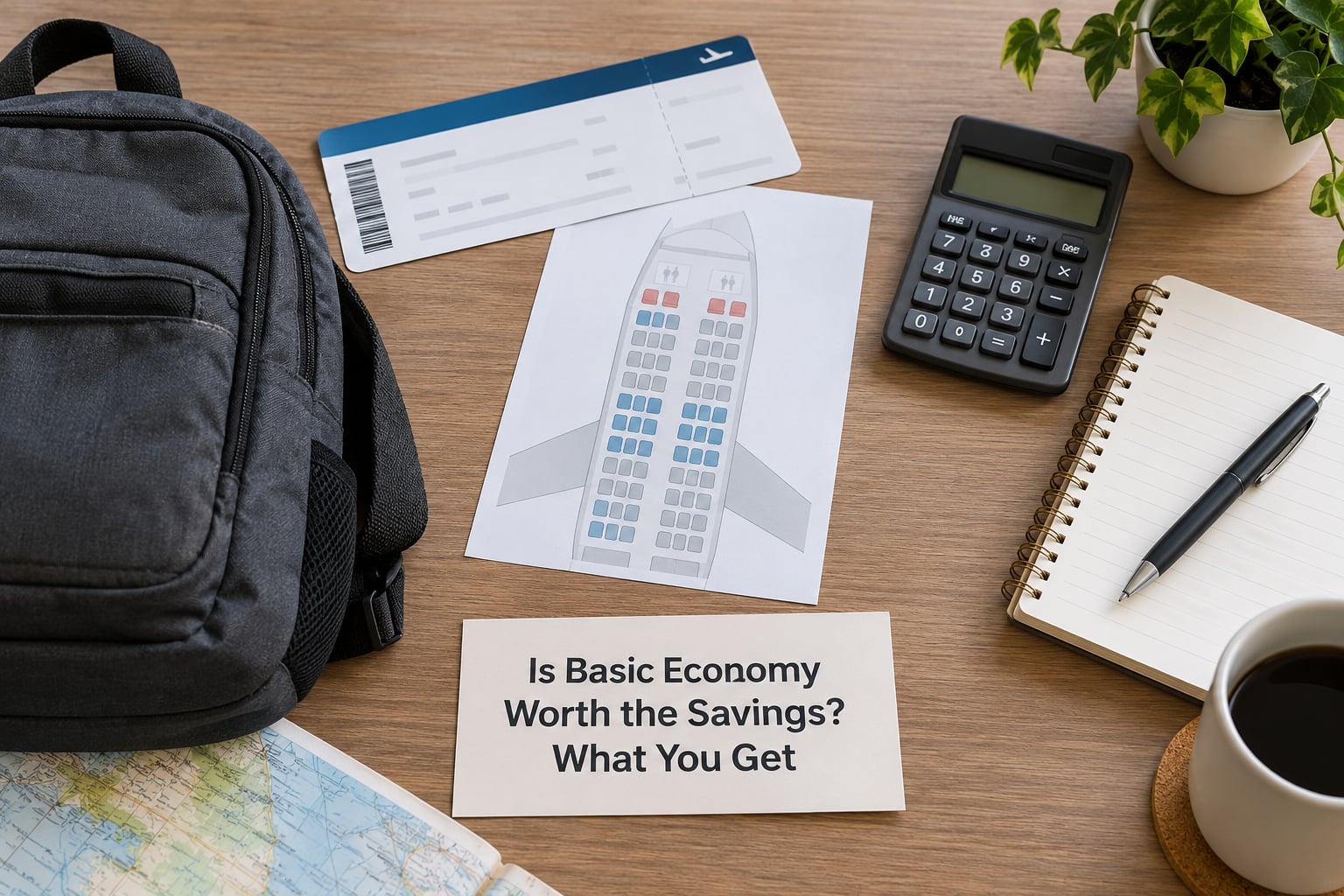
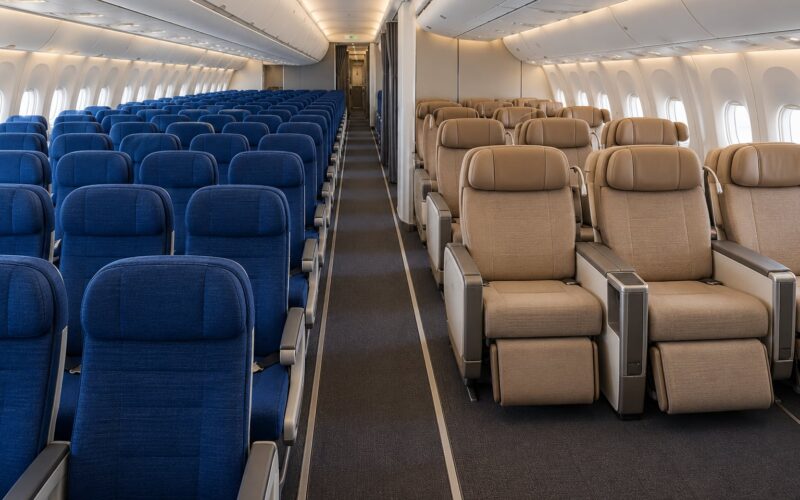
You are not buying a worse seat or a different cabin. Basic economy is the same aircraft, the same seat width, the same 32-inch pitch on a narrow-body as the standard fare most people buy by default. What you are buying is a ticket with the services stripped out and sold again a la carte.
Airlines launched the fare around 2017 to stop low-cost carriers eating their cheapest traffic. The formula is simple: keep the base fare low enough to win the search results, then charge for the things a traveller used to get free. Researchers comparing routes in 2026 found domestic fare gaps between basic and main cabin in the neighborhood of 87 to 113 dollars, and international gaps closer to 178 to 207 dollars. One carry-on fee or two seat assignments can eat that in full.
Basic economy is worth it when:
- Your dates are locked and nothing about the trip is flexible
- You travel alone or with people who do not mind separate seats
- You carry a backpack or one small bag and nothing else
- The itinerary is a single flight, not a connection
- The fare gap is large, not a rounding error
- You do not earn or redeem points and never will on this trip
- The flight is short enough that a middle seat does not hurt
Skip basic economy when:
- You are checking a bag, especially on a United domestic flight
- You are connecting, because fees apply on every segment
- Your employer is booking you and dates may move
- You are flying with kids who need to sit next to an adult
- Weather is likely, since you cannot rebook without paying again
- You want a window or aisle and would pay for it anyway
- The flight is long and you are sensitive to comfort
How to Compare the Real Cost of Basic Economy
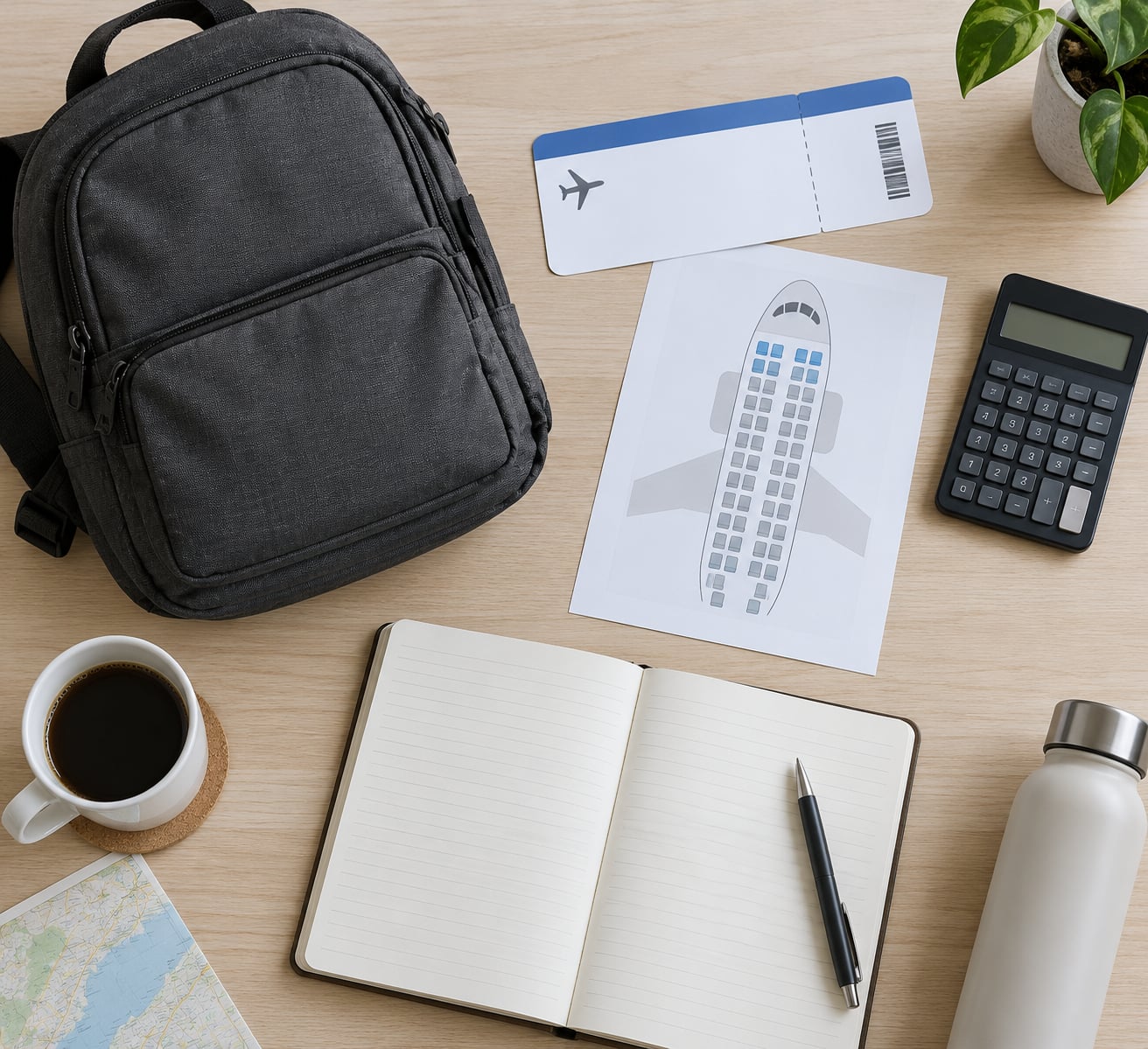
The mistake is comparing the two fares on the search results page. Those numbers only cover the flight. The number that matters is what leaves your account after seats, bags and any change.
Add up five things:
- The fare difference between basic economy and standard economy on the same itinerary
- Seat assignment fees, multiplied by the number of flight segments
- Carry-on fees or checked bag fees, on every segment that charges them
- The fare difference plus fees if your plans change, which on basic economy usually means buying a brand-new ticket
- Anything you value and lose, like miles or the use of an upgrade
Is basic economy worth the savings on a round trip?
Here is a made-up example so the arithmetic is clear. All figures are US dollars and the fares are illustrative, not quoted from any airline.
| Line item | Standard economy | Basic economy | Difference |
|---|---|---|---|
| Round-trip fare, two segments each way | 420 | 360 | 60 saved |
| Seat selection, 4 segments at 30 | 0 | 120 | 120 added |
| One checked bag, 4 segments at 40 | 160 | 160 | no change |
| One change to the return date | 80 | 360 | 280 added |
| Total with the change | 660 | 1000 | 340 worse |
On the same booking without the change, basic economy lands at 640 against 580, so you are 60 behind before anything else happens. The pattern is what matters, not the exact numbers: seat fees scale with segments, not with trips, and any change on a basic ticket means paying the fare again rather than a fee.
Two rules of thumb help. If the fare gap is under about 40 dollars, buy standard economy and stop thinking about it. If the trip has two or more segments and anyone wants a specific seat, do the same.
What Restrictions Usually Come With Basic Economy?
Six things are different on almost every carrier in the U.S. The list below is the common pattern as of 2026; your airline’s fare rules page is the authority for your specific fare.
- No free seat selection. You are assigned a seat at check-in, and you cannot choose a window or aisle in advance. Some carriers will let you pay at check-in or online afterwards.
- No changes and no refunds. Basic economy fares are non-changeable. Cancel and the money is gone unless the fare is refundable, which these almost never are.
- Bags may not be included. On United domestic flights, basic economy includes a personal item only. No overhead carry-on, and a roller gets gate-checked with a handling surcharge on top.
- Last to board. You board after most of the plane, so overhead space is a gamble and a middle seat is close to guaranteed.
- No upgrades. Not free ones and not confirmed ones. Basic economy is almost never on the upgrade list, and a paid upgrade on the day is often unavailable.
- Little or no mileage. Several carriers pay no miles and give no elite credit on these fares, which quietly makes a paid card or status useless for them.
What each airline calls it and how it differs
American Airlines sells Basic Economy on many domestic and international routes. A full-size carry-on is included, seats are assigned at check-in, and there is no advance selection, change or upgrade. Basic economy fares generally earn no AAdvantage miles and do not count toward Executive status. American does seat unaccompanied minors and children under 15 next to a seated adult when booked together, which is the one family protection most travellers do not know about.
Delta renamed Basic Economy to Main Basic in late 2026, with Main Classic and Main Extra above it. Main Basic gets a free seat assignment at check-in, a carry-on, and boarding at the very back of the cabin. Paid advance selection opens on a sliding scale, from about seven days out down to 24 hours before departure. Changes and upgrades are closed, and Medallion-eligible mileage on these fares is reduced or absent.
United is the one to think hardest about. Domestic basic economy is personal item only, so the backpack that fits under the seat becomes the bag that gets gate-checked, and the gate fee can exceed what you saved on the fare. Boarding is last, seats come at check-in, and splitting from your travel party is common. On many transatlantic and international routes United includes the standard main-cabin bag allowance instead, so check the route before assuming the worst. MileagePlus miles are not earned on basic economy.
JetBlue uses Blue Basic. It includes a personal item and a carry-on, seat assignment happens at check-in, and standing up for the whole boarding process to get bins is the part travellers complain about most. You can add a carry-on at booking for a fee, which is cheaper than a gate-check. No changes, no upgrades, and no TrueBlue credit on most of these tickets.
Alaska calls its lowest tier Saver. It includes a carry-on and, unusually, gives you limited free seat selection at the time of booking rather than only at check-in. The rest of the package is standard: no changes, no upgrades, reduced earning.
Southwest does not sell a basic economy fare at all. Every seat is standard economy, two checked bags fly free, and you can change your flight by paying the fare difference. That is why Southwest often comes out ahead on a budget trip even when the headline fare looks higher. If a comparison list never mentions it, the comparison is incomplete.
How Does Basic Economy Affect Seat Choice and Cabin Comfort?
Physical comfort is basically the same. Basic economy passengers sit in standard economy seats with the same legroom, and nobody is put in a separate cabin. The comfort difference is behavioural rather than structural: you board last, you sit wherever you are handed, and you compete for bin space that is usually gone.
The seat assignment at check-in is the part that annoys people most. On a full flight, the leftover seats are largely middle seats in the back, and there is no way to influence that from home. Families with a young child and no adjacent seats end up with one adult on one side of the cabin, which is the single most common complaint in traveller forums.
When paying for an assigned seat is worth it
Pay for the seat, and buy standard economy while you are at it, when any of these are true:
- You have a long flight where a middle seat is a real cost to you
- You are booking an aisle for a reason, like an early connection at the far end
- You are flying with a child, an elderly parent or anyone who needs to move around
- The gap between basic and standard is small enough that adding seats would close it
On most carriers you can also buy the seat on an existing basic economy ticket, either in manage-my-booking or at check-in, and the price is often the same as the airline charges anyone else. It is the cheapest way to remove the worst part of the fare without repaying the base difference.
When Basic Economy Is Worth It
A few situations make the maths simple.
- A fixed-date trip you booked months ago. Nothing about the plan can change, so non-changeability costs you nothing.
- One flight, no connection, backpack only. A personal item or a single carry-on clears the allowance and the seat fee is the only add-on left.
- A solo traveller on a short hop. Middle seat and last boarding are survivable on two hours.
- An unusually wide fare gap. When the price difference is three times the seat fee, the discount is doing real work.
- International on a route where the gap is large. International basic-versus-standard spreads run much wider than domestic ones, which is why travellers keep booking it despite the warnings.
That last point is worth expanding. Forum posters describe looking at a transatlantic itinerary where basic economy came in several hundred dollars under regular economy, knowing they had no refund and no change, and booking it anyway. At that spread, the restrictions are annoying rather than expensive. The answer changes completely when the gap is 30 dollars instead of 300.
When Basic Economy Is Not Worth It
Now the mirror list, where the restrictions usually cost more than they save.
- Any connection. A round trip with one stop is four segments. Seat fees, bag fees or both apply four times, and the savings were calculated on the whole itinerary once.
- Checked luggage on United. Personal item only, plus a gate handling fee, and you have paid the lowest fare in the building.
- Uncertain dates. One change on a basic ticket means buying a new one at today’s price. On a work trip that shifts twice, standard economy wins easily.
- Families and groups. Seats are not held together, and a group of four can board in four different rows. Gate agents can help but are not obliged to.
- Irregular operations. Weather and staffing disruptions are when flexibility pays. A fare difference looks small next to being stuck on a later flight you cannot afford.
- Special assistance needs. Travellers who need wheelchair service, travel with an infant, or fly with a service animal should not put themselves at the mercy of a check-in seat assignment.
- Anyone chasing miles or upgrades. Several carriers pay nothing on these fares, which quietly cancels out the value of your status or card.
One myth deserves clearing up, because it shows up constantly in forum threads: basic economy does not make you the first person bumped. A ticketed, confirmed passenger has a seat, and holding a cheap fare does not change the boarding order or the involuntary denied boarding rules, which apply at the back of the boarding list for everyone. Being assigned a bad seat is annoying. Being denied boarding because of the fare you paid is a different thing entirely.
Basic Economy vs. Standard Economy vs. Premium Economy
Three tiers, and the middle one is where most people should live.
| Basic economy | Standard economy | Premium economy | |
|---|---|---|---|
| Base fare | Lowest | Mid range | Highest |
| Seat selection | Assigned at check-in | Free at booking | Free, extra-wide seats |
| Carry-on | Varies, personal item only on some | Included | Included |
| Changes | None | Fare difference, sometimes plus a fee | Same rules as standard on most carriers |
| Refunds | Almost never | Refundable fares exist | Refundable fares exist |
| Boarding | Last group | Standard or priority add-on | Priority on most carriers |
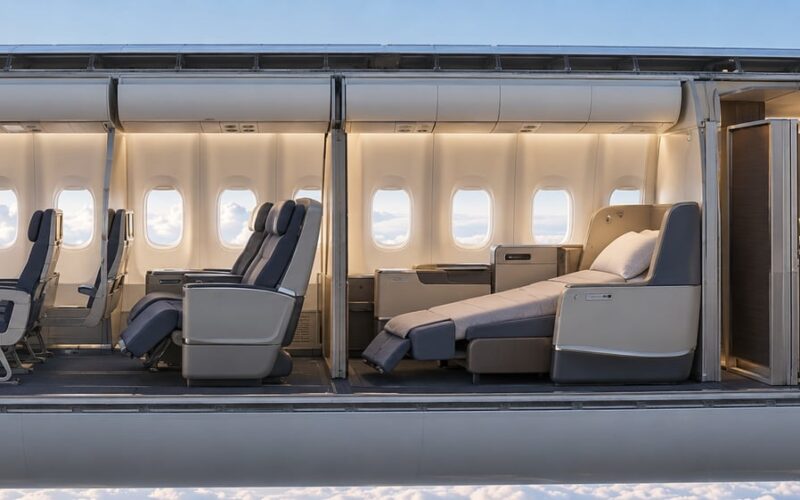
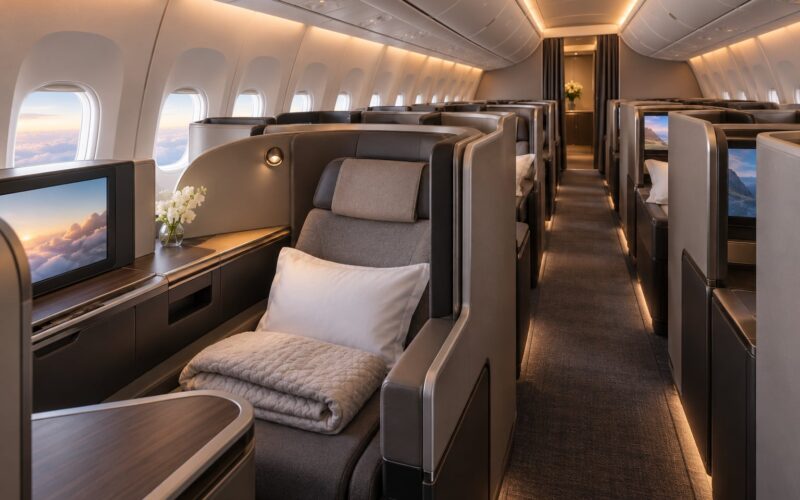
| Cabin space | Standard economy seat | Standard economy seat | Wider seat, extra legroom, recline |
| Best for | Fixed, budget, carry-on-only trips | Almost everyone else | Long flights and heavy red-eye schedules |
Premium economy earns its money on flights over about five hours, where extra legroom and a real recline change how you feel afterwards. On a two-hour hop it is a nicer seat and little more. Standard economy is the default answer, and that is not laziness; it is what most itineraries are actually worth.
If your airline is a low-cost carrier such as Spirit, Frontier or Allegiant, the basic fare means something different again: it is often a bare fare with a paid seat, a paid carry-on, a paid everything. Those carriers rarely offer a comparable all-inclusive standard fare. If one of them shows up cheaper on a route, the rules are not comparable and the total cost needs working out before you assume a win.
How to Get the Best Value From the Cheapest Fare
If you decide to book the cheap fare, do these things in order.
- Open the fare rules before you pay. Each airline publishes a fare class page listing what the ticket does not include. It takes a minute and it settles most arguments with yourself later.
- Compare against standard economy on the same itinerary, not the cheapest fare overall. Often the middle fare is only 20 to 40 dollars more and removes three separate problems.
- Add up the likely extras first. Count segments, multiply by the seat fee, add bags. Do it before checkout, not at the gate.
- Check the bag allowance for your route, not the airline’s headline rule. Several carriers treat international and transatlantic differently from domestic.
- Buy non-refundable only when dates are truly fixed. If there is any chance of a change, the standard fare is the cheaper risk.
- Confirm the restrictions with the airline before you rely on them. Fare rules change, and as of 2026 several carriers have adjusted mileage earning and seat-selection windows within the past year.
And if you already booked and need to change, there is a recovery path on most carriers. Upgrade the ticket to standard economy by paying the fare difference, then change it on standard terms. It is usually cheaper than buying a fresh ticket, and on United it is the documented workaround for basic economy inflexibility. The 24-hour risk-free cancellation rule from the U.S. Department of Transportation also applies to bookings made directly with the airline at least seven days before departure, which gives you a free do-over on anything you book at the last minute.
Frequently Asked Questions
Is it worth upgrading from basic economy to main cabin?
Usually yes, and the cheapest moment to decide is before you book, not at the gate. Add up what you would pay for seats and bags across every segment and compare that with the fare gap. If the extras equal or exceed the difference, standard economy costs you the same and removes the seat assignment, the last-boarding group and the change restrictions.
Can you get bumped on basic economy?
No, not because of the fare. A basic economy ticket is a confirmed ticketed reservation, so you have a seat on the aircraft, and holding the cheapest fare does not move you down the boarding list. Involuntary denied boarding rules apply to passengers in reverse check-in and boarding order, whatever they paid. The realistic risk is being left on a later flight during disruption, not being bumped.
Do you get a carry-on with basic fare?
It depends entirely on the airline and the route. American, Delta and Alaska include a full-size overhead carry-on on most basic fares. United domestic basic economy includes a personal item only, so a roller bag is gate-checked with a handling fee, though many international routes get the standard allowance instead. JetBlue includes a carry-on but lets you add one at booking for a fee. Check the fare rules for your exact route.
Can you get a refund on a basic economy flight?
Generally no. Basic economy fares are non-refundable and non-changeable, so cancelling means the money is gone. Two exceptions matter. Bookings made directly with the airline at least seven days before departure fall under the U.S. Department of Transportation 24-hour risk-free cancellation rule, and some carriers offer travel credit rather than a refund if the airline cancels the flight or you cannot travel for a qualifying reason.
Which airline has the best basic economy seats?
Alaska’s Saver fare is the friendliest because it gives limited free seat selection at booking instead of only at check-in. Delta’s Main Basic includes a free seat assignment at check-in and gives you a seven-day window to buy a better seat before the fee drops closer to departure. JetBlue Blue Basic and American Basic Economy both assign seats at check-in. Southwest has no basic fare at all, and every seat is standard economy.
Is basic economy worth it for international flights?
More often than on domestic routes, because the fare gap is much wider. Comparisons of international itineraries have found basic-to-standard spreads around 178 to 207 dollars per round trip, well above the domestic gap. That cushion absorbs a seat fee or two. The trade-offs still stand, so you fly with no changes, no upgrades and little or no mileage, and the bag rules differ by airline on international routes.
Conclusion: Do the Addition Before You Book
Start with the fare gap, not the headline price. Count your segments, multiply by what seat assignment costs on that airline, add bags, and look at the total. If the cheap fare still wins by a wide margin and your dates are fixed, book it. If the numbers are close, buy standard economy and be done. On most itineraries I have run through this, standard economy is the better buy, and the cheap fare is the right call mainly on single-flight, carry-on-only hops.