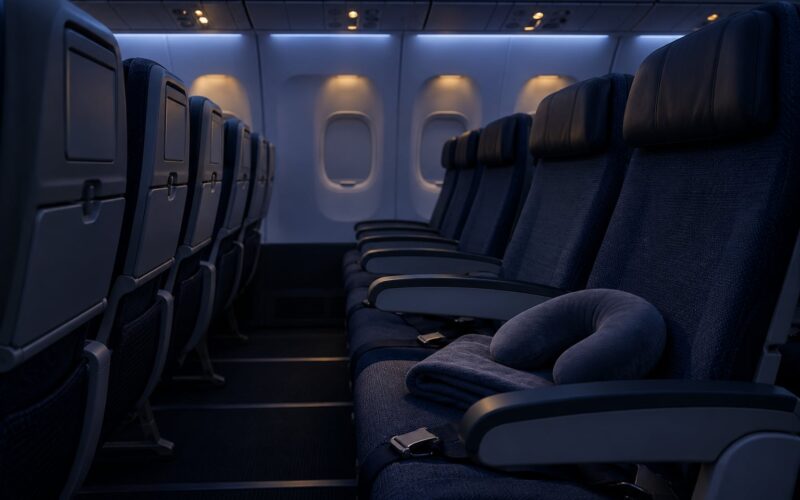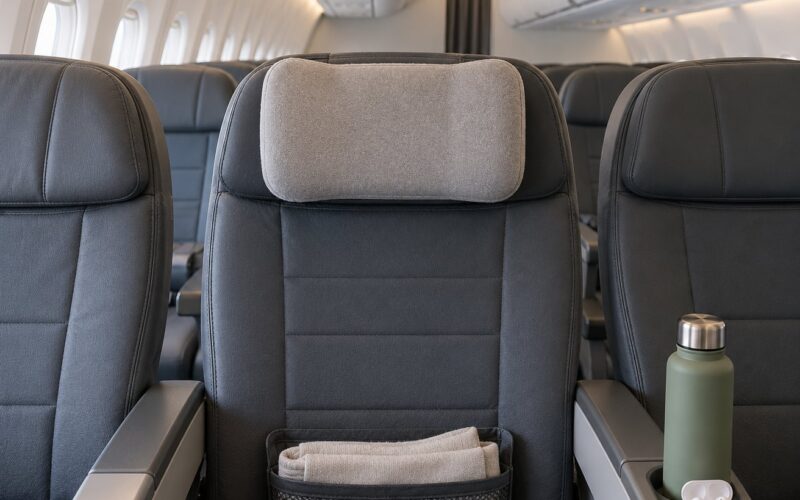
To sleep on a red eye flight well, you do three things: shift your bedtime in the days before you leave, pick a seat that gives you room and quiet, and build a small setup of light-blocking, noise-blocking and cushioning gear. Realistically, most travelers get three to four usable hours, not eight. Anyone expecting a full night in an economy seat sets themselves up to feel groggy all day.
I fly red eyes often enough to have made every mistake in this article at least twice. The method below is the one that still works on a nine-hour transatlantic in a middle seat, and it uses nothing you have to swallow. Last checked for October 2026, since cabin policies change.
Table of Contents
- What You Need
- Step-by-Step: How to Sleep on a Red-Eye Flight
- 1. Choose a Seat That Supports Sleep on a Red-Eye Flight
- 2. Shift Your Sleep Schedule Before Departure
- 3. Build a Comfortable Sleep Setup
- 4. Protect Your Eyes and Ears
- 5. Eat and Drink for Overnight Comfort
- 6. Reduce Discomfort Once Aboard
- 7. Block Out Light and Noise at the Right Time
- 8. Use a Short Nap Strategy If Needed
- 9. Prepare to Wake Up and Reset
- Common Mistakes
- Fixing Common Discomfort Without Waking Fully
- Airline-Specific Tips for Sleeping Better
- Frequently Asked Questions
- Can you really sleep eight hours on a red-eye flight?
- Is melatonin a good idea for sleeping on a red-eye flight?
- Should you recline your seat to sleep on an overnight flight?
- What should I take to help me sleep on a plane?
- Why am I exhausted after sleeping on a red-eye flight?
- Conclusion
What You Need
None of this is mandatory, and the more of it you use the better your odds. Start with the first two and add the rest as you find problems.
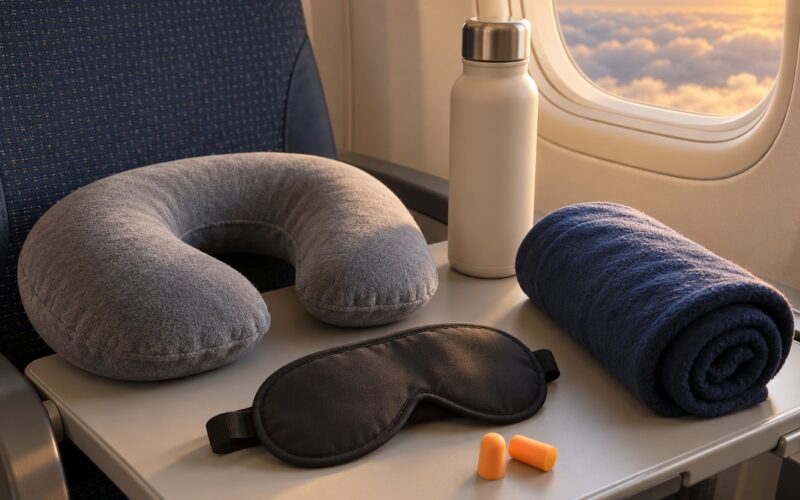
- A contoured neck pillow, not a flat travel cushion. It stops the head-nod that ends the night with a stiff neck.
- A true blackout eye mask with a nose bridge. A light sleep mask leaks light around the nose on a dark cabin.
- Foam earplugs, filtered earplugs for the pressure changes, or noise-cancelling headphones you can remove to hear the crew.
- Two or three thin layers instead of one heavy outfit, plus thick socks.
- A refillable bottle and any medication you already take or have been advised to take.
- A copy of the airline’s current bedding and amenity policy, checked before you pack.
Follow your own medical guidance on anything ingested. If you have questions about a sleep aid, ask your doctor or pharmacist before the trip, not at the gate.
Step-by-Step: How to Sleep on a Red-Eye Flight
1. Choose a Seat That Supports Sleep on a Red-Eye Flight
A window seat is the default answer because nobody walks past you to reach the lavatory, and the window wall gives your pillow something to lean against. The tradeoffs are real: a shade you cannot fully close, and no easy escape if the cabin gets stuffy.
Check the seat map before you pay. Rows near bulkheads sometimes have fixed or limited recline and a tray table that will not stow, which rules them out entirely. Exit rows have legroom but a shallower recline and a seat belt that can jab you. If a three-seat row shows one empty middle seat, that extra space lets you lie diagonally and is the best economy sleep position most people never think to pick.
Stay away from lavatories, galleys and seats under announcements when you can. Every row there takes the full stream of late-night walking and door noise.
2. Shift Your Sleep Schedule Before Departure
Move your bedtime about an hour a day toward the hours you will keep at the destination. Seek daylight when your destination’s day has started and keep the room dim when it has ended.
Two camps argue about the night before: go to bed early, or stay up late to build sleep pressure. Both work, and the deciding factor is how long you will be airborne. On a long flight, a normal night’s sleep plus early caffeine cutoff leaves you able to sleep. On a short overnight hop, staying up past your normal bedtime is the only thing that gets you under at all.
Keep caffeine to the first half of your normal day and stop it well before the flight. Do not drive or operate anything if you have shifted your sleep and feel foggy.
3. Build a Comfortable Sleep Setup
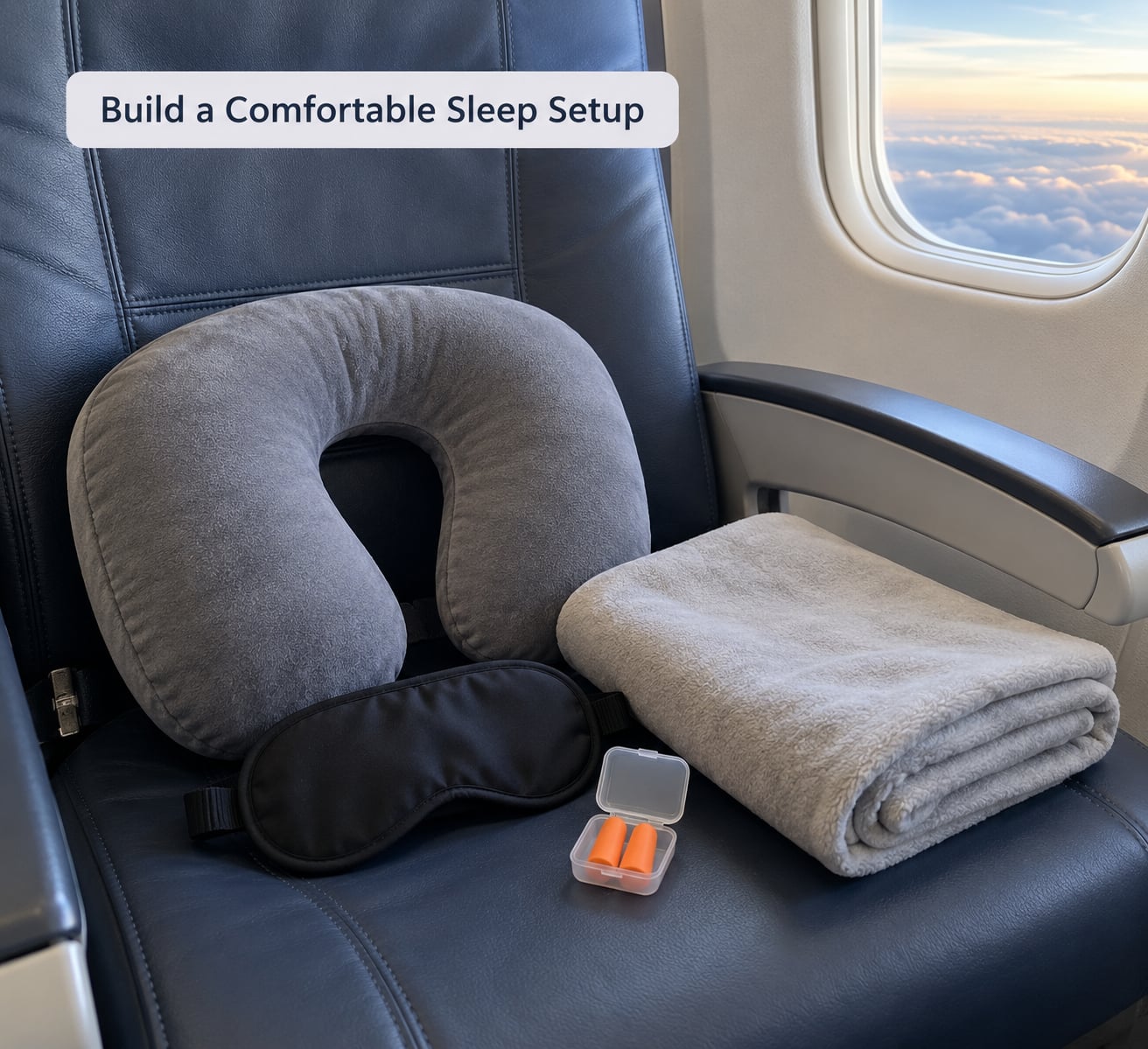
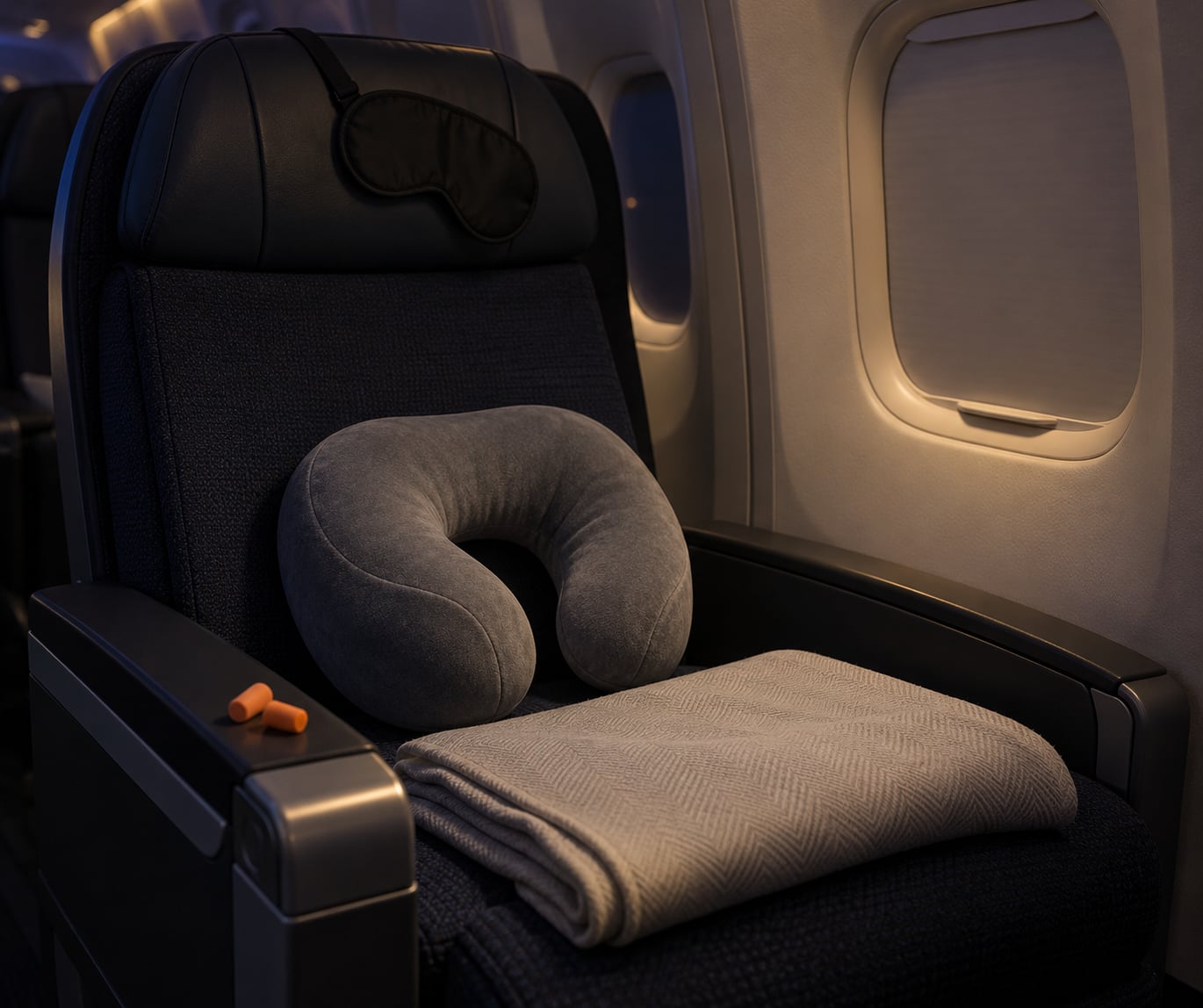
Assemble the whole arrangement before you board so you are not fumbling with straps in the dark while your neighbors are trying to sleep. Pillow first, then mask, then earplugs, then layers. Keep it loose: a tight pillow strap, a cinched waistband or a heavy blanket over your legs all create pressure you will notice an hour later.
Test the setup at home for one evening. Most people discover their pillow is one notch too firm or their mask slips at their temples, and it is much easier to fix that than it is at 35,000 feet.
Pack essentials in a bag that opens without standing up and without spilling across a sleeping seatmate.
4. Protect Your Eyes and Ears
A blackout mask removes the one sensory input your body uses to set its clock, which matters more than most people expect on an overnight flight. Earplugs handle the second-biggest source: engine drone, cart wheels, calls, coughs, and the click of a service light.
For ear pressure on descent, swallowing, yawning or chewing keeps the tubes moving. Yawning when it hurts does not work well for me, but talking does. If pain is sharp or lasts hours after landing, ask a flight attendant for airline medical help rather than trying to sleep through it. Sleeping itself will not prevent every ear problem.
5. Eat and Drink for Overnight Comfort
Time a normal meal so you are not digesting heavily in the first hour, and keep it light. Heavy, greasy food lands badly at altitude and leaves you awake rather than drowsy.
Skip the nightcap. Alcohol fragments sleep, dehydrates you, and it compounds badly with any sedative. Sip water steadily through the evening instead, and be sensible about volume: drinking too much in the last hour guarantees an unpleasant trip to the lavatory.
If you have a condition that affects fluid intake, follow your own medical advice rather than a general hydration rule.
6. Reduce Discomfort Once Aboard
Recline gradually rather than slamming the seat back, because the person behind you is bracing for impact. Change position every hour or so and stretch your ankles and calves while seated.
Walk the aisle when the cabin is quiet, usually right after takeoff or just before service ends. Do not block the aisle while you sleep; a seatmate stepping over you repeatedly is a guaranteed wake-up. Aim for a repeatable comfort routine, not a guarantee of uninterrupted sleep.
7. Block Out Light and Noise at the Right Time
Mask on, earplugs in, and keep the window shade down for the whole flight rather than opening it for the view. Keeping the cabin fake-dark is the single biggest comfort upgrade regular flyers report.
Noise-cancelling headphones are useful, and there is a safe compromise that regulars use: wear them to settle, then take them off for sleep so you can still hear the chime and the announcements. Always follow crew instructions. Nothing unregulated or untested belongs anywhere near this routine.
8. Use a Short Nap Strategy If Needed
If you cannot settle within about half an hour, stop trying and treat it as a nap. A short early-morning nap beats fighting sleep pressure for hours.
The risk is at the other end: a nap that runs long leaves you unable to sleep that night at your destination, which is how a red eye turns into two bad days. Keep the guidance general and adjustable rather than locking yourself into a rigid window. Not every red eye has to become an all-night sleep attempt, and the passengers who feel best on arrival usually slept in blocks and gave up less.
9. Prepare to Wake Up and Reset
Set an alarm about 45 minutes before landing in destination time, or ask a flight attendant for a wake-up call in local time if the airline offers one. Pack your small items into your bag before you sleep so landing does not turn into a scramble.
Once you are up, drink water and eat something within the first hour, then get into daylight. Light exposure timed to your destination’s clock is the single most effective reset. For the first day, keep naps short, avoid booking anything you have to be sharp for, and expect your normal bedtime to be off. Travelers who plan a quiet arrival day usually feel human by day two.
Common Mistakes
Almost every mistake here comes from expecting bedtime behavior in a place that is not a bed. The corrections are simple once you see them.
- Using alcohol as a sleep aid. It shortens the time to sleep and ruins the second half of the night. Drink normally, or not at all.
- Caffeine too late. A coffee at midnight in a six-hour time zone difference lands right in the middle of your destination night. Cut off at least six hours before your intended sleep time.
- Confusing a light mask for a blackout mask. If you can see the glow of the cabin when your eyes are closed, it is not blocking light.
- Sleeping in bulky earplugs unsafely. Insert them gently, and if you have ear tubes, recent surgery or an ear infection, ask a clinician first.
- Overpacking sleep gear. Six items in a bag you cannot reach in the dark is worse than three you can.
- Reclining abruptly. The person behind you will not forgive it, and they may not stay asleep either.
- Drinking too much right before sleep. The bathroom trip costs more sleep than the hydration gained.
- Expecting eight hours in a normal seat. Three or four good hours is a win, and planning around that is what makes it work.
Fixing Common Discomfort Without Waking Fully
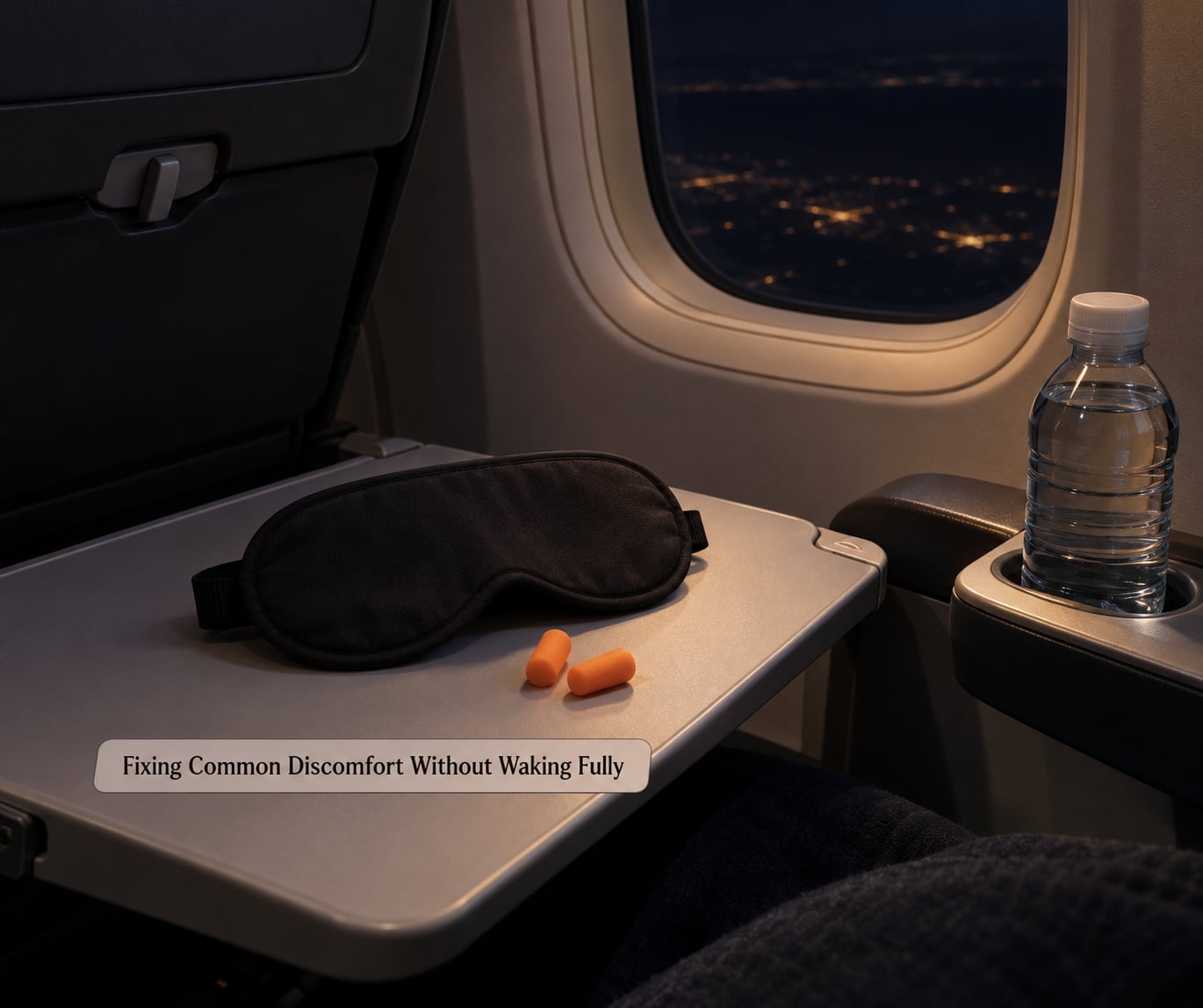
You will wake up more than once. What matters is how fast you get back. A sharp announcement or a clattering cart usually means closing the mask, returning to the pillow position and waiting.
If you are too warm, peel off one layer rather than throwing the blanket off. Too cold, add the layer back over your legs. Dry air gets better with a slow drink of water. Restless legs usually respond to walking the aisle and rolling your ankles. When you need the lavatory, go now rather than resisting until your bladder overrides your body clock.
Each time, rebuild the setup in the same order and you will usually be back under within a few minutes.
Airline-Specific Tips for Sleeping Better
Airlines differ more than most travelers assume. Seat maps change by aircraft, not by airline, so the same flight number can have a different layout at different times of year. Verify the operating aircraft before you choose a seat.
Blankets, pillows and bedding kits are frequently limited to business and premium economy, and often go to the first passengers aboard. Quiet zones or marketed sleep pods exist on a handful of airlines and are not available on every flight in the fleet. Seat-back screens vary from small to large, but brightness settings differ too, and a screen at low brightness still glows through a thin mask.
Check the airline’s current amenity policy rather than trusting a blog post from two years ago, including mine.
Frequently Asked Questions
Can you really sleep eight hours on a red-eye flight?
Rarely. Most travelers get somewhere around three to four hours of genuine sleep on an overnight flight, even a long one. Light, noise, immobility and a body clock that wants to be somewhere else all work against you. Plan your arrival around a few hours of rest rather than a full night, and keep day one light.
Is melatonin a good idea for sleeping on a red-eye flight?
It is widely used and timing matters more than dose, according to the people who use it. Taking it about 30 minutes before you want to be asleep tends to work better than taking it at boarding. It is not a guarantee, and it can leave you groggy if you mis-time it. Ask your doctor or pharmacist about anything you take regularly.
Should you recline your seat to sleep on an overnight flight?
Yes, if the row behind you has space and the seat reclines fully. Recline gradually rather than suddenly. Rows with fixed trays, limited recline, or a passenger in the exit row behind you will not let you lie back far, so check the seat map and choose accordingly. Sitting upright all night is the fastest route to a sore back.
What should I take to help me sleep on a plane?
Most reliable is gear, not medication: a contoured neck pillow, a true blackout eye mask, earplugs, warm layers and thick socks. Keep the kit in an easy-reach bag. For anything you swallow, talk to your doctor or pharmacist first, and never combine a sedative with alcohol. Follow the airline’s medical guidance and any instructions from the crew.
Why am I exhausted after sleeping on a red-eye flight?
Because you rarely get deep sleep in a cabin, so you wake tired rather than restored. Then the timing works against you: you land early, sleep through what would have been your destination morning, and your body clock is still on the old schedule. Get into daylight soon after landing, keep naps short, and expect to feel human by the second day.
Conclusion
Start tonight, not the morning of the flight. Open the aircraft’s seat map and pick a window seat with an empty middle beside it, then pack a blackout mask, foam earplugs and a neck pillow in a bag you can reach without standing. Add a wake-up plan in destination time and a short daylight walk after landing.
None of it guarantees eight hours. What it does is raise your odds of getting a few hours of real rest and landing functional, which is the whole game when you learn how to sleep on a red eye flight. Consistent preparation moves the odds in your favor; a perfect night in an economy seat stays a bonus rather than the plan.